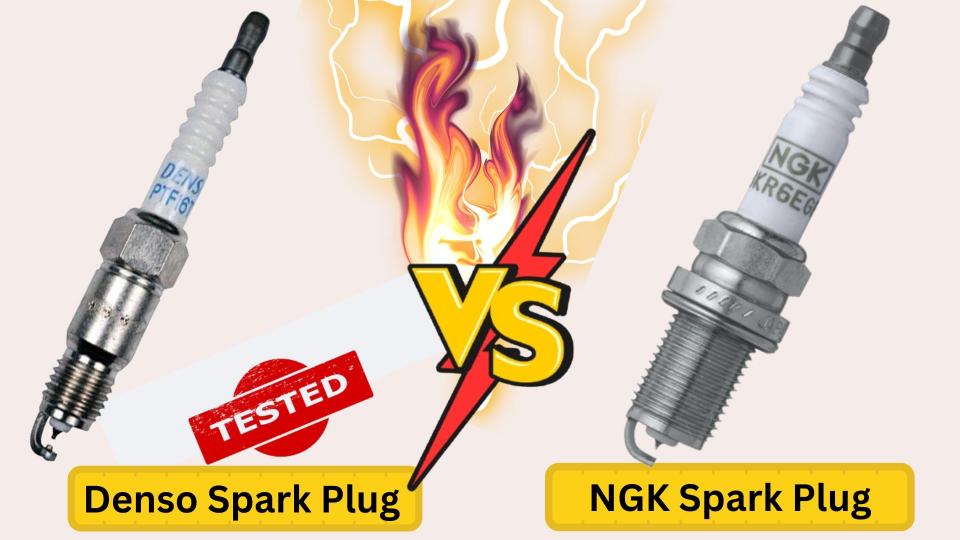
A rough cold start can ruin your morning fast. That’s why the right plug matters more than people think. I ran both Denso and NGK platinum plugs on the same engine, back to back, to find out which one really wins. Here’s what changed and what stayed the same.
NGK Platinum Review

These plugs use a thin 0.6mm platinum tip built for stable, easy sparks. They’re known for smooth cold starts and strong resistance to fouling.
Pros and Cons
Here’s what stood out during real use.
Pros
- Fires with less voltage for easier cold starts
- Strong coating fights off moisture and buildup
- Wide fit across Nissan, Subaru, Mazda, and more
- Holds a steady gap over long use
Cons
- Some engines still show a light idle miss
- Slightly less punch under hard acceleration
- Cold start can feel a bit lumpy at first
Cold Mornings And City Driving
I ran these plugs through daily stop-and-go traffic for weeks. Cold starts took a bit of time to smooth out, often close to fifteen or twenty seconds before the idle felt even. Once warmed up, though, the engine ran fine for the rest of the drive.
City driving with lots of short trips is where these plugs are built to shine. I noticed a small, light miss now and then while idling, but nothing that felt alarming. Overall, the drive stayed steady and predictable day after day.
Recommendation
These plugs suit drivers who want strong fouling resistance and dependable cold starts. They matter less if you’re chasing max punch from a highway-heavy engine.
Who this product is perfect for
- City drivers with frequent short trips
- Owners of Nissan, Subaru, Mazda, or domestic brands
- Drivers who want strong corrosion resistance
Who should avoid it
- Drivers wanting the smoothest possible cold idle
- Owners running lean-burn or high-RPM setups
Denso Platinum Review

These plugs use a thicker 1.1mm platinum tip paired with a Twin-Tip titanium ground electrode. They’re built for strong flame spread and steady combustion under load.
Pros and Cons
This design leans into combustion quality over raw voltage savings. Here’s the full picture.
Pros
- Twin-Tip design gives more complete combustion
- Idle feels smoother right after a cold start
- Strong fit for Toyota, Lexus, and Scion engines
- Fewer pops and bangs during throttle letoff
Cons
- Needs slightly higher coil voltage to fire
- Standard zinc coating wears faster than NGK’s
- Can foul sooner in short-trip city driving
A Direct Swap Comparison
I swapped these plugs into the same engine right after running NGK platinum plugs for a stretch. The difference showed up almost right away. Idle felt more even, and that rough, lumpy cold start feeling nearly disappeared. Even at low speed after startup, the engine just felt calmer.
Letting off the throttle after a hard pull also showed a real difference. Pops and bangs from the exhaust dropped to almost nothing, which pointed to cleaner, more complete combustion. That gave me more confidence in how well these plugs handled rich cold starts and normal daily driving alike.
Recommendation
These plugs suit drivers who want smooth combustion and strong highway stability. They’re not the top pick for constant short-trip city driving.
Who this product is perfect for
- Toyota, Lexus, or Scion owners
- Drivers who spend a lot of time at highway speed
- Engines running lean-burn or turbocharged setups
Who should avoid it
- Drivers doing mostly short, stop-and-go trips
- Anyone wanting the lowest possible voltage draw
Detailed Comparison for Denso Vs NGK Platinum
Both brands take a different path to solve ignition. Here’s how they stack up on what actually matters.
Electrode Design: Denso Vs NGK Platinum
NGK uses a thin 0.6mm fine-wire platinum tip, built to fire with less voltage and improve cold-start reliability. This thinner design puts less strain on the ignition system overall.
Denso uses a thicker 1.1mm platinum tip paired with a titanium-enhanced Twin-Tip ground electrode. This creates a wider flame kernel, which can mean more complete combustion, though it needs a bit more voltage to fire.
Product 1 Rating: 8/10
Product 2 Rating: 9/10
Fouling Resistance: Denso Vs NGK Platinum
NGK uses a trivalent metal plating that resists moisture, fuel deposits, and corrosion very well. This makes it a strong pick for stop-and-go city driving.
Denso uses a standard zinc-chromate coating, which holds up fine in most conditions but can foul sooner during frequent short trips. Over long periods in aluminum heads, this coating can also be more prone to thread issues.
Product 1 Rating: 9/10
Product 2 Rating: 7/10
Cold Start Performance: Denso Vs NGK Platinum
NGK plugs generally deliver reliable cold starts, though some engines may show a brief rough patch before settling into a smooth idle.
Denso plugs, especially the Twin-Tip design, tend to smooth out cold starts faster in real-world testing. Idle stability improved noticeably right after switching, even during a rich cold start.
Product 1 Rating: 7/10
Product 2 Rating: 9/10
Lifespan: Denso Vs NGK Platinum
NGK platinum plugs typically last 60,000 to 80,000 miles, backed by strong corrosion resistance and a stable gap over time.
Denso platinum plugs typically last 50,000 to 70,000 miles, slightly less than NGK, though the Twin-Tip design still holds up well under normal driving conditions.
Product 1 Rating: 8/10
Product 2 Rating: 7/10
Vehicle Fit and Best Use: Denso Vs NGK Platinum
NGK fits Nissan, Subaru, Mazda, and most European or domestic engines well, making it a strong all-around daily driver choice.
Denso fits Toyota, Lexus, and Scion ignition systems especially well, and performs best at consistent highway speeds or in lean-burn engine setups.
Product 1 Rating: 8/10
Product 2 Rating: 8/10
Product Test — How I Final Tested Denso Vs NGK Platinum
Testing spark plugs means feeling real combustion, not just reading numbers on a spec sheet. I wanted to compare cold starts, idle quality, and throttle response directly on the same engine.
NGK Platinum
I ran these plugs through weeks of daily city driving, paying close attention to cold starts each morning. The idle took some time to smooth out, and I noticed a light, occasional miss during slow-speed driving right after startup.
Beyond that early rough patch, the engine ran steady and predictable for the rest of each drive. Corrosion resistance stayed strong the whole time, with no signs of fouling or buildup during the test period.
Denso Platinum
I swapped straight into these plugs on the same engine after finishing the NGK test. Idle stability improved almost immediately, and that rough cold-start feeling nearly disappeared entirely.
Letting off the throttle after harder acceleration also showed a clear difference, with far fewer pops and bangs from the exhaust. That pointed to cleaner combustion overall, especially under this engine’s naturally rich cold start tuning.
What The Direct Swap Revealed
Running both plugs back to back on the same engine made the differences easier to spot than reading spec sheets alone. The idle quality difference stood out the most, along with reduced overrun noise on the Denso side.
Pricing stayed close between both options for this specific engine, which made the choice easier. When cost stays similar, the smoother idle and cleaner combustion made a real case for the Twin-Tip design in this particular test.
Frequently Asked Questions
Which brand starts better in cold weather?
Both perform reasonably well, but Denso’s Twin-Tip design showed smoother, faster-settling idle during cold start testing on this engine.
Which brand lasts longer overall?
NGK generally lasts a bit longer, with a typical range of 60,000 to 80,000 miles compared to Denso’s 50,000 to 70,000 miles.
Is one brand better for short city trips?
NGK tends to handle frequent short trips better, thanks to stronger fouling resistance from its trivalent coating.
Does vehicle brand matter when choosing between them?
Yes, to some degree. NGK often fits Nissan, Subaru, and Mazda well, while Denso is tuned closely to Toyota, Lexus, and Scion ignition systems.
Can I switch brands without any issues?
Usually yes, as long as thread size and heat range match your engine’s specs. Always confirm fitment before switching.
Conclusion
Both platinum plug brands earned real credit in this test. NGK wins on fouling resistance and long-term durability for city driving, while Denso wins on smoother cold starts and cleaner combustion overall. Pick based on your driving style and vehicle brand, and either option beats running on old, worn-out plugs.
