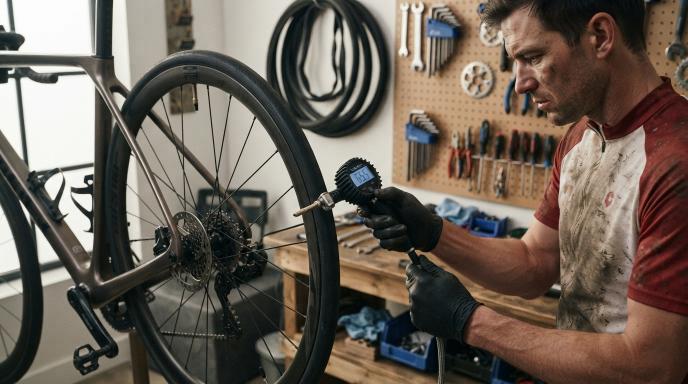
Wondering how much pressure in a bike tire is right? I’ve been there too, especially when one small PSI change can make a ride feel smooth or harsh.
The right pressure is not one fixed number; it depends on your tires, bike, rider weight, and where you ride.
I’ll break down what matters, clear up questions like whether 40 PSI is too much or 30 PSI is too low, and show you how to find a pressure that feels right.
Let’s get into it and make tire pressure simple.
How Much Pressure Should You Put in a Bike Tire?
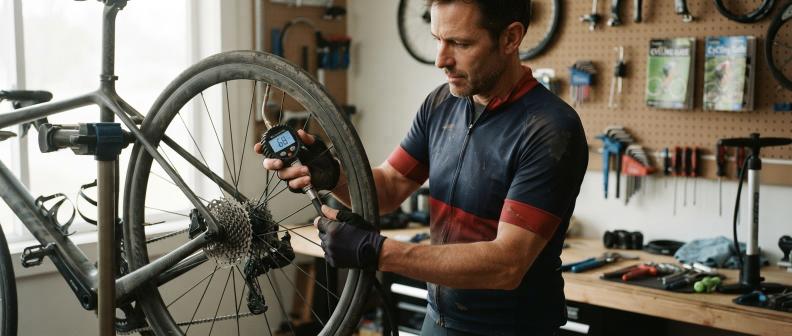
There is no one tire PSI that works for every bike. The right tire pressure depends on the tire, tire width, rim width, rider and bike weight, and the ground you ride on. Start with the range on the tire sidewall, then set the pressure from there.
In my own rides, I have found that a small PSI change can alter the feel of a bike. A firm tire can feel fast and sharp, while a softer tire can feel more calm and sure on rough ground. It is a bit like shoe fit: a small change can make a big change in feel.
Your bike type also plays a big role. Road, hybrid, gravel, and mountain bikes all have tires made for a set job. A wide trail tire will not need the same setup as a thin road tire, so it is not wise to copy a friend’s PSI.
I also look at the full load, not just rider weight. The bike, water, tools, bags, and other gear all add load. Tire casing and rim width matter too, since they change how much help the tire has when it takes a hit or bends in a turn.
So, how much pressure in a bike tire should you use? Use the tire maker’s range as your start, then tune it to your bike and ride. A good gauge helps, since pump gauges can vary, and even a 1–2 PSI change may be easy to feel.
What Is the Normal PSI of a Bike Tire?
There is no single normal PSI of a bike tire. The right pressure depends on your tire size, casing, rider weight, bike weight, and where you ride. In simple terms, use the tire maker’s range as your guide, then tune the pressure to your bike and ride.
Tire width is one key factor. A wider tire can often run less pressure than a thin tire, while the tire casing also affects how much support you get. Your full load matters too, so think about your bike, gear, water, and bags, not just your body weight.
I would not copy another rider’s PSI and call it the “right” number. Two riders can use the same tire size but need a different setup due to weight, casing, rims, and trail use. A pressure that feels firm and stable for one rider may feel too soft or too hard for another.
For example, the source gives a few real trail setups. One 90 kg rider with 2.4-inch tires uses 24 PSI in front and 26 PSI in the rear. Another rider uses 23 PSI front and 25 PSI rear with 2.4-inch trail tires and a rear insert.
A third setup uses 26 PSI in front and 28 PSI in the rear. That rider prefers a firmer feel to limit tire movement in hard turns. These numbers show why “normal PSI” is more of a starting point than a rule.
So, what is the normal PSI of a bike tire? There is no magic number. Start with your tire’s stated range, then find the pressure that gives you the grip, support, and ride feel you need.
What Factors Determine the Right Bike Tire Pressure?
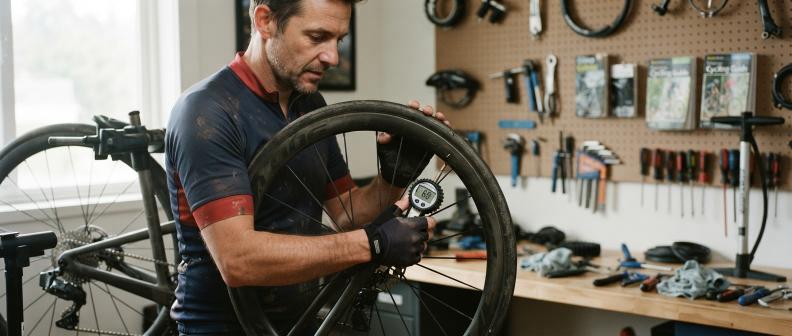
The right bike tire pressure comes down to a few key parts of your setup. Tire width, rim width, casing, and total weight all change how a tire feels. Your trail or road surface matters too, so I never look at PSI as a stand-alone number.
Tire Width and Rim Width
Wider tires can usually run lower pressure than thin tires. But the tire and rim also need to work well as a pair. If the rim is too wide for the tire, it can make the tire shape too square and may add rolling resistance.
I think of the tire and rim like two parts of the same shoe. If they do not match well, the tire may not sit or flex as it should. The source gives examples where a 2.2-inch tire works with a narrower rim, while wider tires suit wider rims. The goal is a tire shape that feels stable without adding drag.
Tire Casing
The tire casing also changes how much support you get from the same PSI. A thin, supple casing can feel light and smooth, but it may need more pressure for a heavier rider. A thicker enduro-style casing gives more support and can allow a lower pressure setup.
This is one reason I would not judge tire pressure by PSI alone. Two tires can show the same number on a gauge and still feel quite different on the trail. The casing changes how the tire holds its shape, so it is a key part of the setup.
Rider and System Weight
Your total riding weight matters, not just your body weight. The system includes you, your bike, water, tools, bags, and other gear. A heavier setup puts more load on the tire, so it generally needs more support.
I like to think of it as carrying a full backpack. The more weight you add, the more support you need from the tire. This is why copying another rider’s PSI can be a poor fit. Their weight, bike, tire casing, and gear may be very different from yours.
Is 40 PSI Too Much for Bike Tires?
No, 40 PSI is not always too much for bike tires. It can work well for some tire and bike setups, but it may be too high for others. The best place to check is the pressure range on your tire sidewall.
Your tire type and riding style matter here. A firm tire may feel quick and smooth on pavement, while that same pressure may feel harsh on a rough trail. On dirt, a very firm tire can skip over small rocks instead of staying in touch with the ground.
I like to think of PSI as a dial, not a fixed rule. If 40 PSI is within your tire’s range, try it for the type of ride you plan to do. Then watch how the bike feels under you and adjust from there.
Is 30 PSI Too Low for a Bike?
No, 30 PSI is not always too low for a bike. It can be a useful pressure for some tire sizes, casings, riders, and riding conditions. The key is whether the tire still gives you enough support and control.
On smooth pavement, a firmer tire can help the bike roll with less drag. On rough ground, though, lower pressure can help the tire bend around small rocks and bumps instead of bouncing over them. That can help the tire stay in contact with the ground and keep your ride more steady.
The source gives a good example of this change. A rider who uses about 24 PSI front and 26 PSI rear on a trail setup may raise the pressure close to 30 PSI when riding on tarmac to make the tires roll faster. That same rider says they would not use that higher pressure for off-road riding.
Still, lower is not always better. Too little pressure can reduce the support you need, while the right lower pressure can improve how the tire follows the ground. Think of it as finding the sweet spot between grip, support, comfort, and a smooth ride.
How Do I Find the Best Tire Pressure for My Bike?
The best tire pressure comes from a good starting point and small changes. Start within the pressure range set by the tire maker. Then tune it to your weight, bike, tires, and the way you ride.
I always like to use a tire pressure gauge for this job. Pump gauges can vary, so three pumps may show three slightly different readings. A small tire gauge gives you one steady way to check your PSI each time.
Next, make small changes instead of big jumps. The source notes that even a 1–2 PSI change can be easy to feel. That makes testing simple: change the pressure a little, ride, and see what feels better.
Pay close attention to the ride. Good tire pressure should give you a mix of grip, smooth rolling, cornering support, and comfort. If the tire feels too soft and moves too much in a turn, you may need more pressure. If it feels harsh and skips over small bumps, a small drop may help.
Your route can change the best setting too. Smooth roads may suit a firmer setup, while rough trails can benefit from a tire that can follow the ground. Weather matters as well, since cold and heat can change how the tire feels. Altitude can also affect tire pressure, so it is worth checking your gauge when riding in a new place.
The goal is not to find one magic PSI and use it forever. Think of tire pressure like a small dial on your bike. Find a good base setting, make small changes, and let the ride tell you what works.
Bike Tire Pressure FAQs
Is 90 PSI too high for bike tires?
90 PSI may be too high for some bike tires, but not all. Check the tire sidewall first. If 90 PSI is above its stated range, do not use that pressure.
Should front and rear bike tires have the same PSI?
Not always. The rear tire often carries more of the rider’s load, so some setups use more PSI in the rear. Your tire size, casing, weight, and riding style all matter.
Does lower tire pressure give you more grip?
Lower pressure can improve grip on some rough surfaces. A softer tire can conform to the ground instead of bouncing over small bumps. Too little pressure can reduce support, though.
Does higher tire pressure make a bike faster?
Not in every riding condition. A firmer tire can roll well on smooth ground, but very high pressure can make a tire skip over rough ground. The best setting depends on where you ride.
How often should I check my bike tire pressure?
Check your tire pressure before rides, especially when the bike has been sitting for a while. A gauge gives you a more useful reading than judging the tire by hand.
Does rider weight affect bike tire pressure?
Yes, rider weight can affect the pressure you need. Your full system weight includes you, the bike, water, tools, and bags. More weight usually calls for more tire support.
Does a wider tire need less PSI?
A wider tire can often run lower pressure than a thin tire. But tire width is only one part of the setup. Casing, rim width, rider weight, and terrain also affect the right pressure.

2 thoughts on “How Much Pressure in a Bike Tire? Famous New”