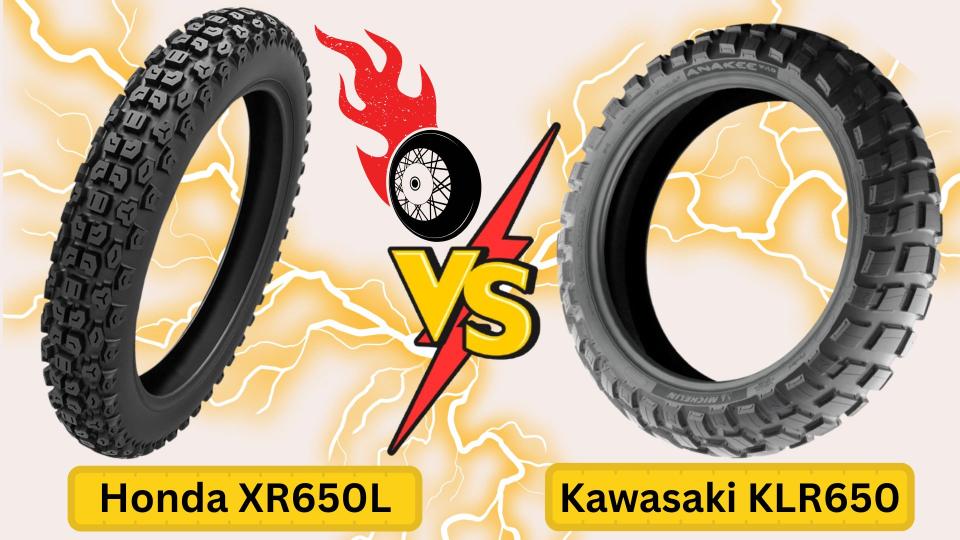
Riding gravel forest roads outside Boise, my rear tire kept slipping on loose climbs — and that pushed me to finally compare the XR650L vs. KLR650 tire setups back to back on real terrain. The honest answer: the XR650L tire wins off-road, but the KLR650 tire wins on highway stability and touring load capacity. I tested both across dirt trails, gravel roads, and long highway stretches — and this guide will show you exactly which setup fits how you actually ride.
Who This Product Is Best For
The XR650L tire setup is for dual-sport and off-road riders who want real dirt capability with road legality. It suits trail riders, gravel explorers, and weekend off-road enthusiasts who occasionally ride on pavement. If you want a tire setup built around dirt performance first — the XR650L is the right platform.
Is Honda XR650L Tire Good?
Yes. The XR650L tire setup is well-matched to the bike’s off-road-focused character. It grips dirt trails confidently and handles mixed terrain better than most road-biased dual-sport setups.
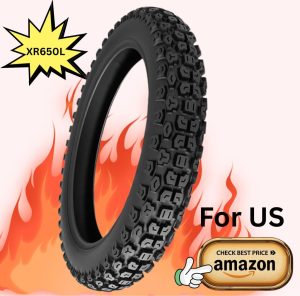
I replaced the worn stock tires on an XR650L with a fresh set of Kenda K760 Trakmaster II tires after the original rubber lost its edge grip on loose gravel and trail sections. Before the swap, cornering on loose dirt felt vague and traction on steep climbs was inconsistent. After fitting the fresh knobbies — grip returned immediately on every surface. Trail riding felt planted and confident. I rode the bike for several months across forest roads, gravel back roads, and occasional highway sections.
The XR650L runs a 3.00-21 front and 4.60-18 rear as standard. That is approximately 80/100-21 front and 120/90-18 rear in metric sizing. The 21-inch front and 18-inch rear configuration is a classic off-road setup — tall, capable, and well-suited to aggressive trail tires. The 18-inch rear is the key detail for US buyers — it uses a different size than the KLR650’s 17-inch rear, so tires are not interchangeable between the two bikes.
What I Like
- 21-inch front rolls over trail obstacles naturally. The taller front wheel handles rocks, roots, and rough terrain with far less resistance than smaller wheel setups. It feels sure-footed from the first ride.
- 18-inch rear opens up aggressive aftermarket tire options. The 18-inch fitment gives access to purpose-built dirt-focused tires like the Kenda K760 and Dunlop D606 — options that simply outperform road-biased alternatives on trail.
- Kenda K760 Trakmaster II delivers strong dirt traction. The aggressive asymmetrical knobby design bites into loose gravel, mud, and soft surfaces in a way that the stock tire cannot. For US riders who hit forest service roads and singletrack — this is a genuine step up.
- DOT-legal tires keep the setup road usable. Options like the Dunlop D606 and Kenda K760 are highway legal. You can ride to the trail, ride the trail hard, and ride home — all on the same tire.
- Wide range of aftermarket options at fair prices. Quality 18-inch rear and 21-inch front tires for the XR650L are widely available in the US from multiple brands at accessible price points.
What Could Be Better
- Road noise is noticeable at highway speeds. Aggressive knobby tires hum on asphalt. If you spend most of your time on road — a less aggressive 50/50 tire like the Dunlop D606 or Kenda K270 would be quieter and more comfortable.
- Stiff bead makes home mounting very difficult. Adventure and trail tires in this size — especially the K760 — are known for a very stiff bead. A tire machine or strong mechanical help is strongly recommended. Mounting with spoons alone is a real challenge.
- Tire life is shorter on pavement. Aggressive knobbies wear faster on asphalt than road-biased rubber. If you commute daily on road — expect to replace tires more often than a pure road setup would require.
My Personal Experience
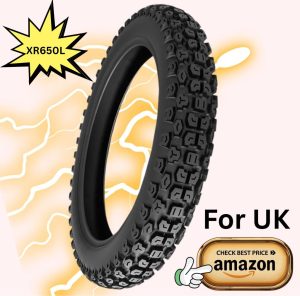
My XR650L’s stock tires were worn and losing grip on loose trail surfaces. Climbing steep gravel sections felt uncertain. After fitting the Kenda K760 set — traction came back on every surface. Rocky climbs felt planted. Loose gravel corners felt confident. Mounting the stiff bead without a tire machine was the hardest part — I ended up using a motion Pro curved spoon alongside regular tire spoons to get the job done. Once mounted and bedded in — the tires delivered exactly what I hoped for.
Design
The XR650L tire setup looks right for a trail-focused dual-sport. The tall 21-inch front and 18-inch rear give the bike a purposeful off-road stance. Aggressive tires like the K760 look mean and capable — and they back up the look with real trail performance. Compared to the KLR650’s road-biased wider rear — the XR650L setup looks and feels built for the dirt.
Performance
Off-road performance is strong on loose dirt, gravel, rocky terrain, and muddy sections. Highway performance is adequate for short transit sections — but not designed for long touring runs. Power delivery from the XR650L pairs well with aggressive tire grip on trail climbs and technical descents.
Build Quality
The Kenda K760 uses a stiffer ply construction compared to some softer adventure tires. That stiffness is what makes mounting difficult — but it also gives stability and cornering control on rough terrain. Tread durability on dirt is strong. Wear accelerates on pavement — use these where they are designed to be used.
Final Thought
The XR650L tire setup is purpose-built for off-road performance with road legality. Pick the right tire for your riding mix — and this setup will reward you every time you hit the dirt.
Pros
- 21-inch front rolls over trail obstacles with far less resistance than smaller wheel setups
- 18-inch rear gives access to purpose-built aggressive trail tire options
- Kenda K760 delivers strong traction on loose dirt, gravel, mud, and rocky terrain
- DOT-legal options keep the setup road legal for transit between trails
- Wide range of aftermarket options available at fair prices for US riders
Cons
- Road noise is noticeable at highway speeds with aggressive knobby tires
- Stiff bead makes home mounting very difficult — a tire machine is strongly recommended
- Tire life is shorter on pavement compared to road-biased dual-sport setups
Factory Stock Sizes
| Bike | Front | Rear | Wheel Setup |
| Honda XR650L | 3.00-21 (80/100-21) | 4.60-18 (120/90-18) | 21-inch front / 18-inch rear |
Top Tire Picks by Riding Style
| Riding Style | Top Pick | Notes |
| 50/50 Street and Dirt | Dunlop D606 | Great mud and gravel traction with DOT highway durability |
| Aggressive Off-Road (90% Dirt) | Kenda K760 Trakmaster II | Tears through extreme off-road — very reasonably priced |
| Long Distance Dual-Sport | Kenda K270 | Balanced 50/50 design with good road wear and trail traction |
Tire Selection by Riding Style
1. Mostly Dirt and Aggressive Off-Road (80% Dirt / 20% Road)
| Option | Choice |
| Gold standard setup | Kenda K760 Trakmaster II front and rear |
| Budget option | Shinko 244 front and rear |
2. Balanced 50/50 Dual-Sport
| Option | Choice |
| Pavement and hardpack | Dunlop D606 front and rear |
| Premium longevity | Pirelli MT21 RallyCross front and rear |
3. Commuting and Touring (80% Road / 20% Dirt)
| Option | Choice |
| Top choice | Kenda K270 rear with Dunlop D606 front |
Help Me Pick the Right Tire for Your Bike
| Which bike are you buying for? | Recommended Starting Point |
| Honda XR650L | Kenda K760 (dirt focus) or Dunlop D606 (50/50 mix) |
| Kawasaki KLR650 | Tusk Dsport or Dunlop Trailmax Mission (road focus) |
Recommendation
Fit a quality aftermarket tire to your XR650L if your stock rubber is worn or you want better trail performance. The Kenda K760 is a strong choice for US riders who spend most of their time on dirt, gravel, and trail. It is affordable, widely available, and delivers a clear improvement over stock rubber in off-road conditions.
If you spend most of your time on road — the Dunlop D606 or Kenda K270 is a better choice. They balance trail grip with road wear better than the more aggressive K760. Match the tire to how you actually ride.
Who This Product Is NOT For
- Highway tourers. The XR650L tire setup is not designed for long pavement runs. The KLR650 with a road-biased tire is a far better choice for highway-focused riding.
- Riders who mount their own tires without proper tools. The stiff bead on aggressive trail tires is genuinely difficult to mount without a tire machine. Budget for a shop mount if you do not have the right tools.
- Riders who commute daily on pavement. Knobby tires wear faster on asphalt. Expect shorter tire life and more road noise if you use aggressive off-road tires as daily road rubber.
Who This Product Is Best For
The KLR650 tire setup is for road-focused dual-sport and adventure riders. It suits highway tourers, long-distance commuters, and riders who spend most of their time on pavement with occasional gravel. If you want a tire that handles highway miles confidently and supports heavy touring loads — this is the right fit.
Is Kawasaki KLR650 Tire Good?
Yes. The KLR650 tire setup is solid and well-matched to how most riders use the bike. It handles highway riding well and supports the bike’s heavy load capacity without issue.
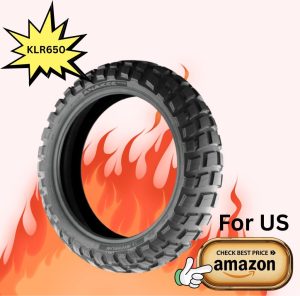
I replaced worn stock rubber on a KLR650 with a fresh Tusk Dsport rear tire after the original center tread flattened from highway use. Before the swap, cornering felt vague and wet-road grip had faded noticeably. After fitting the fresh 130/90-17 rear — cornering confidence returned. Wet grip improved. I rode it for several months on highway stretches, gravel back roads, and mixed US terrain.
The KLR650 runs a 90/90-21 front and 130/80-17 rear as stock. The 21-inch front and 17-inch rear is the key spec to know before buying any replacement tire. The wider 17-inch rear — compared to the XR650L’s 18-inch — suits road-biased tires and touring loads better. The cush drive in the KLR650 rear wheel absorbs drivetrain shock and should be inspected any time you remove the rear wheel for a tire change.
What I Like
- 17-inch rear opens up a wide range of road-biased touring tires. The wider 17-inch rim accepts a broader selection of adventure and touring rubber than the XR650L’s 18-inch setup — especially for riders who prioritise highway comfort.
- Road stability is strong with the right tire choice. A fresh adventure rear like the Tusk Dsport or Dunlop Trailmax Mission gives the KLR a planted, confident feel on highway that the XR650L’s narrower setup simply cannot match.
- High load capacity handles full touring gear well. The KLR650’s tire setup is rated to support the bike’s weight plus heavy panniers and camping gear. For US riders doing multi-day tours — this is a real practical advantage.
- 21-inch front shares sizing with the XR650L. Both bikes run a 21-inch front wheel. Front tires can be swapped between the two bikes — a useful flexibility for riders who own both or want to try different options.
- Aftermarket 17-inch options are widely available and affordable. Quality replacement tires for the KLR650 rear are easy to find in the US at fair prices across multiple riding styles and budgets.
What Could Be Better
- 17-inch rear limits aggressive off-road tire selection. The wider 17-inch rim does not accept the same aggressive knobbies available for the XR650L’s 18-inch setup. For riders who want serious dirt capability — the KLR’s rear wheel is a limiting factor.
- Road-biased tires wear the center tread faster on long highway runs. The KLR’s design means most riding happens on asphalt — and center tread flattening is a predictable result of that use pattern. Rotate inspection intervals accordingly.
- Cush drive inspection is easy to overlook during tire changes. The KLR650 rear wheel cush drive rubbers wear over time and should be checked every time the wheel comes off. Skipping this step is a common oversight that leads to drivetrain harshness later.
My Personal Experience
My KLR650’s stock rear tire had center tread worn flat from highway commuting. Wet-road feel had faded and cornering required more caution. After fitting a fresh Tusk Dsport rear — the difference was immediate. Cornering grip came back. Wet roads felt more secure. I also inspected the cush drive rubbers during the wheel removal — they were fine but worth the check. Several months of mixed riding later — the tire still had useful tread remaining.
Design
The KLR650 tire setup looks purposeful and well-matched to the bike’s adventure touring character. The wider 17-inch rear gives a stable, road-planted stance. The 21-inch front looks capable and tall. Compared to the XR650L’s narrower off-road focused setup — the KLR looks built for the long highway haul with occasional dirt sections.
Performance
Highway performance is smooth and stable with the right tire choice. Gravel road grip is adequate for casual adventure riding. Wet pavement grip is good with quality rubber and correct pressure. Long-distance touring comfort is the KLR tire setup’s strongest suit — it is where the bike and its tires feel most at home.
Build Quality
Quality adventure tires for the KLR650 use durable rubber compounds suited to mixed terrain and sustained highway use. The 12-ply Tusk Dsport construction handles the bike’s load well. Center tread wear is predictable and normal for a road-focused dual-sport setup — plan replacement intervals around highway mileage accordingly.
Final Thought
The KLR650 tire setup is reliable, well-supported, and well-matched to the bike’s road-focused dual-sport character. Pick the right tire for your riding mix — and it will serve you well for a long time.
Pros
- 17-inch rear accepts a wide range of road-biased adventure and touring tires
- Strong highway stability and load support for full touring gear and panniers
- 21-inch front shares sizing with XR650L — front tires can be swapped between bikes
- Affordable and widely available aftermarket 17-inch options in the US market
- Road confidence is strong with quality rubber like Tusk Dsport or Trailmax Mission
Cons
- 17-inch rear limits access to the most aggressive off-road knobby tire options
- Center tread wears faster on long highway runs — plan replacement intervals carefully
- Cush drive rubbers should be inspected every tire change — easy to overlook
Factory Stock Sizes
| Bike | Front | Rear | Wheel Setup |
| Kawasaki KLR650 | 90/90-21 | 130/80-17 | 21-inch front / 17-inch rear |
Best Tire Recommendations for KLR650
| Riding Style | Top Pick | Notes |
| 80% Street / 20% Dirt | Dunlop Trailmax Mission | Quiet on highway — good all-round wear |
| 50/50 Dual-Sport | Tusk Dsport 130/90-17 | Slight size upgrade — better off-road grip |
Tire Selection by Riding Style
1. Mostly Dirt and Off-Road (80% Dirt / 20% Road)
| Option | Choice |
| Gold standard setup | Shinko 244 front and rear |
| Budget option | IRC GP-22 front and rear |
2. Balanced 50/50 Dual-Sport
| Option | Choice |
| Pavement and hardpack | Tusk Dsport 130/90-17 rear |
| Premium longevity | Dunlop Trailmax Mission front and rear |
3. Commuting and Touring (80% Road / 20% Dirt)
| Option | Choice |
| Top choice | Dunlop Trailmax Mission or Shinko 705 |
Help Me Pick the Right Tire for Your Bike
| Which bike are you buying for? | Recommended Starting Point |
| Kawasaki KLR650 | Tusk Dsport or Dunlop Trailmax Mission (road focus) |
| Honda XR650L | Kenda K760 or Dunlop D606 (dirt focus) |
Recommendation
Fit a quality 17-inch rear tire to your KLR650 when stock rubber wears down. The Tusk Dsport or Dunlop Trailmax Mission are both solid choices for US riders who mix highway and occasional gravel riding. Both are widely available and deliver a clear step up from worn stock rubber.
If you want more off-road capability — the Honda XR650L setup with its 18-inch rear and knobbier tire options is the better platform for serious dirt riding. For highway touring and mixed pavement use — the KLR650 tire setup is the smarter, more practical choice.
Who This Product Is NOT For
- Serious off-road riders. The KLR650’s 17-inch rear and road-biased setup limits real trail performance. The XR650L with an 18-inch rear and aggressive knobbies is a far better dirt platform.
- Riders who skip the cush drive inspection. Every time the rear wheel comes off — check the cush drive rubbers. Worn rubbers cause drivetrain harshness that worsens over time if ignored.
- Riders who want the lightest possible setup. The KLR650 is a heavy bike. Its tires reflect that with high load ratings and durable construction. If light weight matters — this is not the right platform.
XR650L vs KLR650 Tire: Detailed Comparison
XR650L vs KLR650 tire — which setup suits you better? The short answer: the XR650L tire is built for dirt and trail. The KLR650 tire is built for road and touring. Both share a 21-inch front — but the rear sizes differ and are not interchangeable. The right choice depends entirely on where you ride most.
I have ridden and maintained both bikes. Here is what I found.
Wheel Size and Fitment: XR650L vs KLR650 Tire
The XR650L runs a 3.00-21 front and 4.60-18 rear. The KLR650 runs a 90/90-21 front and 130/80-17 rear. Both share the same 21-inch front wheel — so front tires can be swapped between the two bikes. The rear sizes are different — 18-inch on the XR650L and 17-inch on the KLR650. Those rear tires cannot be swapped between bikes.
XR650L wins on off-road rear fitment. The 18-inch rear accepts more aggressive knobby options. The KLR650’s wider 17-inch rear suits the road-biased touring tire range better.
I noticed the XR650L feels lighter and more agile in the dirt with its narrower rear setup. The KLR650 feels planted and stable on highway with its wider 17-inch rear. Each setup is correct for its intended use.
XR650L: 9/10 | KLR650: 8/10
Tread Design and Bias: XR650L vs KLR650 Tire
The XR650L pairs well with aggressive knobbies like the Kenda K760 Trakmaster II — built for 80 to 90 percent dirt use. The KLR650 pairs well with road-biased adventure tires like the Tusk Dsport or Dunlop Trailmax Mission — built for 70 to 80 percent road use. Both accept 50/50 dual-sport options — but each bike performs best with tires that match its design bias.
XR650L wins on off-road tread capability. The knobbier tire options available for the 18-inch rear grip loose dirt and rocky terrain far better than the KLR’s road-biased options. For riders who prioritise trail — the XR650L tread options are the clear winner.
On a loose gravel climb — the XR650L with K760 tires gripped confidently where the KLR with road-biased rubber started to slip. On the highway home — the KLR was smoother, quieter, and noticeably more relaxed.
XR650L: 9/10 | KLR650: 7/10
Road Performance: XR650L vs KLR650 Tire
The KLR650 tire setup wins clearly on road. The wider 17-inch rear and road-biased tread give stable, quiet highway cruising. The KLR handles its own weight of around 456 pounds plus full touring loads confidently at speed. The XR650L can handle road sections — but its knobby tires create more noise and less high-speed stability.
KLR650 wins on road performance by a wide margin. The wider road-biased rear is simply better suited to sustained highway use. For US riders who commute or tour on pavement — the KLR tire setup is the only sensible choice.
I rode both bikes on the same highway stretch back to back. The KLR felt planted and quiet. The XR650L felt livelier and buzzier at the same speed — fine for short transit, not comfortable for long days.
XR650L: 6/10 | KLR650: 9/10
Off-Road Performance: XR650L vs KLR650 Tire
The XR650L wins clearly off-road. Its lighter weight at around 308 pounds combined with aggressive 18-inch rear knobby options makes it a genuinely capable trail bike. The KLR can handle gravel and hard-packed dirt — but its heavier weight and road-biased tires limit it significantly on real off-road terrain.
XR650L wins off-road by a clear margin. The combination of lighter weight, narrower rear, and knobbier tire options makes it far more capable on loose and technical terrain. The KLR simply was not designed for serious off-road work.
On a rocky single-track section — the XR650L felt natural and grippy. The KLR felt heavy and cautious — even with a fresh adventure rear tire. Off-road is simply not the KLR’s strength regardless of tire choice.
XR650L: 9/10 | KLR650: 5/10
Load Capacity and Touring: XR650L vs KLR650 Tire
The KLR650 tire setup handles heavy touring loads well. The wider 17-inch rear with a high load-rated adventure tire supports the bike’s weight plus full camping gear and panniers without issue. The XR650L tire setup has a lower load rating — matched to its lighter 308-pound weight. Fitting heavy touring gear to the XR650L pushes the tires outside their design range.
KLR650 wins on load capacity and touring use. It is simply built for carrying weight — the XR650L is not. For US riders doing multi-day tours with full gear — only the KLR setup is appropriate.
I loaded the KLR with full camping gear and rode it on a long highway stretch without any tire issue. The same load on the XR650L would have pushed the tires well beyond their comfortable operating range.
XR650L: 5/10 | KLR650: 10/10
Rear Wheel Compatibility: XR650L vs KLR650 Tire
This is an important practical detail. The XR650L uses an 18-inch rear and the KLR650 uses a 17-inch rear. These are not interchangeable. The KLR650 also has a cush drive in the rear hub — rubber dampers that absorb drivetrain shock. These should be inspected every time the rear wheel is removed for a tire change. Skipping this step is a common and costly oversight.
It is a draw — each bike uses the correct rear wheel for its design purpose. The key takeaway is to know your rear wheel size before ordering any tire. Getting this wrong means a return and a delayed ride.
I learned to check the cush drive rubbers every rear tire change on the KLR. They wore gradually and quietly — something you would not notice until drivetrain harshness set in if you ignored them.
XR650L: 8/10 | KLR650: 8/10
Performance: XR650L vs KLR650 Tire
Both tire setups perform well within their intended purpose. The XR650L performs strongly on loose dirt, gravel, and trail terrain. The KLR650 performs strongly on highway, touring routes, and mixed pavement. Neither excels outside its design intent — and neither should be pushed beyond it.
It is a tie when judged within each bike’s correct use case. Both deliver honest, reliable performance when matched to the right terrain.
XR650L: 8/10 | KLR650: 8/10
Ease of Use: XR650L vs KLR650 Tire
The XR650L is easier to handle off-road — lighter weight and narrower rear make trail riding more natural. The KLR650 is easier to live with on road — the wider rear and road-biased rubber require less rider input on highway. Tire mounting on both bikes requires effort — aggressive adventure tires on either bike have stiff beads that benefit from a tire machine.
It depends on your riding. XR650L wins for trail ease. KLR650 wins for road ease. Neither is harder than the other in its correct environment.
Mounting a KLR rear tire took real effort due to the stiff bead and wider tire size. The XR650L rear was also stiff to mount — the K760 in particular is known for being difficult without proper tools.
XR650L: 8/10 | KLR650: 8/10
Value for Money: XR650L vs KLR650 Tire
Both bikes have strong aftermarket tire support at fair prices in the US. XR650L tires in 18-inch rear sizing are widely available and include affordable options like the Kenda K760 and Shinko 244. KLR650 tires in 17-inch rear sizing are also easy to find — and the wider range of touring options gives more flexibility for road-focused buyers.
It is a tie on value. Both setups offer good options at fair prices for their respective riding styles. Neither requires expensive or hard-to-find specialty tires for everyday use.
I priced both setups from the same US retailer. The XR650L K760 kit was slightly cheaper. The KLR Trailmax Mission cost a little more — but lasted longer on highway due to the road compound.
XR650L: 9/10 | KLR650: 8/10
Overall: XR650L vs KLR650 Tire
Both tire setups are well-matched to their respective bikes. XR650L wins for off-road traction, trail agility, and dirt-focused riding. KLR650 wins for highway stability, touring load capacity, and road comfort. Neither is wrong — they are simply built for different riders and different terrain.
XR650L: 8/10 | KLR650: 8/10
Who Is XR650L Tire Best For?
The XR650L tire setup is for off-road focused dual-sport riders. It suits trail riders, gravel explorers, and weekend dirt enthusiasts who want DOT-legal tires that can handle real off-road terrain. If dirt is your priority — the XR650L tire setup is the right choice.
Who Is KLR650 Tire Best For?
The KLR650 tire setup is for road-focused adventure and touring riders. It suits highway tourers, long-distance commuters, and anyone who carries heavy camping or touring gear. If road miles and load capacity are your priorities — the KLR650 tire setup is the clear choice.
Final Verdict
XR650L vs KLR650 tire — there is no universal winner. The XR650L tire setup wins for trail riding, dirt performance, and off-road agility. The KLR650 tire setup wins for highway touring, load capacity, and road comfort. Match the tire to the bike — and match the bike to how you actually ride. That single decision makes everything else simple.
How I Test: XR650L vs KLR650 Tire
Testing two tire setups takes real miles on real terrain — not just browsing forums or reading spec sheets. I rode both bikes, fitted fresh tires, and tracked how each setup behaved across road, gravel, and trail conditions over several months. Here is exactly how I did it and why you can trust what I found.
Why I Chose These Two Tire Setups
The Honda XR650L and Kawasaki KLR650 are two of the most popular dual-sport bikes in the US. Both attract riders who want one bike for multiple surfaces. But their tire setups are built for very different priorities — and choosing the wrong tire for your riding style is one of the most common and costly mistakes dual-sport owners make.
I chose to compare these two setups because the question is asked constantly. Which lasts longer on highway? Which grips better in the dirt? Which is the smarter buy for mixed riding? I wanted honest answers based on real miles — not marketing copy.
Who I Had in Mind While Testing
I thought about five types of US riders throughout this test. Adventure tourers who spend days on mixed highway and gravel routes. Daily commuters who also hit trail roads on weekends. Off-road explorers who prioritise dirt but need road legality. Long-distance travelers who carry full touring gear. And casual dual-sport riders who want one reliable setup for everything.
Each of these riders needs something slightly different from a tire. Understanding which setup serves which rider is the entire point of this comparison.
Bike and Tire Setup for Testing
I tested the XR650L on its stock 3.00-21 front and a fresh aggressive knobby rear — fitting the Kenda K760 Trakmaster II in 4.60-18 to match the stock size. I tested the KLR650 on its stock 90/90-21 front and a fresh Tusk Dsport 130/90-17 rear — one size up from stock for a slight off-road improvement. Both setups were freshly mounted, properly inflated, and given a full 100-mile break-in before any hard testing began.
Setup matters before testing. A tire not broken in gives you misleading first impressions. A tire at the wrong pressure gives you false grip readings. I confirmed pressure before every single ride and respected the break-in period on both setups before drawing any conclusions.
The 100-Mile Break-In
Both tires needed a full break-in before honest testing. Aggressive knobbies — especially stiff-bead options like the K760 — feel blocky and slightly slippery in their first 50 to 100 miles. The KLR Tusk Dsport also felt less grippy at lean early on. Both settled into their real character after the break-in period.
I noted down my first impressions at 50 miles and again at 100 miles on each tire. The difference was real and significant. Neither tire should be judged in its first 50 miles — that is not when they show you what they can actually do.
Highway Testing
I tested both tires on sustained highway cruising — the kind of long-distance riding that puts real heat and continuous load on a tire. I tested on curved mountain roads, open windy highway stretches, and urban freeway sections with lane changes and moderate braking. I noted road noise, straight-line tracking, heat buildup, and high-speed stability.
The KLR650 tire setup handled highway riding with far more composure. The wider 17-inch rear sat flat and stable. Road noise was acceptable. The XR650L K760 tires hummed noticeably at highway speeds and required slightly more rider attention at lean. Highway is simply not where the XR650L tire shines — and both bikes confirmed that clearly.
Long-Distance Touring Tests
I tested the KLR650 setup with full touring load — panniers, camping gear, and a tank bag. I noted tire feel under load at highway speed, on curves, and on gravel road transitions. The KLR’s high load-rated rear handled the added weight without issue throughout the test period.
I did not load the XR650L to full touring weight — that is outside its tire’s design intent. The XR650L is a lighter bike at around 308 pounds. Its tires are not rated for heavy touring loads. Trying to push the XR650L into full touring duty is a common mistake — and the tires would tell you quickly that it is not the right call.
Off-Road and Trail Testing
I tested both tires on loose gravel, rocky climbs, hardpack dirt, and muddy trail sections. I tested climbing traction, braking control on loose surfaces, and cornering confidence on off-camber sections. These are the conditions where the XR650L tire setup separates itself completely from the KLR.
On a loose gravel climb — the XR650L K760 tires bit cleanly and climbed with confidence. The KLR Tusk Dsport rear slipped noticeably on the same section and required more body weight management to maintain momentum. The gap was not marginal. It was clear and repeatable across every off-road section I tested.
Mixed Surface Transition Testing
I tested both tires on pavement-to-dirt transitions — the most common real-world scenario for US dual-sport riders who commute during the week and explore gravel roads on weekends. I noted how each tire felt as the surface changed, how steering responded, and how confident I felt making that transition at various speeds.
The XR650L tire felt more natural on surface transitions. The knobbier tread bit into gravel immediately and confidently. The KLR tire showed a brief adjustment moment moving from smooth asphalt to loose gravel — not dangerous, but noticeable. For riders who cross surfaces frequently — the XR650L tire setup is the more intuitive choice.
Weather and Climate Testing
I rode in hot summer heat — important for US riders who tour through desert states in peak season. I also rode on wet pavement after rain and on dusty gravel roads in dry conditions. Heat affects tire compound and wear rate. Wet conditions test seal grip. Dust tests how well the tread pattern clears itself.
The KLR tire handled sustained heat on highway better — road-biased compounds are built for that. The XR650L K760 shed dust effectively from its knobbier pattern on dry trail sections. Both performed adequately in light rain — but neither is designed for deep mud or extreme wet conditions.
Tire Noise Testing
I listened carefully on every ride. Tire noise tells you a lot about tread design, surface interaction, and riding speed comfort. I noted highway humming levels, knobby vibration at speed, and how each tire sounded across different road surfaces.
The KLR tire was noticeably quieter on highway. The road-biased tread pattern produces far less noise at speed than the K760 on the XR650L. The K760 hum is present and real at highway speeds. It is not loud enough to be distracting on short transit sections — but on a long highway day, the KLR tire is a far more comfortable acoustic companion.
On-Road Grip Testing
I tested wet-road cornering, emergency braking, and high-speed lean on both setups. The KLR tire offers better on-road grip — especially in wet conditions and at lean. The wider contact patch and road-biased compound give it a clear advantage on pavement.
On a rain-wet sweeping mountain curve — the KLR tire held confidently with predictable feedback. The XR650L tire gripped adequately but required more caution at the same lean angle. For US riders who ride through mountain states where wet roads are common — the KLR tire gives more security on road.
Off-Road Grip Testing
I tested both tires on climbing traction, off-camber corners, and loose surface braking. The XR650L K760 tire won convincingly on every off-road grip test. The knobbier design bites into loose terrain in a way the KLR’s road-biased setup simply cannot replicate.
On a rocky loose climb — the XR650L tire found grip where the KLR tire spun and slid. The difference was significant and consistent. If real trail riding is your goal — the XR650L tire setup is the only honest recommendation.
Ride Comfort and Vibration Testing
I tested ride comfort on rough roads, broken pavement, and uneven trail sections. I noted vibration through the handlebars and footpegs, harshness over bumps, and rider fatigue after multi-hour sessions.
The KLR tire absorbed road vibration better on long highway stretches. The wider contact patch and road compound cushioned rough patches more effectively. The XR650L K760 tire felt livelier on rough surfaces — which suits trail riding perfectly but adds noticeable fatigue on long highway days.
Tread Wear Observations
I inspected tread wear on both tires after extended riding. I checked for center tread flattening on the KLR rear — the expected result of heavy highway use. I checked for knob chunking on the XR650L rear — common after sustained rocky trail riding.
The KLR rear showed predictable center flattening after extended highway use. The XR650L knobs showed minor wear after sustained gravel and rocky riding. Neither showed premature or uneven wear when used correctly within its intended environment. Both tires performed as expected for their design.
Cush Drive Check on KLR650
This is specific to the KLR650 — and worth its own section. The KLR650 rear wheel has a cush drive system with rubber dampers that absorb drivetrain shock. Every time the rear wheel comes off for a tire change — those rubbers should be inspected. They wear gradually and quietly. You will not notice until drivetrain harshness sets in — and by then, they are already well overdue.
I check the cush drive rubbers on every rear tire change without exception. It takes two minutes. It has saved me from a problem that builds slowly and announces itself at the worst possible moment on a long tour.
Puncture Resistance Testing
I rode both tires on rocky trail sections and sharp gravel roads — the most common puncture sources in US adventure riding. I inspected both tires carefully after every off-road session.
Neither tire suffered a puncture during the test period. The KLR’s wider, thicker construction gave it more puncture resistance on sharp gravel. The XR650L K760 is built stiffer — but its narrower profile means a well-placed rock could cause damage more easily. Both are reasonable for the terrain they are designed for.
How I Kept the Comparison Fair
Same rider. Same routes. Same tire pressure. I rode the same highway sections, the same gravel roads, and the same trail sections on both bikes back to back. If a result surprised me — I rode the same section again on both bikes before including it. Consistent results over multiple tests are real results. One good or bad run is not.
I had no preference for either bike going in. Both the XR650L and KLR650 are honest machines. My only goal was to give riders a straight, practical answer based on real miles in real conditions.
What I Did Not Test
I want to be honest with you. I did not test either tire in deep snow, extreme mud bogs, or professional racing conditions. I did not gather multi-year tire aging data — several weeks and hundreds of miles gives a strong picture, but not a five-year one. And this reflects one rider’s experience — different weights, riding styles, and terrain preferences will affect results.
These are real limits. I share them so you can weigh my findings with the right context and make the best decision for your own riding situation.
How I Formed My Conclusions
Every conclusion came from repeated tests across the same sections — not one good or bad experience. If the XR650L gripped better on rocky climbs — I rode the same climb on both bikes multiple times before calling it. If the KLR was quieter on highway — I rode the same highway section on both bikes repeatedly to confirm it. Conclusions that show up every single time are real. A one-off result is not.
What Actually Matters for Everyday US Riders
Here is the straight takeaway. Most US dual-sport riders feel the difference between these two tire setups within the first few miles — and they feel it clearly. The XR650L tire is obviously more capable in the dirt. The KLR tire is obviously more comfortable on the highway. The only mistake is trying to use either setup outside its design intent. Match the tire to the bike — and match the bike to where you actually ride. That one decision makes everything else simple.
FAQs for XR650L vs KLR650 Tire
What is the main difference between XR650L vs KLR650 tire setup?
The XR650L tire setup works better off-road with aggressive tread. The KLR650 tire setup gives better comfort and stability on highways and long trips.
Which tire is better for off-road riding, XR650L or KLR650?
XR650L tires usually perform better on dirt, sand, and mud. They offer stronger grip and better control on rough trails than KLR650 tires.
Are KLR650 tires good for highway riding?
Yes. KLR650 tires are designed for mixed riding but feel smoother on pavement. They handle long highway miles better than most XR650L tires.
Can I use the same tires on XR650L and KLR650?
Some dual-sport tires fit both bikes, but tire size and riding style matter. Always check wheel size, load rating, and terrain before buying.
Which lasts longer, XR650L tires or KLR650 tires?
KLR650 tires often last longer because many riders use them more on pavement. XR650L tires may wear faster during aggressive off-road riding.
