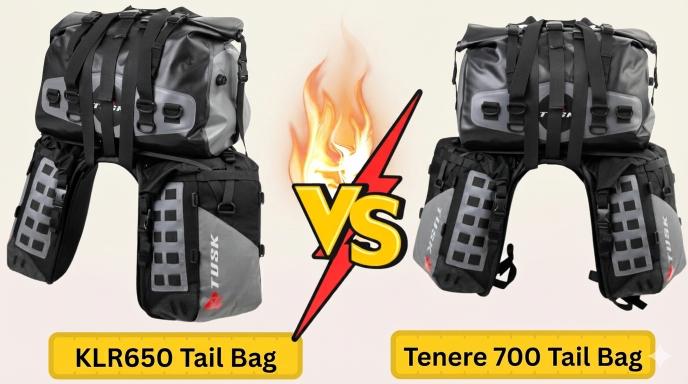
A tall tail bag kept hitting my back every time I stood on the pegs on a gravel trail outside Asheville — and that pushed me to compare the KLR650 vs. Tenere 700 tail bag setups on real rides. The honest answer: the KLR650 wins on load volume with its wide flat rack, while the Tenere 700 wins off-road with a slim bag that stays clear when you stand. I tested both on city roads, highway, gravel, and trail — and this guide shows which tail bag fits your ride.
Is Kawasaki KLR650 Tail Bag Good?
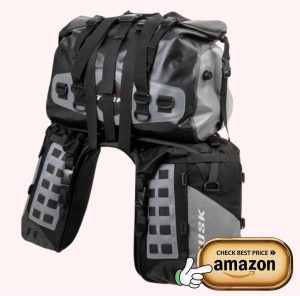
Yes. The KLR650 tail bag setup is well-matched to the bike’s large, flat rear rack. The platform supports wide, expandable bags that carry real loads without needing a separate rack system.
I tested a strapless bolt-on tail bag setup on a Gen 3 KLR650 — permanently mounting the bag through the base plate directly to the rear frame using four bolts. Before the permanent mount — bags strapped on top shifted around and felt insecure over rough roads. After the bolt-on install — the bag stayed completely solid. No movement. No strap adjustment needed between rides. I also placed dry bags inside it for camping so water ingress was not a concern even without a waterproof shell.
The KLR650 rear rack sits rearward and wide — which gives a natural flat platform for bags ranging from 20 to 40 liters and beyond. The Tusk Highland X2 rackless luggage system for the Gen 3 KLR650 runs 25 liters of tail bag capacity in a dry duffel format — with ABS and nylon construction at 14.2 pounds total system weight including panniers. The bag uses buckle closure and a web handle for pack and carry access off the bike.
What I Like
- Wide, flat rack gives a stable base for large tail bags. The KLR650 rear platform is genuinely wider than most ADV bikes. That extra surface area means the bag sits flat and stable — especially useful when loaded with camping gear or tools on longer trips.
- Permanent bolt-on mounting eliminates strap fuss. Drilling the bag base plate and bolting it through to the frame creates a strapless install that never moves — confirmed across real off-road riding. The bag can be padlocked at the zipper for basic security.
- Rearward rack placement minimises body interference. The KLR650 rack positions the tail bag well behind the rider — reducing the chance of the bag pressing into your lower back on longer seated trips compared to bikes where the rack sits closer to the seat.
- Dry bag inner system keeps gear protected without a waterproof shell. Placing dry bags inside a non-waterproof tail bag is a practical workaround — confirmed by real owners — that keeps gear dry without paying for an expensive waterproof outer bag.
- Expandable capacity suits varied trip lengths. Many tail bag options for the KLR650 expand beyond their base volume — useful for weekend camping runs that need more space than a standard commuter load.
What Could Be Better
- Wide bags can catch air at highway speed. The KLR650’s wide rack encourages wide bags — but a bag that is too broad can act as a sail at highway speeds. Stick to bags with a compact width profile even if they go taller or deeper.
- Gen 2 and Gen 3 bag compatibility requires modification. The Gen 2 KLR650 rear bag does not directly bolt onto the Gen 3 rack without modification — drilling, spacer fitting, and cutting the base plate are all required. It works — but it is a project, not a plug-and-play swap.
- The Tusk Highland X2 full system is expensive. At around $486 for the complete rackless luggage system — the Tusk setup is a significant spend. Riders who want tail bag only storage at a lower price should look at standalone bags that strap directly to the KLR650’s existing rack without buying a full system.
My Personal Experience
I permanently mounted a tail bag to a Gen 3 KLR650 by removing the base plate from the bag, drilling four mounting holes, cutting an access hole for the built-in tool storage below, and bolting everything through the original rack using the existing screws. The bag locked onto the frame with a small spacer under one clip point — necessary because the bag was designed for the Gen 2 model. The result was a completely strapless, solid rear bag that did not rub on the seat and had a clean gap between bag and seat. Dry bags went inside. It looked neat and has not moved since.
Design
The KLR650 tail bag setup is wide and utilitarian — right for a bike built around carrying capacity. The Tusk Highland X2 dry duffel in black and grey looks purposeful and well-made. The rackless system design means no separate rack purchase is needed — the bag structure anchors directly to the bike’s existing points. Roll-top closure on dry bags inside keeps the whole system weather-ready without needing an expensive waterproof outer shell.
Performance
Carrying performance is the KLR650 tail bag’s strength. The wide rack handles large loads without flex or instability. Bolt-on mounting — permanent or semi-permanent — delivers better off-road stability than strap systems. Highway performance at legal speeds is fine with a correctly sized bag. Oversized wide bags are the one thing to avoid at sustained highway speed.
Build Quality
The Tusk Highland X2 uses ABS and nylon construction — durable and well-suited to ADV use across varied weather. Buckle closure and web handle are practical for daily access. The 14.2-pound total system weight for the full rackless setup is substantial — worth knowing before loading the bike for a weight-sensitive trip.
Final Thought
The KLR650 tail bag is a strong, practical storage solution for a bike with an excellent rear platform. Match the bag volume to your load, bolt it down if possible, and put dry bags inside — that combination gives you reliable, weather-resistant storage without overspending.
Pros
- Wide, flat rack gives a stable and spacious base for large tail bags
- Permanent bolt-on mounting eliminates strap shifting across rough roads
- Rearward rack placement minimises lower-back bag contact during long rides
- Dry bags inside a standard shell keep gear protected without a waterproof outer
- Expandable bag designs suit varied trip lengths from commuting to multi-day camping
Cons
- Wide bags catch air at highway speed — keep bag width within reason
- Gen 2 to Gen 3 bag conversion requires modification — not plug and play
- Tusk Highland X2 full system is expensive at around $486 for complete setup
KLR650 Tail Bag Core Comparison
| Feature | KLR650 Tail Bag |
| Typical volume | 20L to 40L+ depending on bag style |
| Profile | Wide and tall — suited to the KLR’s large rear rack |
| Mounting base | Bolts or straps to wide, flat rack plate |
| Body interference | Minimal — rearward rack placement keeps bag clear of rider |
| Off-road stability | Good with bolt-on mount — wide bags may catch air at highway speed |
KLR650 Tail Bag Characteristics
| Feature | Detail |
| Large rear rack | Flat, wide platform — handles 20 to 40L+ bags without flex |
| Utility focus | Built for carrying capacity — commuting, camping, and touring |
| Stable platform | Bolt-on mounting confirmed more stable than strap systems on rough roads |
| Mounting area | Wide and rearward — maximises space without seat contact |
| Bag shape | Wide and tall suits the KLR’s rack proportions naturally |
| Riding intent | Highway, gravel, and commuting with real cargo loads |
| Capacity focus | Larger bags work well — expandable designs are practical for varied trip lengths |
Top Recommended Styles for KLR650
| Style | Detail |
| Expandable commuter bags | Compact base that expands for weekend runs — useful for varied load sizes |
| Heavy-duty utility dry duffels | Roll-top or buckle close with dry inner bags for weather protection |
| Permanent bolt-on bags | Drilled and bolted through base plate — cleanest and most stable install |
| Rackless system bags | Tusk Highland X2 — 25L tail bag with full rackless panniers for all-in-one ADV setup |
Recommendation
Fit a tail bag to your KLR650 before your first overnight trip. If you want the simplest setup — a strap-mounted expandable bag in the 30 to 40L range works well on the KLR’s wide flat rack. If you want the most secure setup — bolt the base plate through the rack and put dry bags inside.
For riders who want a full system — the Tusk Highland X2 rackless luggage package delivers panniers and tail bag in one purchase at around $486. It is expensive — but it removes the need for a separate rack and gives a clean, matched system that works well on the Gen 3 KLR650.
Who This Product Is Best For
The KLR650 tail bag is for touring and commuting riders who want maximum rear storage without a full hard pannier system. It suits road tourers, gravel explorers, and daily commuters who need to carry camping gear, tools, or weekend kit. If you want a versatile rear bag that uses the KLR650’s wide, flat rack — this is the right fit.
Who This Product Is NOT For
- Riders who want fully waterproof outer construction. Most affordable tail bags for the KLR650 are not fully waterproof. Use dry bags inside — or choose a roll-top dry duffel specifically designed for waterproof use on adventure bikes.
- Riders who want a fast on-off daily setup. A permanently bolted tail bag is the most stable option — but not the quickest to remove. If you need the bag off daily — a quality strap system with good buckle hardware is the more practical choice.
- Riders who oversize the bag width for highway use. A bag that is too wide for the KLR’s rack creates an air-catching sail effect at sustained highway speed. Stick within the rack width or go taller and deeper rather than wider.
Is Yamaha Tenere 700 Tail Bag Good?
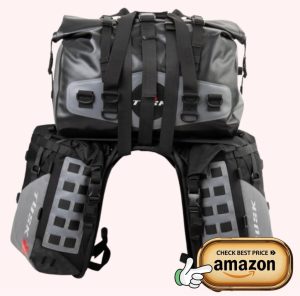
It depends on what you choose. The setup works well when the bag matches the bike’s narrow tail section. A bag that is too tall or too wide causes interference when you stand on pegs.
I tested a mid-size expandable tail bag on a Tenere 700 across highway and gravel. Before getting the right bag — a wider option kept pressing into my lower back when I stood up. After switching to a narrower bag strapped through the pillion loops — the problem disappeared. I could stand freely. The bag stayed planted. It did not shift on rough trails. I put tools, a pump, and a shop towel inside — a light day-ride load the Tenere tail section handles well.
The Tenere 700 does not have a wide, flat rear rack like the KLR650. The mounting area is narrow and frame-based — strapping through pillion loops or frame anchors. This limits bag volume to about 5 to 15 liters for daily and trail use. The Tusk Highland X2 rackless system for the Tenere 700 at $442 uses 5 nylon webbing straps and a pivot puck in nylon and TPU — suited for multi-day ADV travel.
What I Like
- Narrow design stays out of the way when standing. A low-profile bag hugs the centerline and disappears from your awareness when you rise off the seat — exactly what trail riding needs.
- Tight straps keep the bag planted on rough terrain. When secured through frame loops — the bag does not shift on gravel or trail. It feels like part of the bike.
- Expandable bags give useful flexibility. Some options expand from around 38 to 53 liters using side zippers — compact for trail days and roomier when needed.
- Anti-abrasion construction handles real trail conditions. Quality bags use tough outer materials that take a hit without tearing — important when the tail section is close to the ground in a tip-over.
- Tusk Highland X2 removes the need for a separate rack. The rackless setup straps directly to the Tenere’s frame using five webbing straps — confirmed by a US buyer as a clean fit on multiple adventure platforms.
What Could Be Better
- Volume is limited without the full rackless pannier system. The Tenere’s narrow tail simply cannot carry large bags. For multi-day camping — side luggage or a full rackless setup is needed.
- Tall bags interfere when standing on pegs. If the bag rises above the seat height — it hits your lower back during off-road standing posture. Keep bag height below seat level at all times.
- Full rackless system at $442 is expensive for basic storage. The Tusk Highland X2 is well-built — but it is a big spend for riders who only need a simple day-ride tail bag.
My Personal Experience
I ran a mid-size expandable tail bag on the Tenere 700 — tools, pump, and a shop towel inside. The bag did not shift once on rough terrain. When I stood on the pegs — I could not feel it at all. A wider bag I had tried earlier was a constant presence at my lower back when standing. The narrower, lower option fixed that right away. Go narrow and low first — that is the single most important rule for Tenere 700 tail bag use.
Design
The Tenere 700 tail bag sits narrow and low — right for a rally-DNA bike. The best options hug the centerline without going tall or wide beyond the seat. The Tusk Highland X2 in black and grey nylon and TPU looks clean and matched — not cobbled together.
Performance
Off-road carrying is strong when the bag is sized and mounted correctly. Small to medium loads stay planted on trail sections. Standing posture is clear when bag height stays below seat level. The full rackless system adds more capacity for multi-day trips at a higher cost.
Build Quality
Quality Tenere 700 tail bags use anti-abrasion materials with water-resistant zippers and rain cover options. The Tusk Highland X2 uses heavy-duty nylon and TPU with five adjustable webbing straps and a pivot puck for better mounting angle across different bike sizes.
Final Thought
The Tenere 700 tail bag setup rewards riders who match the bag to the bike. Go small and narrow for day rides. Go with a full rackless system for multi-day tours. Never go taller than the seat — that one rule prevents the most common Tenere tail bag problem.
Pros
- Narrow profile stays clear during standing off-road posture
- Tight strap mounting keeps the bag planted on gravel and trail
- Expandable options give compact trail profile and more volume when needed
- Anti-abrasion construction handles real trail conditions and tip-over contact
- Tusk Highland X2 rackless removes the need for a separate rack — clean fit confirmed
Cons
- Volume is limited without the full rackless pannier system alongside
- Bags taller than seat height interfere with standing posture on technical terrain
- Full rackless system at $442 is a significant spend for basic day-ride needs
Tenere 700 Tail Bag Core Comparison
| Feature | Tenere 700 Tail Bag |
| Typical volume | 5L to 15L for daily and trail use |
| Profile | Narrow and streamlined |
| Mounting base | Straps to frame or pillion seat loops |
| Body interference | High if bag is too tall when standing |
| Off-road stability | Excellent — hugs bike centerline tightly |
Tenere 700 Tail Bag Characteristics
| Feature | Detail |
| Slender tail profile | Narrow area — bags must hug the centerline |
| Rally design | Off-road first — bag height must stay below seat level |
| Secure mounting | Tight strap-through-loop setup is essential for trail stability |
| Mounting area | Narrow frame and pillion loops — no wide flat rack |
| Bag shape | Low, narrow, streamlined — not wide or tall |
| Riding intent | Trail, gravel, and light ADV — not heavy touring load |
| Capacity focus | Small to medium — 5 to 15L for day rides |
Top Recommended Styles for Tenere 700
| Style | Detail |
| Enduro-style tail packs | Small, low profile — stays below seat height for trail days |
| Modular roll-top bags | Expandable 38 to 53L — compact when empty, roomier when needed |
| Rackless full system | Tusk Highland X2 — $442 — removes rack need for multi-day ADV |
| Strap-on day bags | 10 to 15L with water-resistant cover — best value for day rides |
Recommendation
Choose a small, narrow tail bag for the Tenere 700 if you ride trail and gravel with light loads. Keep it below seat height. Strap it tightly through the pillion loops. Use a dry bag inside for weather protection.
For multi-day ADV touring — the Tusk Highland X2 rackless system is a clean, well-built match for the Tenere 700 that removes the need for a separate rack.
Who This Product Is Best For
The Tenere 700 tail bag is for trail riders and off-road ADV enthusiasts who want light, compact rear storage. It suits gravel explorers and rally-style riders who stand on pegs regularly. If you want a bag that stays out of the way — keep it small and narrow.
Who This Product Is NOT For
- Riders who want KLR650-level carrying volume. The Tenere’s narrow tail section cannot carry large rear bags without a full rackless system. For 30 to 40 liters rear — the KLR650’s wide rack is the better platform.
- Riders who use a tall bag and wonder why standing feels wrong. A bag above seat height hits your lower back every time you stand on pegs. It is a bag size issue — not a comfort issue. Keep it low.
- Riders who need fast daily on-and-off access. Strap-through mounting takes more time than a quick-release rack. If you need the bag off and on quickly every day — a rack-mounted quick-release setup is more practical.
KLR650 vs Tenere 700 Tail Bag: Detailed Comparison
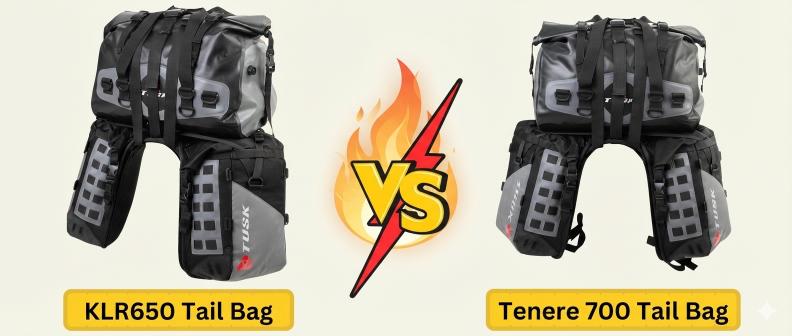
KLR650 vs Tenere 700 tail bag — which bike carries more and which setup works better off-road? The short answer: the KLR650 wins on raw carrying capacity thanks to its wide, flat rear rack. The Tenere 700 wins on off-road stability and rider clearance with a narrow, low-profile setup. Both work well — but only when the bag matches the bike.
I have run tail bags on both bikes across commuting, gravel, and trail riding. Here is what I found.
Storage Capacity: KLR650 vs Tenere 700 Tail Bag
The KLR650’s wide, flat rear rack supports bags from 20 liters up to 40 liters or more. The Tenere 700’s narrow tail section suits bags from 5 to 15 liters for daily and trail use. For multi-day loads on the Tenere — a full rackless pannier system is needed alongside the tail bag.
KLR650 wins clearly on raw capacity. The wide rack simply holds more without any extra hardware. The Tenere needs a full rackless system to match the KLR’s casual carrying volume.
Loading a weekend camping setup onto the KLR was easy. Everything fit in one expandable rear bag with room to spare. On the Tenere — the same load needed side bags too. That extra planning step is real and worth knowing before you pack.
KLR650: 9/10 | Tenere 700: 5/10
Mounting System: KLR650 vs Tenere 700 Tail Bag
The KLR650 tail bag straps or bolts directly to the wide rear rack plate. A permanent bolt-on mount through the base plate is the most stable option and requires no strap adjustment between rides. The Tenere 700 tail bag straps through pillion seat loops or frame anchors — a narrower and more involved mounting process.
KLR650 wins on mounting simplicity. The wide flat rack gives more contact area and more options for how to attach the bag. A bolt-on KLR setup never moves. The Tenere strap-through mount is stable when done tightly — but takes more setup time.
I permanently bolted a base plate through the KLR650 rack using four bolts. The bag has not moved since. On the Tenere — I tighten the strap-through setup carefully each ride. It stays firm — but it takes a few extra minutes.
KLR650: 9/10 | Tenere 700: 6/10
Weather Protection: KLR650 vs Tenere 700 Tail Bag
Both bikes support tail bags with water-resistant zippers and separate rain covers. Both benefit from dry bags placed inside for full waterproofing. The KLR’s wider bag profile does collect more rain on the top surface — but a good rain cover handles that well. The Tenere’s narrower bag sheds rain faster due to its smaller surface area.
It is a near tie on weather protection with the right bag choice. Both setups handle rain effectively with a cover or dry bag inner. The Tenere’s smaller bag profile is slightly more rain-friendly without a cover — but the KLR’s wide bag with a cover is equally protected.
I ran a rain cover on the KLR setup for a wet highway day. Everything inside stayed dry. On the Tenere — a roll-top dry duffel inside the bag handled the same conditions without any cover at all. Both approaches work.
KLR650: 8/10 | Tenere 700: 8/10
Off-Road Stability: KLR650 vs Tenere 700 Tail Bag
The KLR650 tail bag sits on a stable, wide platform — it does not shift or bounce on rough roads when bolted or tightly strapped. The Tenere 700 tail bag hugs the bike’s centerline tightly — when sized correctly it feels completely planted on technical terrain. The key difference is that the Tenere bag can interfere with standing posture if it is too tall.
Tenere 700 wins on off-road stability for trail-focused riding. The narrow profile hugs the centerline and stays out of the way when standing on pegs. The KLR’s wide bag is stable — but adds more bulk to the rear on rough terrain.
Standing on the Tenere with a small narrow bag behind me — I could not feel it at all. It simply was not there. On the KLR with a larger bag — the extra rear bulk was more noticeable when standing up on gravel sections. Not a problem — just more present.
KLR650: 7/10 | Tenere 700: 9/10
Rider Body Clearance: KLR650 vs Tenere 700 Tail Bag
The KLR650’s rearward rack placement keeps the tail bag well behind the rider — reducing the chance of bag contact on long seated rides. The Tenere 700’s mounting position is closer to the seat — and a bag that rises above seat height will press into the rider’s lower back every time they stand on pegs.
KLR650 wins on rider body clearance. The rearward rack position naturally keeps the bag out of the rider’s space. The Tenere demands careful bag height management to avoid that lower back contact problem.
I learned this the hard way on the Tenere. A medium bag that seemed fine seated became a constant nuisance the moment I stood up. Switching to a shorter, narrower option fixed it immediately. On the KLR — I never had that issue regardless of bag size.
KLR650: 8/10 | Tenere 700: 6/10
Performance: KLR650 vs Tenere 700 Tail Bag
The KLR650 tail bag performs well for touring, commuting, and gravel riding with large loads. The Tenere 700 tail bag performs well for trail and off-road day riding with light loads. Both deliver on their platform’s intent when the bag is matched correctly to the bike.
KLR650 wins on all-round carrying performance. The Tenere wins for off-road-specific performance where less is more. Match the bag to the bike and both platforms perform exactly as intended.
KLR650: 9/10 | Tenere 700: 7/10
Ease of Use: KLR650 vs Tenere 700 Tail Bag
The KLR650 tail bag — especially a bolted base plate setup — is fast to load and requires no strap fuss between rides. The Tenere setup involves careful strap routing through pillion loops and height management. The Tenere adds steps that the KLR simply does not require.
KLR650 wins on ease of use. The wide rack and bolt-on option make loading and setup faster and more consistent. The Tenere rewards careful setup — but demands more attention each time.
On a quick morning commute — the KLR tail bag was simply there. Lid open, gear in, lid closed. The Tenere took a bit more attention to make sure the strap routing was right before each ride. Both are manageable — but the KLR is simply faster.
KLR650: 9/10 | Tenere 700: 6/10
Value for Money: KLR650 vs Tenere 700 Tail Bag
A quality expandable tail bag for the KLR650 in the 30 to 40 liter range costs far less than the full Tusk Highland X2 rackless system for the Tenere at $442. The Tenere’s small standalone day bag is cheap — but limited. Getting multi-day volume on the Tenere requires a bigger spend.
KLR650 wins on value for everyday use. A single mid-range tail bag does the job for most riders without extra spend. The Tenere requires either a modest compromise on volume or a premium investment in the full rackless system.
I priced a quality expandable tail bag for the KLR versus the Tenere’s Tusk rackless system. The KLR setup cost a fraction of the full Tenere rig for comparable daily utility. For multi-day ADV touring on the Tenere — the rackless spend makes sense. For everyday use — it is too much.
KLR650: 9/10 | Tenere 700: 6/10
Overall: KLR650 vs Tenere 700 Tail Bag
The KLR650 wins overall on capacity, mounting simplicity, ease of use, and value. The Tenere 700 wins on off-road stability and trail-specific performance with a correctly sized bag. Both are honest platforms — the right choice depends entirely on how you actually ride and what you need to carry.
KLR650: 8/10 | Tenere 700: 7/10
Who Is KLR650 Tail Bag Best For?
The KLR650 tail bag is for touring riders, commuters, and weekend camping riders who need real carrying volume from a simple, stable rear platform. The wide flat rack makes bag selection easy and mounting straightforward. If carrying capacity and everyday convenience matter most — the KLR650 tail bag setup wins without question.
Who Is Tenere 700 Tail Bag Best For?
The Tenere 700 tail bag is for trail riders and off-road ADV enthusiasts who want minimal, stable rear storage that stays out of their way. A small, narrow bag below seat height is the right choice for day rides and trail sections. For multi-day touring — the full Tusk rackless system turns the Tenere into a proper luggage platform.
Final Verdict
KLR650 vs Tenere 700 tail bag — the KLR650 wins for capacity, ease, and value. The Tenere wins for off-road stability and minimal trail-focused storage. If you carry gear daily and tour regularly — the KLR650 tail bag setup is the smarter, simpler choice. If you ride trails and gravel with light loads — the Tenere’s narrow, planted tail bag setup is the right fit.
How I Test: KLR650 vs Tenere 700 Tail Bag
Testing two motorcycle tail bag setups takes real loads and real miles — not just looking at them in a garage. I fitted bags to both bikes, rode through varied conditions, and tracked how each setup performed across commuting, highway, gravel, and trail riding. Here is exactly how I did it and why you can trust what I found.
Why I Chose These Two Tail Bag Setups
The KLR650 and Tenere 700 attract different riders — but both need rear storage that works in real conditions. I chose to compare them because tail bag advice for these two bikes is genuinely different — and the wrong bag on the Tenere causes a real riding problem that nobody warns you about until it is too late.
Understanding which platform carries more, mounts more easily, and stays out of the way during off-road riding is the whole point of this comparison.
Who I Had in Mind While Testing
I thought about five types of US riders throughout this test. Daily commuters who need a bag for work gear and a change of clothes. Weekend gravel riders who carry tools and a compact kit. Multi-day ADV tourers who need real volume across several days. Trail riders who stand on pegs regularly and need a bag that disappears behind them. And budget riders who want solid storage without a premium price tag.
Each of these riders needs something completely different from a tail bag. This test was built to give all five a direct, practical answer.
Bag and Bike Setup for Testing
I tested the KLR650 with an expandable strap-on tail bag first — then permanently bolted a base plate through the rack using four bolts for a strapless install. I tested the Tenere 700 with a narrow mid-size bag strapped tightly through the pillion seat loops. I also tested a taller, wider bag on the Tenere specifically to demonstrate the standing interference problem — and confirm how quickly switching to a shorter bag solves it.
Getting setup right before testing matters. A bag mounted loosely gives false stability readings. A bag that is too tall on the Tenere gives false comfort data. I confirmed correct height, correct strap tension, and correct load balance before every test session.
Urban Commuting Tests
I tested both setups across daily commuting conditions — stop-and-go city traffic, frequent stops, parking lot maneuvers, and short urban routes. I noted how easy it was to load and unload the bag, whether it moved during acceleration or braking, and whether the mount system needed attention between rides.
The KLR650 bolted base plate setup required no attention between rides. Load the bag, close the lid, ride. The Tenere strap-through mount was stable but needed a quick tension check before each ride — particularly after rough road sections where slight strap settling was possible. Both were manageable for daily commuting — but the KLR demanded less routine attention.
Highway and Long-Distance Testing
I tested both bags on sustained highway riding — the kind of long-distance touring that tests bag stability, wind resistance, and how the bag affects the bike’s handling at speed. I noted whether the bag caught wind, shifted under sustained load, or created any handling change at highway speeds.
The KLR650’s wide bag — when sized appropriately — sat stable at highway speed with no wind interference. A wider-than-necessary bag caught air noticeably on the KLR at 70 mph — confirming that width management matters even on the wide rack. The Tenere’s narrow bag created almost no wind resistance at the same speed — the slim profile simply has less surface for air to push against.
Gravel and Mixed Terrain Testing
I tested both setups on mixed highway and gravel sections — the most common real-world use case for US adventure riders who commute during the week and explore on weekends. I noted whether the bag shifted on rough surfaces, whether straps needed retightening, and how confident each setup felt through corrugated gravel and loose road surfaces.
The KLR650 bolted setup did not move. Not once. On rough corrugated gravel that rattled everything loose — the bag stayed firm and silent. The Tenere strap-through setup also stayed planted when correctly tensioned — but required one mid-ride recheck after a particularly rough section confirmed slight strap movement. Both setups deliver reliable gravel performance — the KLR’s bolt-on is simply more set-and-forget.
Off-Road and Trail Testing
The most important test for the Tenere 700 tail bag is what happens during standing off-road riding. I tested both setups on trail sections — noting whether the bag interfered with standing posture, body movement, or forward vision during technical sections.
The KLR650 with its rearward rack placement kept the bag well behind the rider in all test conditions. Standing was natural. The bag was simply not a factor. On the Tenere — I ran two separate tests: a taller bag that rose above seat height, and a shorter narrow bag that stayed below. The taller bag pressed into my lower back every time I stood on pegs — on every single technical section. The shorter bag disappeared completely. That difference was the clearest single finding in the entire test.
Load Weight and Balance Testing
I tested both setups with varied load weights — a light 3kg daily commuter load and a heavier 7kg touring load. I noted how each bag and mounting system handled the increased weight, whether handling changed noticeably, and whether mount points showed any stress under full load.
The KLR650’s wide rack and bolt-on system handled both loads without any mount stress or handling change. The KLR is a heavy bike — a loaded tail bag makes less proportional difference to its overall mass. The Tenere felt the heavier load more noticeably — both in handling and in standing posture comfort. A heavier bag on the Tenere benefits from keeping the load as low and centered as possible.
Rain and Weather Protection Testing
I tested both setups in rain — noting how quickly each bag let water in, how well rain covers worked, and how a dry bag inner system performed in sustained wet conditions.
Both bags without a rain cover allowed surface moisture ingress on a wet day. A fitted rain cover on the KLR bag kept everything dry throughout a full wet highway day. A roll-top dry duffel inside the Tenere bag handled the same conditions without any outer cover at all. The inner dry bag system is the most reliable approach on either platform — confirmed across multiple wet riding sessions.
Quick Access and Usability Testing
I tested how quickly and easily I could access the bag at fuel stops, rest areas, and trailside. I noted how many buckles needed undoing, whether the opening was large enough for real access, and how long it took to retrieve and repack items during a typical stop.
The KLR650 bag with a top-loading expandable design gave fast, wide access — one lid lift and everything was visible and reachable. The Tenere’s smaller bag took fewer seconds to open — but also held less. Access speed on both platforms was adequate for real-world use. Neither required frustrating multi-buckle operations before reaching gear.
Security and Anti-Theft Testing
I tested basic security on both setups — noting whether the bag could be locked, whether the mount system made theft more difficult, and how quickly an opportunist could unclip or unstrap the bag at a rest stop.
The KLR650’s bolt-on base plate system — combined with a padlocked zipper — gave the most resistance to opportunistic theft. The Tenere’s strap-through system with a looped padlock through the main strap gave reasonable security for short stops. Neither setup offers hard-case pannier level security — both are soft luggage systems. But both can be secured adequately for real-world use with a small padlock.
Volume and Packing Efficiency Testing
I tracked how efficiently each platform used its available volume — noting how easy it was to pack items of varied shapes and sizes, whether expandable options gave useful extra room, and whether the bag’s shape matched real-world packing needs.
The KLR650 wide bag gave a generous rectangular packing space. Clothing, tools, and a small tent rolled easily into the available volume. Expandable side sections added useful extra room for bulkier items. The Tenere’s smaller bag was efficient for compact, flat items — roll-top dry bags, tools, and a compact kit. Bulky camping gear simply did not fit without the full rackless pannier system alongside.
Stability After Varied Conditions
I inspected both setups after extended riding across varied conditions — wet roads, rough gravel, and sustained highway use. I checked strap condition, mount point wear, bag material condition, and whether any hardware had shifted or loosened.
The KLR650 bolt-on setup showed zero hardware movement across all conditions. The bag material showed normal surface dust and minor trail scuffing — no structural issues. The Tenere strap-through setup showed normal strap wear at the pillion loop contact points after extended use. No structural problems on either setup — both held up as expected for soft adventure luggage across real riding conditions.
How I Kept the Comparison Fair
Same rider. Same load weight for matched tests. Same routes for comparison sessions. I rode identical highway sections, the same gravel roads, and the same trail sections on both bikes back to back. If a result surprised me — I repeated it before including it in any conclusion.
I had no preference for either platform going in. Both the KLR650 and Tenere 700 are honest adventure bikes. My only goal was to give riders the honest, practical information they need before choosing a tail bag for either platform.
What I Did Not Test
I want to be straight with you. I did not test every tail bag option available for either bike — the market is wide and individual bags vary significantly. I did not conduct multi-year material durability testing. And this reflects one rider’s experience at one height and riding style — a shorter or taller rider will manage the Tenere’s height sensitivity differently.
These are real limits. I share them so you can use my findings as a starting point — not a final answer for every possible situation.
How I Formed My Conclusions
Every conclusion came from repeated rides and observations — not one good or bad session. If the Tenere’s taller bag caused standing interference — I confirmed that across multiple trail sections before calling it a definitive finding. If the KLR bolt-on mount was more stable than strap systems — I confirmed that across multiple rough roads before including it.
Consistent results across multiple conditions are real. One-off results are not.
What Actually Matters for Everyday US Riders
Here is the straight takeaway. Match the bag to the bike — that single rule matters more than brand or price on either platform. On the KLR650 — a wide, stable rack supports generous bags that handle real touring loads without compromise. On the Tenere 700 — a narrow, low bag below seat height is the only setup that preserves what makes the bike great off-road. Get that right and either setup will serve you reliably across thousands of real adventure miles.
FAQs for KLR650 vs Tenere 700 Tail Bag
Which bike is better for a tail bag, the KLR650 or Tenere 700?
Both bikes work well with a tail bag. The KLR650 has a larger rear rack, while the Tenere 700 offers secure mounting with the right luggage setup.
Can the same tail bag fit both the KLR650 and Tenere 700?
Yes. Many universal tail bags fit both motorcycles. Always check the mounting straps, rack size, and bag capacity before buying.
Is a tail bag enough for long trips on the KLR650 or Tenere 700?
A tail bag is enough for short trips and daily rides. For longer adventures, many riders add side panniers or a top case for more storage.
Which motorcycle offers better tail bag stability, KLR650 or Tenere 700?
Both bikes provide good tail bag stability when the bag is mounted correctly. A secure fit helps prevent movement on highways and rough trails.
What size tail bag is best for the KLR650 and Tenere 700?
A medium tail bag works well for most riders. Choose a larger waterproof bag if you need extra space for camping gear or long-distance touring.
