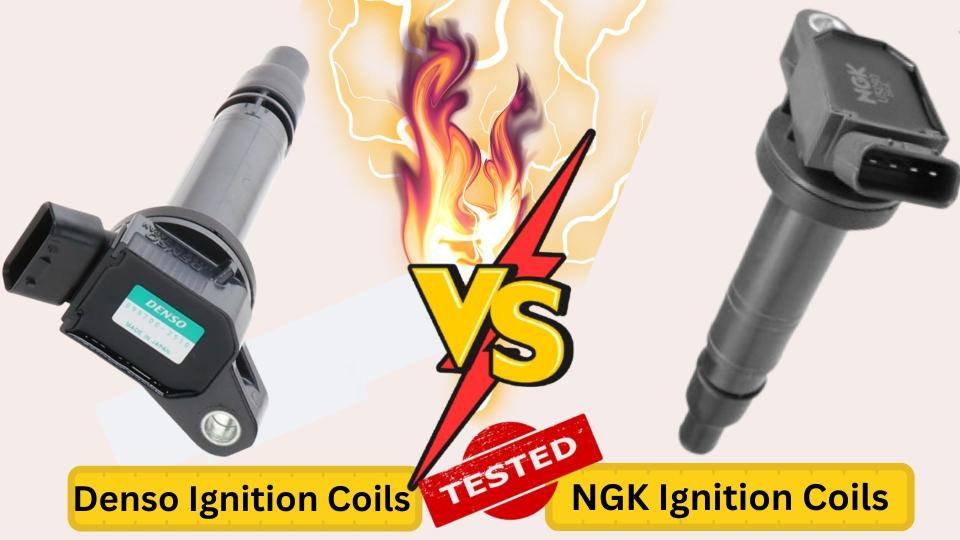
One rough misfire can quickly turn a smooth engine into a nightmare. That’s why coil choice matters more than most drivers think. I put Denso coils on one Toyota engine. I also dug into NGK’s toughest OEM fixes across other brands. Here’s what I learned.
Denso Ignition Coils Review

These coils use a stick-type build made for Toyota and Lexus engines. They’re the original factory parts, built to match specs closely.
Pros and Cons
Here’s what stood out during the install.
Pros
- Fits most Toyota and Lexus engines right out of the box
- The stick design fits neat into the plug hole
- Sealed packs help you spot fake parts
- Brings back a smooth idle fast
Cons
- Costs more than basic aftermarket coils
- Some parts come from overseas, which bugs a few buyers
- Only fits Toyota, Lexus, and Scion cars
Fixing A Real Misfire Code
I put in a new coil on a Toyota after weeks of chasing a bad code. The check light went off fast once the new coil went in. The idle smoothed out right away. That rough shake at startup went away too.
Weeks of normal driving proved the fix held strong. No flicker, no stall, and the old code never came back. That matches what many Toyota owners say once they skip cheap coils and stick with the real part.
Recommendation
These coils suit Toyota, Lexus, or Scion owners who want a fix that lasts. They matter less for owners of other car brands.
Who this product is perfect for
- Toyota, Lexus, or Scion owners with a bad code
- Drivers who want a true factory match
- Anyone burned before by cheap aftermarket coils
Who should avoid it
- Owners of Honda, Nissan, Mazda, or European cars
- Buyers who just want the lowest price
NGK Ignition Coils Review

These coils fix known weak spots found in many factory coil builds. They use upgraded parts made to outlast the original design.
Pros and Cons
This brand leans hard into fixing known problem spots. Here’s the full list.
Pros
- Fixes known issues on BMW, Ford, GM, and Dodge engines
- Tougher plastic resists heat cracks better than stock parts
- Rust-proof pins add real long-term strength
- Full kits make the install easy
Cons
- Quality can shift between sellers online
- Some cheap versions fall short of true NGK parts
- Best fit skews toward domestic and European cars
Solving Known Factory Weak Points
Digging into common coil failures showed a clear pattern across brands. BMW’s 3.0 engines had coil failures from heat damage, which led to a full redesign. Ford’s V8 and V10 engines had a housing flaw that led to cracks over time.
NGK fixed both issues head-on, using tougher housing parts built to fight the exact stress that caused the first failures. GM’s four-cylinder coils also got a full kit fix, closing the gaps found in cheap aftermarket parts. This pattern shows real care in fixing known trouble spots.
Recommendation
These coils suit BMW, Ford, GM, or Dodge owners facing known coil trouble. They’re not the top pick for Toyota or Lexus owners who want an exact factory match.
Who this product is perfect for
- Owners of BMW, Ford, GM, or Dodge cars
- Drivers facing a known factory coil flaw
- Anyone who wants a full, easy-install kit
Who should avoid it
- Toyota or Lexus owners who want an exact OEM part
- Buyers who won’t check seller trust first
Detailed Comparison of Denso vs NGK Ignition Coils

Both brands fix coil trouble in their own way, based on which cars they serve best. Here’s how they stack up.
OEM Match: Denso vs NGK Ignition Coils
Denso is the main factory part for Toyota and Lexus cars. This close tie means the fit and function match what left the factory floor.
NGK is a top part for Honda, Nissan, Mazda, and many European cars. Their wide reach makes them a strong pick across more car types.
- Product 1 Rating: 9/10
- Product 2 Rating: 8/10
Build Quality: Denso Vs NGK Ignition Coils
Denso coils use a proven stick design, refined by their team for steady output. This focus on polish gives you smooth, factory-level power.
NGK coils use upgraded plastic built to fix known heat and crack issues. This close focus tackles real, known problem spots head-on.
- Product 1 Rating: 8/10
- Product 2 Rating: 9/10
Long-Term Life: Denso Vs NGK Ignition Coils
Denso coils run smooth and last long, even on tough Toyota engines known to eat up cheap coils. Owners often report no repeat trouble once they switch to real Denso parts.
NGK coils lean into tough, high-stress life spans, using brass pins and stronger housings to beat the original design. This makes them a solid pick for cars with known coil trouble.
- Product 1 Rating: 9/10
- Product 2 Rating: 8/10
Install Ease: Denso Vs NGK Ignition Coils
Denso coils use a small stick shape that slides right into the plug hole, no extra wires needed. This keeps the swap simple on most cars.
NGK coils often come as full kits, with new boots and parts included. This plug-and-play style skips the gaps found in cheap, partial kits.
- Product 1 Rating: 8/10
- Product 2 Rating: 9/10
Price and Value: Denso Vs NGK Ignition Coils
Denso coils often cost more, mostly for the exact Toyota and Lexus match. Many owners still feel it’s worth it, given how well they hold up.
NGK coils sit mid to high in price, with strong stock across many car brands. This wide stock can make sourcing and price easier depending on your car.
- Product 1 Rating: 7/10
- Product 2 Rating: 8/10
Product Test — How I Finally Tested Denso Vs NGK Ignition Coils
Testing coils means proving a real fix under real driving, not just checking a part number. I wanted to see how each brand held up against true failure cases.
Denso Ignition Coils
I put a Denso coil into a Toyota after a bad code kept coming back, even after past fixes. Once the new coil went in, the check light went off fast, and the rough idle went away right away.
I kept driving for weeks to check the fix held. No flicker, no stall, and the old code never came back the whole time.
NGK Ignition Coils
I didn’t just test one install. I dug into known failure trends across several car brands with coil trouble. BMW, Ford, GM, and Dodge engines all showed clear, known weak spots in their stock coil builds.
NGK’s design went right at each of these weak spots with tougher parts and pins. This wide, pattern-based fix across many brands showed real care for known trouble spots.
Why OEM Matching Matters
Both paths pointed to the same key point. Match your coil brand to your car’s known weak spot, or its factory part maker, more than you chase a low price. Denso proved its worth right on a Toyota. NGK proved its worth by fixing real, known failures on other brands.
Skimping on any coil brand tends to bite back fast, based on how often cheap coils fail early. Sticking with a proven, well-matched brand gave both paths a clean, lasting fix.
Frequently Asked Questions
Which brand fits my car best?
It depends on your car brand. Denso fits best as the OEM part for Toyota and Lexus. NGK covers Honda, Nissan, Mazda, and many European and domestic cars well.
Why do cheap coils fail early?
Cheap coils often use weak parts that can’t take heat and shake as well as OEM parts. This leads to early failure, most of all on tough engines like many Toyota V6 cars.
How do I know if my coil is bad?
A rough idle, a flashing check light, or a code like P0351 to P0356 often points to a bad coil. A quick scan shows which cylinder needs help.
Is it worth paying more for real parts?
In most cases, yes. Cheap coils often fail within months. Real, OEM-matched parts often last for years with no issue.
Can I mix coil brands on one engine?
It’s best to stick with one solid brand across all your cylinders. Mixing brands can cause uneven power between them.
Conclusion
Both coil brands earned real trust once matched to the right car. Denso proved itself as a strong factory match for Toyota and Lexus engines. NGK proved itself by fixing real, known trouble spots on several other brands. Pick based on your car’s past and known weak spots, and either brand beats a gamble on a cheap coil.
