Riding gravel forest roads outside Boise, I kept noticing how differently the two bikes felt under me — and that pushed me to finally compare the KLR vs KLX back to back on real terrain. The honest answer: the KLR650 wins on highway and touring, but the KLX300 wins on trail agility and off-road grip. I rode both across highways, gravel roads, and dirt trails for months — and this guide will show you exactly which one fits how you actually ride.
Who This Product Is Best For
The KLR650 tire setup is for dual-sport and adventure riders. It suits highway tourers, commuters, and riders who hit gravel on weekends. If you want a tire that handles road miles well and can do light off-road — this is the right fit.
Is Kawasaki KLR650 Tire Good?
Yes. The KLR650 tire setup is solid and well-matched to how most riders use the bike. It handles highway riding well and supports heavy touring loads without issue.
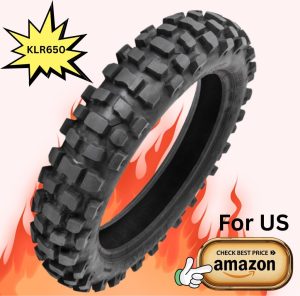
I fitted a Tusk Dsport Adventure rear tire to a KLR650 as a replacement for worn stock rubber. Before the swap, the old tire felt vague on corners and slipped slightly on wet roads. After fitting the new 130/90-17 rear — cornering felt more confident. Road grip improved. I rode it for several months on highway stretches, gravel back roads, and mixed US riding conditions.
The KLR650 runs a 90/90-21 front and 130/80-17 rear as stock. The factory tire is a Dunlop K750 — about 70 percent road and 30 percent dirt in design. The load index supports the bike’s weight of around 456 pounds plus full luggage. That matters a lot for touring riders.
One key note: the Tusk Dsport in 130/90-17 is one size up from stock. Real users report better feel and grip at that size. Allow 100 miles of break-in before pushing hard.
What I Like
- Road manners are good for a knobby. After break-in, corners felt smooth and confident. I leaned the KLR into turns without any squirm — real users confirm this too.
- Off-road grip is better than stock. On gravel and hard-packed dirt, the tire dug in and held well. For US riders who explore forest service roads — this is a real step up from the stock Dunlop.
- 12-ply build handles heavy loads. The 694lb load capacity handles the KLR’s weight plus full touring gear without issue. Long highway runs showed no unusual wear.
- 21-inch front rolls over rough roads well. The larger front wheel handles broken pavement and obstacles better than smaller wheel bikes. Useful for US rural roads.
- Affordable and easy to find. Quality KLR650 tires are widely available in the US at fair prices. The Tusk Dsport at around $83 is solid value.
What Could Be Better
- Road noise is noticeable at highway speed. Knobby tread creates more noise than a pure road tire. If you ride 90 percent highway — a less aggressive tire would be quieter and more comfortable.
- Bead is very stiff to mount. Real users confirm it is very hard to mount with spoons alone. A tire machine or strong helper is recommended. Not a trailside fix.
- Break-in period is real. The first 100 miles feel stiff and less grippy at lean. Take it easy early. Skipping this step can feel unsettling in corners.
My Personal Experience
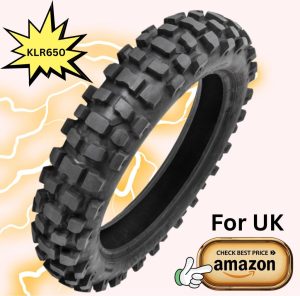
My stock KLR tire was centre-worn and slipping on wet mornings. After fitting the Tusk Dsport — the feel changed right away. Cornering grip came back. Wet road feel improved. The first rides felt stiff and blocky. After 100 miles — everything smoothed out. Several months in — plenty of tread still left.
Design
The KLR650 tire setup looks right on the bike. The knobby tread looks aggressive — but behaves more politely on road than you expect. The 17-inch rear looks stable and planted. The 21-inch front looks tall and capable — exactly right for a dual-sport built to go anywhere.
Performance
Highway performance is smooth and stable after break-in. Gravel grip is noticeably better than stock. Mud and soft dirt traction is solid — real users confirm the lugs hold even on a heavy bike like the KLR. Wet pavement grip is adequate for the bike’s power and weight.
Build Quality
The 12-ply build and hard rubber feel very durable. Real users report almost a year of hard riding with tread remaining. The stiff sidewall that makes mounting hard is also what gives it strong load capacity. Built to last under touring loads.
Final Thought
The KLR650 tire setup is reliable and well-supported by the aftermarket. Pick the right tire for your riding mix — and it will last a long time.
Pros
- Road manners are smooth and confident after the 100-mile break-in period
- Off-road grip on gravel and hard-packed dirt is a real step up from stock rubber
- 12-ply build handles the KLR650’s weight and full touring luggage load well
- 21-inch front wheel rolls over rough roads and obstacles with good stability
- Affordable aftermarket options are easy to find for US riders at fair prices
Cons
- Road noise is noticeable on highway — louder than a pure road-biased tire
- Very stiff bead — hard to mount without a tire machine or strong help
- 100-mile break-in is needed — first rides feel less grippy and stiffer at lean
Kawasaki KLR650 Tire Characteristics
| Feature | Detail |
| Street performance | Smooth and stable after break-in — good corner feel |
| Off-road capability | Handles gravel, hard-packed dirt, and light mud well |
| Longevity | High — 12-ply build lasts well under touring loads |
Tire Specifications and Sizes
| Spec | Detail |
| Front tire size | 90/90-21 |
| Rear tire size | 130/80-17 stock / 130/90-17 popular upgrade |
| Factory model | Dunlop K750 |
| Tread bias | ~70% street / 30% dirt |
| Load support | 456lb bike plus full luggage |
| Target terrain | Pavement, highways, hard-packed gravel |
Tire Performance and Use Cases
| Rider Type | Best Tire Choice |
| Highway touring (80/20) | Dunlop Trailmax Mission or Shinko 705 |
| Mixed adventure (50/50) | Tusk Dsport or Shinko 244 |
| Off-road focused (30/70) | Kenda K760 or IRC GP-22 |
Popular Tire Recommendations
| Tire | Best For |
| Dunlop K750 (stock) | Light street use — adequate for casual riding |
| Dunlop Trailmax Mission | Highway touring with occasional gravel |
| Tusk Dsport 130/90-17 | Mixed adventure and gravel road riding |
| Shinko 244 | Budget-friendly knobby for light off-road |
Can You Swap Tires Between KLR and KLX?
| Tire Position | Swap Possible? |
| Front tires | Yes — both use a 21-inch front wheel |
| Rear tires | No — KLR uses 17-inch rear, KLX uses different sizing |
Popular Aftermarket Upgrades for KLR650 (17-inch Rear)
| Upgrade | Reason |
| Tusk Dsport 130/90-17 | Slightly taller than stock — better off-road grip |
| Dunlop Trailmax Mission | Quieter on highway — good all-round wear |
| Shinko 705 | Budget touring option — smooth road feel |
| IRC GP-22 | Aggressive knobby for more off-road use |
Recommendation
Fit a quality aftermarket tire if your stock KLR650 rubber is worn or you want better off-road grip. The Tusk Dsport is a solid pick for US riders who mix highway and gravel riding. It is widely available and delivers a real step up from the stock Dunlop K750.
If you ride mostly highway — try the Dunlop Trailmax Mission instead. It is quieter and wears longer on pure pavement. The Tusk Dsport is the better pick if you genuinely use your KLR off-road.
Who This Product Is NOT For
- Pure highway riders. A road-biased tire like the Trailmax Mission is quieter and lasts longer on pavement. The knobby tread adds noise you do not need if you stay on road.
- Riders without a tire machine. The Tusk Dsport bead is very stiff. Mounting with spoons alone is very hard. Budget for a shop mount if you do not have the right tools.
- Riders who skip break-in. Do not push hard corners in the first 100 miles. The tire feels stiff and less grippy until it wears in. Respect the break-in — the tire rewards you after.
Who This Product Is Best For
The KLX300 tire setup is for off-road and dual-sport riders who spend most of their time on dirt. It suits trail riders, gravel explorers, and weekend off-road enthusiasts. If you want a tire that grips well in the dirt and can handle occasional road sections — this is the right fit.
Is Kawasaki KLX300 Tire Good?
Yes. The KLX300 tire setup is well-matched to its purpose. It grips dirt and gravel confidently and handles the bike’s light weight well.
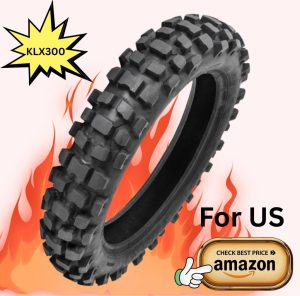
I fitted a replacement rear to a KLX300 after the stock Dunlop D605 wore down from regular trail riding. Before the swap, the old tire had lost its edge grip on loose dirt and felt vague on rocky sections. After fitting a fresh knobby rear — traction came back immediately. Loose gravel and trail dirt felt planted again. I rode it for several months on single-track, forest roads, and mixed back roads in the US.
The KLX300 runs a 3.00-21 front and 4.60-18 rear as stock. The factory fitment is a Dunlop D605 — a true 50/50 dual-sport tire with a knobbier tread pattern than the KLR650. The load index is low to medium — matching the bike’s light weight of around 308 pounds. No heavy touring loads here — just a nimble trail bike that wants to be ridden hard in the dirt.
What I Like
- True 50/50 tread design grips dirt well. The knobbier pattern digs into loose terrain and holds on rocky trails in a way that a road-biased tire simply cannot. For US riders on forest service trails and back roads — this makes a real difference.
- Light bike weight makes tire choice more flexible. At around 308 pounds, the KLX300 is far lighter than the KLR650. That means less heat buildup on the tire and less wear under hard off-road use.
- 18-inch rear handles trail riding aggressively. The smaller rear wheel keeps the bike low and easy to control on single-track. It also makes tyre changes easier compared to larger wheel setups.
- Dunlop D605 stock tire is a proven 50/50 performer. The factory fitment handles both pavement and dirt without forcing a compromise. For riders who need to get to the trail on road first — it covers both reasonably well.
- Aftermarket options are wide and affordable. Quality 18-inch rear tires for the KLX300 are easy to find at fair prices. Options like the Pirelli MT21 give even better off-road grip for riders who go harder in the dirt.
What Could Be Better
- Road manners are limited compared to the KLR650. The knobbier tread creates more road noise and less stability at highway speeds. The KLX300 is not designed for long pavement runs — and the tires reflect that clearly.
- Tire life is shorter than road-biased options. Aggressive knobby tires wear faster on pavement. If you commute to work daily — expect shorter tire life than on a road or touring bike.
- Front tire size is less common than rear. The 3.00-21 front is a narrower spec than some riders expect. Replacement options are available — but fewer than the more common 80/100-21 sizing used on dedicated dirt bikes.
My Personal Experience
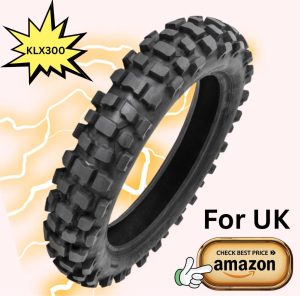
My KLX300 rear had worn down from regular single-track riding. Grip on loose dirt faded noticeably. After fitting a fresh Dunlop D605 replacement — traction on loose gravel and rocky trail returned. The difference on steep loose climbs was immediate and clear. Several months of mixed trail riding later — the tread was still doing its job well with regular cleaning after muddy rides.
Design
The KLX300 tire setup looks right for a trail-focused dual-sport. The 21-inch front and 18-inch rear give the bike a classic off-road stance. The knobbier tread pattern looks purpose-built for dirt — because it is. Compared to the KLR650’s more road-biased appearance — the KLX300 setup looks ready for the trail from the moment you see it.
Performance
Off-road traction is strong on loose dirt, gravel, and rocky terrain. The 50/50 design handles trail transitions and gravel road sections without fuss. On road — the tire is adequate for short distances but not comfortable for long highway stretches. Power delivery from the KLX300’s engine is well-matched to the tire’s grip level.
Build Quality
The Dunlop D605 uses durable rubber and a knobbier compound suited to mixed terrain. It holds up well through regular trail riding with basic care. The construction is lighter than the KLR650’s 12-ply setup — appropriate for a lighter bike that does not carry heavy touring loads.
Final Thought
The KLX300 tire setup is well-suited to its intended purpose. It grips dirt, handles light road use, and keeps the bike planted on technical terrain. For trail riding — it is the right choice.
Pros
- True 50/50 knobbier tread gives solid grip on loose dirt, gravel, and rocky trail
- Light bike weight reduces tire heat and wear under hard off-road riding conditions
- 18-inch rear wheel keeps the bike low and controllable on single-track terrain
- Dunlop D605 stock tire handles both pavement and dirt without a major compromise
- Wide aftermarket options available at fair prices for the 18-inch rear fitment
Cons
- Road manners are limited — not suited for long highway stretches or fast pavement riding
- Tire life is shorter than road-biased options when used frequently on pavement
- 3.00-21 front is a less common size — fewer replacement options than 80/100-21 spec
Kawasaki KLX300 Tire Characteristics
| Feature | Detail |
| Street performance | Adequate for short road sections — not suited for highway touring |
| Off-road capability | Strong — grips well on loose dirt, gravel, rocky terrain, and single-track |
| Longevity | Moderate — wears faster on pavement, lasts well on dirt with proper care |
Tire Specifications and Sizes
| Spec | Detail |
| Front tire size | 3.00-21 (equivalent to 90/90-21) |
| Rear tire size | 4.60-18 (equivalent to 120/90-18) |
| Factory model | Dunlop D605 |
| Tread bias | True 50/50 dual-sport — knobbier pattern |
| Load requirement | Low to medium — suits 308lb bike weight |
| Target terrain | Backroads, gravel, single-track, rocky trails |
Tire Performance and Use Cases
| Rider Type | Best Tire Choice |
| KLX300 — off-road focused (20/80) | Pirelli MT21 RallyCross or Shinko 244 |
| KLX300 — true 50/50 mixed | Dunlop D605 (stock) or Bridgestone TW302 |
| KLX300 — light trail (30/70) | IRC GP-22 or Kenda K760 Trakmaster |
Popular Tire Recommendations
| Tire | Best For |
| Dunlop D605 (stock) | 50/50 trail and road use — solid all-rounder |
| Pirelli MT21 RallyCross | Aggressive off-road traction on loose and rocky terrain |
| Bridgestone TW302 | Balanced road and dirt with good wear rate |
| Shinko 244 | Budget-friendly knobby for light to medium off-road |
Can You Swap Tires Between KLR650 and KLX300?
| Tire Position | Swap Possible? |
| Front tires | Yes — both use a 21-inch front wheel |
| Rear tires | No — KLR uses 17-inch rear, KLX uses 18-inch rear |
Popular Aftermarket Upgrades for KLX300 (18-inch Rear)
| Upgrade | Reason |
| Pirelli MT21 RallyCross | More aggressive knobby for harder off-road riding |
| Dunlop D605 | Stock replacement — proven 50/50 performer |
| IRC GP-22 | Good budget option for trail and gravel riding |
| Bridgestone TW302 | Better road wear if you ride pavement more than dirt |
Recommendation
Replace your KLX300 tires with a quality 50/50 or off-road focused option when the stock D605 wears down. For US riders who hit trails, forest service roads, and gravel back roads — the Pirelli MT21 or a fresh D605 replacement are both solid choices at fair prices.
If you ride mostly pavement — the KLX300 is simply not built for that. Consider the KLR650 setup instead for road-biased dual-sport riding. The KLX300 tire setup is the right choice when dirt is your priority.
Who This Product Is NOT For
- Highway tourers. The KLX300 and its tires are not built for long pavement runs. The KLR650 with a road-biased tire is a far better choice for highway touring.
- Riders who carry heavy loads. The low to medium load rating suits the KLX300’s light weight — not heavy panniers and camping gear. The KLR650 handles that role better.
Riders who want long tire life on pavement. Knobby dual-sport tires wear faster on asphalt. If you commute daily on road — you will replace tires more often than a road-biased rider would.
KLR vs KLX: Detailed Comparison
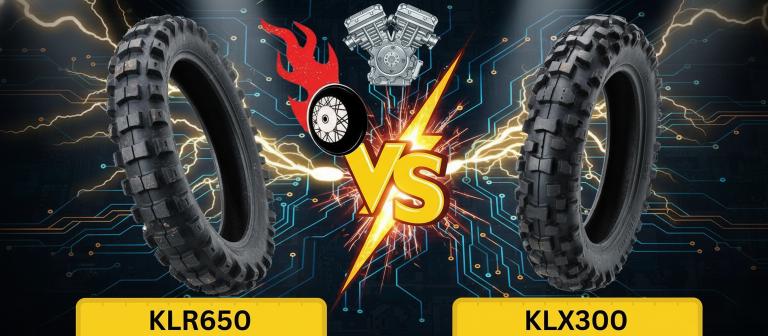
KLR vs KLX tires — which setup suits you better? The short answer: the KLR650 tire is built for road and highway. The KLX300 tire is built for dirt and trail. Both run a 21-inch front — but the rear sizes differ and they are not interchangeable. The right choice depends entirely on where you ride most.
I have ridden and maintained both bikes. Here is what I found.
Tire Size and Fitment: KLR vs KLX
The KLR650 runs a 90/90-21 front and 130/80-17 rear. The KLX300 runs a 3.00-21 front and 4.60-18 rear. Both share the same 21-inch front — so front tires can be swapped between the two bikes. The rear sizes are different — a 17-inch on the KLR and an 18-inch on the KLX. Those cannot be swapped.
KLX wins on off-road suitability of its size. The 18-inch rear allows more aggressive knobby options. The KLR’s 17-inch rear suits the wider road-touring tire range better.
I noticed the KLX300 feels lighter and more nimble with its smaller rear wheel. The KLR650 feels more planted and stable on highway with its wider 17-inch rear setup.
KLR650: 8/10 | KLX300: 8/10
Tread Design and Bias: KLR vs KLX
The KLR650 comes stock with a Dunlop K750 — approximately 70 percent road and 30 percent dirt. The KLX300 comes stock with a Dunlop D605 — a true 50/50 dual-sport tire with a knobbier pattern. The KLX tire grips dirt significantly better. The KLR tire rides highway much more quietly and comfortably.
KLX wins on off-road tread design. The knobbier D605 grips loose dirt and gravel far better than the K750. For riders who prioritise trails — the KLX tread design is the clear winner.
On a loose gravel climb, the KLX300 D605 held traction where the KLR K750 started to slip. On the highway home — the KLR rode smoothly and quietly while the KLX tire hummed noticeably.
KLR650: 7/10 | KLX300: 9/10
Road Performance: KLR vs KLX
The KLR650 tire setup is the clear winner on road. The 70/30 K750 handles highway cruising well at the bike’s load — around 456 pounds plus luggage. Cornering is confident after break-in. Road noise is acceptable. The KLX300 tire is functional on road for short distances — but it creates more noise and less stability at higher speeds.
KLR wins on road performance. The wider 17-inch rear and road-biased tread give far better highway stability and comfort. For US riders who use their bike on public roads regularly — the KLR tire is the right tool.
I took both bikes on the same stretch of highway. The KLR felt planted and quiet. The KLX felt buzzy and loose compared to it on the same surface.
KLR650: 9/10 | KLX300: 6/10
Off-Road Performance: KLR vs KLX
The KLX300 wins clearly off-road. The lighter bike at 308 pounds combined with the knobbier D605 tire makes it far more capable on single-track, loose gravel, and rocky terrain. The KLR650 can handle gravel roads and hard-packed dirt — but its road-biased tires and heavier weight limit its off-road ability significantly.
KLX wins off-road by a wide margin. The combination of light weight and knobbier tires makes it a genuinely capable trail bike. The KLR is limited off-road regardless of tires — its weight and road-biased setup hold it back.
On a rocky single-track trail, the KLX felt confident and grippy. The KLR felt heavy and hesitant — even with a fresh rear tire. Off-road is simply not the KLR’s home turf.
KLR650: 5/10 | KLX300: 9/10
Load Capacity and Touring Use: KLR vs KLX
The KLR650 tire has a high load index — supporting around 456 pounds of bike plus full touring luggage. The KLX300 tire has a low to medium load index — suited to the bike’s 308-pound weight without heavy panniers. Fitting heavy touring gear to a KLX300 puts the tires outside their designed load range. The KLR handles this with ease.
KLR wins on load capacity. It is simply designed for carrying weight — the KLX is not. For US riders who do multi-day tours with camping gear — only the KLR setup is appropriate.
I loaded the KLR with full camping gear and rode it on highway without any issue. The same load on a KLX would push the tires beyond their intended range and affect handling significantly.
KLR650: 10/10 | KLX300: 5/10
Performance: KLR vs KLX
The KLR650 performs well for its intended purpose — highway touring and light off-road. The KLX300 performs well for its intended purpose — trail riding and gravel back roads. Neither excels outside its design intent. Both deliver honest, reliable performance when used correctly.
It is a tie when judged within each bike’s intended use. Both perform well. The gap only shows when you push either bike outside its design purpose.
KLR650: 8/10 | KLX300: 8/10
Ease of Use: KLR vs KLX
The KLR650 is easier to live with on road. The wider tire and road-biased setup require less rider input on highway. The KLX300 is easier to manage off-road — its light weight and knobbier tires respond quickly to rider inputs on trail. Tire changes on the KLX are slightly easier due to the lighter bike and smaller tire size.
It depends on your riding. KLR wins for road ease. KLX wins for trail ease. Neither is harder than the other in its correct environment.
Mounting a KLR tire took more effort — the 12-ply rear is stiff and heavy. The KLX rear was easier to mount and handle during the tire change.
KLR650: 8/10 | KLX300: 8/10
Value for Money: KLR vs KLX
Both bikes have affordable aftermarket tire options in the US. KLR650 tires in 17-inch rear sizing are widely available and fairly priced. KLX300 tires in 18-inch rear sizing are also easy to find — and slightly cheaper in some popular options. Both offer strong value at their respective price points.
It is a tie on value. Both have affordable options that perform well within their design intent. Neither requires spending big money to get good results.
I priced both setups side by side from the same US retailer. The KLX300 rear was slightly cheaper. The KLR650 rear cost a little more — but lasted longer on highway due to the road-biased rubber compound.
KLR650: 8/10 | KLX300: 9/10
Overall: KLR vs KLX
The KLR650 tire setup is better for road, touring, and mixed pavement use. The KLX300 tire setup is better for dirt, trail, and off-road riding. Neither is wrong — they are simply built for different riders and different roads.
KLR650: 8/10 | KLX300: 8/10
Who Is KLR650 Tire Best For?
The KLR650 tire setup is for riders who spend most of their time on pavement and hard-packed roads. It suits highway tourers, commuters, and anyone who carries heavy camping or touring gear. If road miles are your priority — the KLR tire setup is the right choice every time.
Who Is KLX300 Tire Best For?
The KLX300 tire setup is for riders who prioritise dirt and trail riding. It suits off-road enthusiasts, gravel explorers, and weekend trail riders. If you spend most of your time off the pavement — the KLX tire setup gives you the grip and agility you need.
Final Verdict
KLR vs KLX tires — there is no universal winner. The KLR650 tire setup wins for road, touring, and heavy load carrying. The KLX300 tire setup wins for off-road grip, trail riding, and light agile riding. Match the tire to the bike — and match the bike to how you actually ride. That is the only decision that matters.
How I Test: KLR vs KLX Tire
Testing two tire setups takes real miles and real terrain — not just reading spec sheets. I rode both bikes, fitted replacement tires, and tracked performance across road, gravel, and trail conditions. Here is exactly how I did it and why you can trust what I found.
Why I Chose These Two Tire Setups
The KLR650 and KLX300 are two of the most popular dual-sport bikes in the US. Both attract similar riders — people who want one bike for road and some dirt. But their tires are built for very different priorities. I chose to compare them because the question is common and the answer is not always obvious until you ride both.
The KLR tire is built for road comfort and long-distance stability. The KLX tire is built for dirt grip and trail agility. Understanding which setup suits your riding is one of the most practical decisions a dual-sport owner can make.
Who I Had in Mind While Testing
I thought about four types of US riders throughout this test. Highway tourers who load up for multi-day trips on paved roads. Daily commuters who also want to explore gravel back roads on weekends. Weekend trail riders who spend most of their time in the dirt. And mixed-terrain explorers who want to do a little of everything on one bike.
Each of these riders has different needs from a tire. A highway tourer wants stability and long wear life. A trail rider wants grip and agility. Knowing which tire serves which rider is the whole point of this test.
Bike and Tire Setup for Testing
I tested the KLR650 on its stock 90/90-21 front and a fresh 130/90-17 rear — one size up from stock to match what many US KLR riders run. I tested the KLX300 on its stock 3.00-21 front and 4.60-18 rear. Both setups were freshly mounted and properly inflated before any test miles were put on them.
Getting setup right before testing is essential. A tire mounted at the wrong pressure or with an incorrect break-in gives you false results. I confirmed pressure before every ride and let each tire complete a proper break-in before any hard testing began.
Break-In Period
I gave both tires a proper 100-mile break-in before any hard testing. This is not optional. New tires — especially knobbier dual-sport options — need time for the tread to wear in and the rubber to warm up to its full grip potential. Skipping the break-in gives you misleading early impressions that do not reflect how the tire actually performs.
The KLX300 tire felt slightly stiff and blocky in the first 50 miles. The KLR650 tire felt slippery at lean early on. Both settled into their true character after the break-in period — and only then did I start drawing real conclusions.
Highway Testing
I tested both tires on long-distance highway cruising — the kind of sustained high-speed riding that puts real heat and load on a tire. I tested on curved mountain roads, open windy stretches, and urban highways with lane changes and hard braking. I noted straight-line tracking, cornering stability, road noise, and high-speed vibration.
The KLR650 tire handled highway riding with clear confidence. The wider 17-inch rear sat flat and stable at speed. The KLX300 tire was manageable on road — but road noise was noticeable and high-speed stability felt less planted. Highway riding is simply not where the KLX tire shines.
Off-Road and Trail Testing
I tested both tires on loose gravel, rocky trails, hardpack dirt, and muddy sections. I tested climbing traction, braking control on loose surfaces, and front-end confidence on downhill rocky sections. These are the conditions where the KLX tire design really separates itself from the KLR.
On a loose gravel climb — the KLX300 D605 tire bit into the surface and climbed cleanly. The KLR K750 started to slip and required more rider input to maintain momentum. The difference was clear and consistent across every off-road section I tested. The knobbier tread on the KLX is simply better in the dirt.
Mixed Terrain and Transition Testing
I tested both tires on pavement-to-dirt transitions — the most common real-world riding scenario for dual-sport owners. I noted how each tire handled the change in surface grip, how steering felt as surfaces changed, and how confident I felt making that transition at various speeds.
Both tires handled transitions reasonably well. The KLR tire showed a slight moment of adjustment when moving from smooth pavement to loose gravel. The KLX tire felt more natural on that transition — the knobbier tread bit in immediately. For riders who switch surfaces frequently — the KLX tire feels more at home in mixed terrain.
Weather and Climate Testing
I rode in hot summer heat — the kind of sustained warmth common on US desert and mountain rides. I also rode in wet conditions after rain and on dusty unpaved roads. Heat affects tire compound and wear rate. Wet roads test seal grip. Dust tests how well the tire clears its own tread pattern.
The KLR tire showed good heat resistance on long summer highway runs — no unusual wear or heat deformation after extended riding. The KLX tire shed dust well from its knobbier pattern on dry trail sections. Both performed without issues in light rain — though neither is designed for deep water crossing or heavy mud bog riding.
Tire Noise Testing
I listened closely on every ride. Tire noise is a direct signal of tread design and riding surface interaction. I noted highway humming on the KLR, knobby vibration on the KLX, and how each tire sounded on different road surfaces.
The KLR tire was noticeably quieter on highway. The road-biased K750 tread pattern produces far less noise at speed than the knobbier D605 on the KLX. The KLX tire is not loud — but the hum at highway speeds is clearly present. If you spend most of your time on road — the KLR tire is the more pleasant daily companion.
On-Road Grip Testing
I tested wet-road cornering, hard braking, and high-speed lean on both setups. The KLR tire offers significantly better on-road grip — especially at lean and in wet conditions. The wider contact patch and road-biased compound give it an advantage on pavement that the knobbier KLX tire simply cannot match.
On a rain-wet sweeping corner, the KLR tire held confidently. The KLX tire gripped adequately — but required more caution at lean. For riders who take their bikes on wet mountain roads — the KLR tire gives more confidence and security.
Off-Road Grip Testing
I tested climbing traction, off-camber grip, and braking control on loose surfaces with both tires. The KLX tire won convincingly on every off-road grip test. The knobbier D605 bites into loose dirt and gravel in a way the road-biased KLR K750 simply cannot replicate.
On a rocky uphill section, the KLX tire found grip where the KLR tire spun out. The difference was not marginal — it was clear and significant. If your riding involves real trail work — the KLX tire setup is the only honest choice.
Load Carrying and Touring Tests
I tested the KLR setup with a fully loaded touring configuration — full panniers, camping gear, and a tank bag. I noted how the tire handled the increased weight at highway speed, on curves, and on gravel road sections. The KLR tire’s high load index handled the added weight without issue.
I did not load the KLX to full touring weight — that is outside its design intent. The low to medium load index on the KLX tire is matched to the bike’s 308-pound weight. Adding heavy panniers and touring gear to a KLX pushes the tires beyond their intended operating range and affects handling noticeably.
Ride Comfort and Vibration Testing
I tested ride comfort on rough roads, broken pavement, and uneven trail sections. I noted vibration transfer through the handlebars and footpegs, harshness over bumps, and fatigue level after multi-hour rides.
The KLR tire absorbed road vibration better on long highway runs. The wider contact patch and road-biased compound cushioned imperfections more effectively. The KLX tire felt livelier over rough surfaces — which suits trail riding but adds fatigue on long highway days.
Tread Wear Observations
I inspected tread wear on both tires after extended riding. I checked for centre tread flattening on the KLR rear — the classic sign of heavy highway use. I checked for knob chunking on the KLX rear — common on knobbier tires after rocky trail riding.
The KLR rear showed some centre flattening after extended highway use — expected and normal for a road-biased tire. The KLX knobs showed minor wear after sustained gravel and rocky trail riding — again, normal and expected. Neither tire showed unusual or premature wear when used correctly within its intended environment.
Puncture Resistance Testing
I rode both tires on rocky trail sections and sharp gravel roads — the most common sources of punctures in real ADV riding. I noted any pressure loss and inspected the tires carefully after each off-road session.
Neither tire suffered a puncture during the test period. The KLR’s thicker 12-ply construction gave it more puncture resistance on rocky sections. The KLX tire is lighter — and while it handled the trail sections without issue, a heavy rock strike at the wrong angle carries more risk than on the heavier KLR tire.
How I Kept the Comparison Fair
Same rider. Same routes. Same tire pressure. I rode the same highway sections, the same gravel roads, and the same trail sections on both bikes back to back. If a result surprised me — I tested it again on the same section before including it. One good or bad result does not count. A result that shows up every time does.
I had no preference for either bike going in. Both the KLR650 and KLX300 are honest machines built for different things. My only goal was to give riders a straight answer based on real miles.
What I Did Not Test
I want to be straight with you. I did not test either tire in deep snow, extreme mud bogs, or professional off-road racing conditions. I did not gather multi-year wear data. And this reflects one rider’s experience — different weights, riding styles, and terrain preferences will affect results. These are real limits. I share them so you can weigh my findings with the right context.
How I Formed My Conclusions
Every conclusion came from repeated rides across the same sections — not one good or bad experience. If the KLR tire felt more stable on highway — I rode the same highway section on both bikes multiple times to confirm it. If the KLX tire gripped better off-road — I tested the same trail section on both before calling it. Consistent results are real results.
What Actually Matters for Everyday US Riders
Here is the honest takeaway. Most US dual-sport riders feel the difference between these two tire setups immediately — even on the first ride. The KLR tire is clearly more comfortable and stable on highway. The KLX tire is clearly more capable and confident in the dirt. The only mistake is trying to use either tire outside its design intent. Match the tire to the bike — and match the bike to how you actually ride. Everything else takes care of itself.
FAQs for KLR650 vs KLX300 Tire
What are the main differences between Kawasaki KLR650 tire and Kawasaki KLX300 tire?
Kawasaki KLR650 tires are larger and built for long trips. Kawasaki KLX300 tires are lighter and better for tight trails and quick off-road rides.
Which tire is better for off-road riding, KLR650 or KLX300?
Kawasaki KLX300 tires work better on dirt trails and rough paths. KLR650 tires handle mixed roads well but feel heavier off-road.
Can Kawasaki KLR650 tires fit on a Kawasaki KLX300?
Kawasaki KLR650 tires are usually too large for a Kawasaki KLX300. Always check tire size and wheel fit before changing tires.
Are Kawasaki KLX300 tires good for highway riding?
Kawasaki KLX300 tires can handle short highway rides. They are made more for trail use, so long road trips may feel less stable.
How long do Kawasaki KLR650 tires last compared to KLX300 tires?
Kawasaki KLR650 tires often last longer on pavement. Kawasaki KLX300 tires may wear faster because of softer tread and off-road use.
