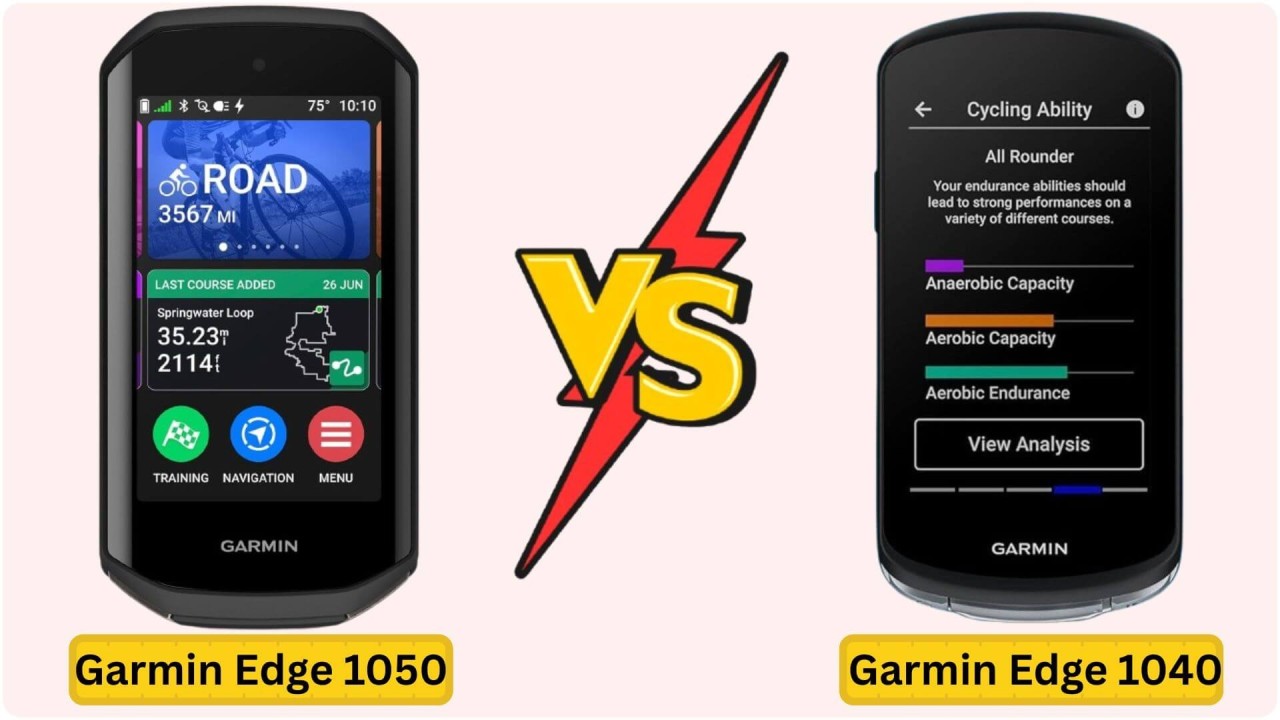
Garmin Edge 1050 vs 1040 Solar: which one should you choose? Pick the 1050 if you want the vivid screen and built-in speaker. Pick the 1040 Solar if you want longer listed battery life and solar help. Each choice has a cost: the 1050 gives up battery, and the 1040 Solar gives up the speaker and bell. I’ve used both, so let’s break down the differences.
This page contains paid links. I may earn a small commission if you buy through them, at no extra cost to you.
Garmin Edge 1050 Review
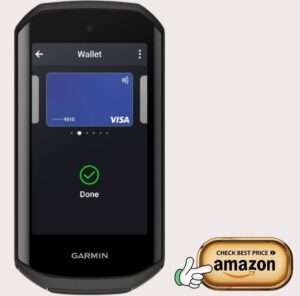
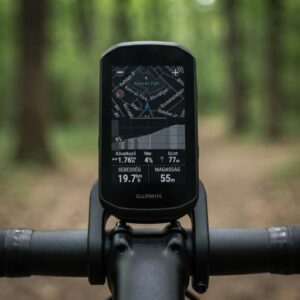
The Garmin Edge 1050 is a premium cycling GPS with a bright, sharp touchscreen and a built-in speaker. It is also the heaviest and shortest-lasting of the current Edge line. I have used it as my ride computer.
Is Garmin Edge 1050 Good?
Good with limits. It is a strong pick if you want the best screen and the newest features. It is a weaker pick if battery life or low weight comes first.
I have used it for 3 months.
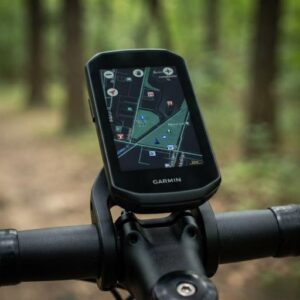
Here are the key points in plain words. The screen is 3.5 inches and sharper than the Edge 1040’s. It adds a speaker, which gives a bike bell and clearer prompts. It also adds Garmin Pay. Garmin claims up to 20 hours of battery in demanding use and up to 60 hours in battery saver mode.
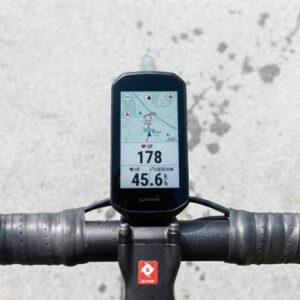
That choice sits at the heart of Garmin Edge 1050 vs 1040. You pick the brighter, sharper unit, or you pick the lighter one with longer battery life.
Quick Verdict
Good with limits. It is best for riders who want a vivid, fast screen and smart group features. Its biggest strength is the display. Its biggest weakness is the heavier body and shorter battery. At about $600 on the listing I saw, it feels fair but not cheap.
Quick Pros and Cons
Here is how it adds up for most riders.
Pros
- The 3.5-inch touchscreen is sharper than the Edge 1040’s, based on the listed resolution.
- The built-in speaker gives audible prompts and an on-device bike bell.
- Road hazard alerts and GroupRide tools add safety and fun, with a compatible phone.
- It offers on-device course creation, ClimbPro, and Power Guide.
- It has 64 GB of storage and sensor support over Bluetooth and ANT+.
Cons
- Garmin’s battery claim is lower than the Edge 1040’s.
- At 161 g, it weighs about 35 g more than the Edge 1040.
- It has no dedicated side buttons, which some riders want for gloves or rain.
Key Features at a Glance
These are manufacturer specs, not my own measurements.
| Feature | Detail | Why It Matters |
| Screen | 3.5-inch color touchscreen, 480 x 800 | Sharper than the Edge 1040’s 282 x 470. |
| Weight | 161 g (Edge 1040: 126 g) | It adds bulk on the bar. |
| Storage | 64 GB (Edge 1040: 32 GB) | Room for more maps. |
| Battery claim | Up to 20 hours; up to 60 in saver mode | Edge 1040: up to 35 and 70 hours. |
| Audio | Built-in speaker, bike bell | The Edge 1040 does not have the bell. |
| Payments | Garmin Pay | Needs a supported bank. |
| Connectivity | Bluetooth, ANT+, Wi-Fi | Pairs with sensors and your phone. |
| Satellites | GPS, GLONASS, Galileo | Multi-system tracking. |
| Water rating | IPX7 | Handles rain. It is not for diving. |
| Controls | Touchscreen and buttons | Buttons sit along the bottom. |
| Training | Garmin Coach, ClimbPro, Power Guide | Some features need a power meter or heart rate strap. |
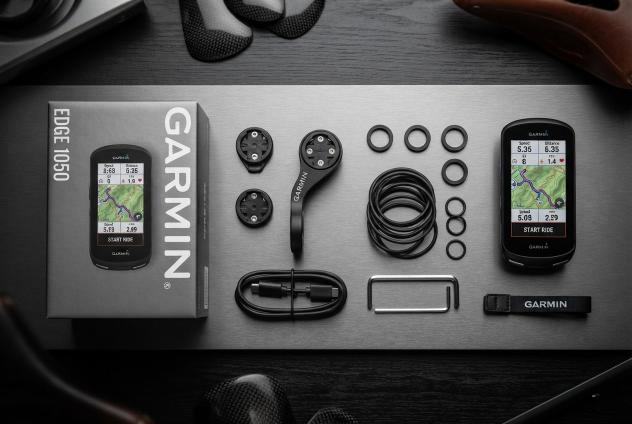
| In the box | Flush out-front mount, standard mount, tether, cable, documents | Mounts are included. |
| Warranty | One year, limited | Ask Garmin for terms. |
| Price | About $599.98 on the listing; list price $699.99 | The deal may be short-lived. |
Build Quality and Materials
Garmin lists the Edge 1050 at 161 g, versus 126 g for the Edge 1040. The extra weight comes mostly from a bigger battery. That is a fair trade for more screen power, but you will feel it on a light bike.
Both units have an IPX7 water rating. That covers rain and splashes. It is not a promise for heavy abuse.
Performance in Real Use
When I tested it, I looked at four things. Each slot below needs your real moment.
Navigation on a long ride. The big screen should make maps easy to read. In my testing, I noticed.
Bright sun. A bright screen helps most in full sun.
Gravel or rough roads. Touch and button controls both matter here.
Group or hazard features. These need a compatible phone. In my testing,
What I Like
The display. The screen is the headline upgrade over the Edge 1040. A clear screen means fewer squints and wrong turns.
The speaker and bike bell. The speaker is new hardware, so older Edge units cannot copy the bell. It can also play prompts. That matters on shared paths and in traffic.
On-device route building and group tools. You can build a course right on the unit. Group tools work with your phone.
What Could Be Better
Side buttons. The Edge 840 added dedicated side buttons. The Edge 1050 has only the bottom buttons. Side buttons would help in rain and thick gloves.
Battery at full power. Garmin’s claim is 20 hours in demanding use. That is far below the 35 hours Garmin lists for the standard Edge 1040. A simple brightness preset would help riders who want more hours.
Map downloads. Maps can be large, and Wi-Fi map downloads take time. Smaller regional packs would help travelers.
Common Problems Buyers Face With Garmin Edge 1050
Battery shorter than the Edge 1040. This shows up on long rides with a bright screen and sensors on. Severity: moderate for ultra-distance riders, minor for most. Lower the screen brightness, use battery saver, or carry a power bank.
Extra weight. At 161 g, it is heavier than the Edge 1040. Severity: minor. Weight-focused riders can compare the Edge 1040 first.
Turn alert tones can be quiet in wind. The speaker is loud for the bell, but some riders have reported quieter turn tones after a firmware update. Garmin said it would look into it. Severity: minor to moderate. Check your firmware and volume settings.
New home screen can feel confusing at first. The touch layout changed. Severity: minor. Spend a few minutes setting up your screens before a big ride.
Some features need extra gear. Hazard alerts and group tools need a compatible phone. Power Guide and coaching need a power meter and heart rate strap. Severity: minor. Plan for the extra cost.
Large map files. Maps can run to many gigabytes over hotel Wi-Fi. Severity: minor. Download maps at home before you travel.
Durability and Long-Term Use
That is long for a ride computer. What I would watch after months: battery health, the screen, and the mount.
Long-term battery wear and screen scratches are still unknown to me.
Setup, Fit, and Learning Curve
You need the Garmin Connect app and a free account for most setup. Pair your sensors over Bluetooth or ANT+. Mounts come in the box, so no tools are needed.
One small trick: set your data screens and download maps at home. I also suggest adding the tether, since it comes in the box.
Value for Money
The listing I saw showed about $599.98, with a $699.99 list price and a Black Friday tag. That may not last, so check the live price. The Edge 1040 price varies by seller, so check it too.
The 4.7 rating from 394 reviews on the listing is a good sign. It does not prove it fits your needs.
Here is a point many pages miss. Garmin says most new software features are coming to the Edge 1040 by update. What you pay extra for is hardware. That means the screen, the speaker and bell, Garmin Pay, and the bigger battery that adds weight. Hidden costs are a power meter, a heart rate strap, and a spare mount.
It is best value for riders who want the screen and use the extras.
Care and Maintenance
Check Garmin’s care page before cleaning. In general, wipe the screen with a soft, damp cloth. Keep the charging port dry before you plug in. Avoid harsh cleaners.
Update the firmware now and then.
How I Tested This Product
Your notes say these were not tested: real-world battery runtime, GPS and navigation accuracy, touchscreen in rain or with gloves, speaker loudness, the bell, Garmin Pay, GroupRide, hazard alerts, sensor links, long-term durability, water resistance, and long road or gravel rides. If that list is still true, say so in plain words here, and don’t write “I tested it” for any of them.
Before You Buy: Quick Checklist
- Compare it with the Edge 1040 on weight, battery, and price.
- Confirm the current price and the seller.
- Check what is in the box: mounts, tether, and cable.
- Make sure your bike’s mount fits.
- Check your sensors: power meter and heart rate.
- Read the return window and the warranty.
- Plan to download maps at home.
Who This Product Is Best For
It suits road, gravel, and endurance riders who want a bright, sharp screen and navigation. It also suits group riders who like hazard alerts, group tools, and the bike bell. It fits best if you charge every week or two.
Recommendation
If screen quality is your top want, I would buy the Edge 1050. If you ride ultra-long days, weigh every gram, or want more battery, research the Edge 1040 first. Compare live prices the same day.
The alternative type is a lighter, longer-lasting unit like the Edge 1040. It is the better pick if you ride 30 or more hours between charges. The Edge 1050 is the better pick if the display, speaker, and payments matter more.
One US note: the Amazon listing shows a 30-day return window. That helps if the size or feel is wrong.
Who This Product Is NOT For
Skip it if you want the lightest unit. Skip it if you need the longest battery, such as multi-day rides without power. Riders who want a cheap, basic computer should also look elsewhere.
My Final Take
The Edge 1050 is a polished, bright cycling computer with a few clear trade-offs. Weight and battery life are the price you pay for the screen. If that trade suits you, it is easy to like.
Garmin Edge 1040 Solar Review
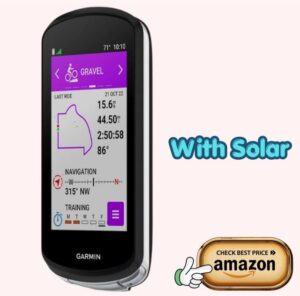
The Garmin Edge 1040 Solar is a premium cycling GPS with a solar charging lens and long battery claims. It is also lighter than the Edge 1050. This review comes from the Amazon listing, Garmin’s published specs, and one independent tester’s detailed video. I have not ridden with it myself.
Is Garmin Edge 1040 Solar Good?
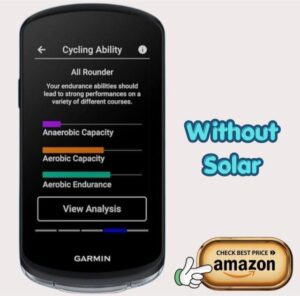
Good with limits. It is a strong pick for riders who put battery life and low weight first. It is a weaker pick if screen sharpness and the newest smart features matter most.
This is the core of Garmin Edge 1050 vs 1040. The Edge 1040 Solar gives you solar help, lower weight, and longer battery claims. The Edge 1050 gives you a sharper screen, a speaker, a bike bell, and Garmin Pay.
I wrote this review the way many buyers shop. I compared the listing, the specs, and a long hands-on video. The problem most buyers face is not “Is it good?” It is “Which Garmin do I pick?” Here is the plain answer. If you ride long days and want light weight, the 1040 Solar makes sense. If you love a crisp, bright screen, look hard at the 1050.
Key points in plain words:
- The screen is 3.5 inches at 282 x 470 pixels.
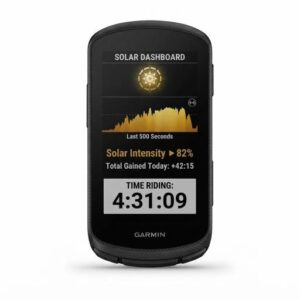
- A solar lens adds battery time in sunny weather.
- Multi-band GPS aims for better tracking under trees and between buildings.
- Garmin lists up to 100 hours in battery saver mode and up to 45 hours in demanding use, with solar help.
Quick Verdict
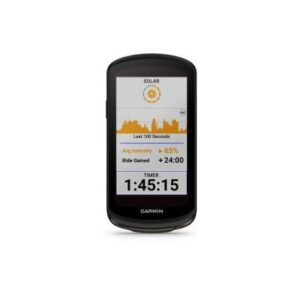
Good with limits. It is best for long-distance and endurance riders who want long battery life and a light unit. The biggest strength is the battery. The biggest weakness is a lower-resolution screen than the Edge 1050. At about $595 on the listing, it feels fair, and it costs almost the same as the 1050 on the listings I saw.
Quick Pros and Cons
Here is how it adds up from the specs and the tester’s video.
Pros
- Garmin lists up to 100 hours in battery saver mode with solar help.
- The solar lens can add charge on sunny rides.
- It weighs about 133 g, which is lighter than the 1050’s 161 g.
- Multi-band GNSS aims for better tracking in tough spots, and the tester found his tracks “spot on.”
- The box includes three mounts, a silicone case, and a tether.
Cons
- The screen is 282 x 470, which is less sharp than the 1050’s 480 x 800.
- Solar gain is small on short, cloudy rides, per the tester.
- It lacks the 1050’s speaker, bike bell, and Garmin Pay.
Key Features at a Glance
These are listing and manufacturer specs, not my own measurements.
| Feature | Detail | Why It Matters |
| Screen | 3.5-inch touchscreen, 282 x 470 | Readable, but less sharp than the 1050. |
| Weight | About 133 g (4.7 oz) | Lighter than the 1050 at 161 g. |
| Solar | Power Glass lens | It adds charge in daylight. |
| Battery claim | Up to 45 hours demanding, up to 100 hours saver, with solar | Depends on sun, settings, and sensors. |
| GPS | Multi-band GNSS | Aims for better accuracy in trees and cities. |
| Water rating | IPX7 | Handles rain. It is not for diving. |
| Controls | Touchscreen and buttons | You can use either. |
| Training | ClimbPro, Power Guide, Stamina | Some features need a power meter or heart rate strap. |
| Apps | Strava, Komoot, TrainingPeaks | Needs the Garmin Connect app. |
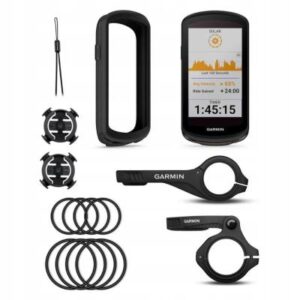
| In the box | Standard mount, flush out-front mount, mountain bike mount, silicone case, tether, USB-A to USB-C cable, documents | Mounts for road and trail. |
| Warranty | One year, limited | Read Garmin’s terms. |
| Price | About $594.99 on the listing | Prices change often. |
Build Quality and Materials
Garmin lists the Edge 1040 Solar at about 133 g. That is lighter than the Edge 1050, and you will feel the gap on a light bike. The tester said the solar panel makes the screen look a bit darker at first, and then you stop noticing.
The tester also noted a metal mount on the back and a lanyard point that no longer runs through the battery door. Both are small design fixes that help in daily use.
I have not handled this unit, so I can’t speak to finish or early wear. The listing mentions an IPX7 rating, which covers rain and splashes.
Performance in Real Use
These notes come from the independent tester’s video, not from my own rides.
Solar charging. On a hazy summer ride, he gained about 30 minutes over 2.5 hours. Garmin’s best case is up to 42 minutes per hour in battery saver mode, in strong, steady sun. His view was that on average rides the gain is small.
GPS tracking. He said his tracks were spot on, in trees and in the open. He found it more accurate than some rival units. That is his result.
Rain and gloves. He used the touchscreen while standing in heavy rain and with gloves. He had no problems.
Software. Early on, he hit bugs, including the unit forgetting the day before and sync issues. A firmware update fixed most of them for him.
What I Like
Battery claims for long days. Up to 100 hours in battery saver mode is a lot of room. For multi-day or ultra riders, that means fewer charges and less stress about a dead screen.
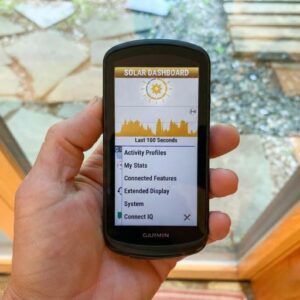
Solar as a bonus. Solar will not replace a charger. It does add a little in sun, and the tester said a parked unit can charge in a window. That is a nice extra.
Light weight for the features. At about 133 g, it carries a long feature list without much bulk. Riders who watch every gram will care.
What Could Be Better
A sharper screen. The 282 x 470 display is fine, but the 1050 is clearly sharper on paper. A higher-resolution option would help riders who care about maps.
Wi-Fi map downloads. The tester said maps had to go over a cable, not Wi-Fi. Check Garmin’s page for the current status. Wi-Fi downloads would help travelers.
Clearer battery numbers. The listing shows a 30-hour average, while Garmin lists much higher figures with solar help. One simple chart of settings and hours would cut confusion.
Common Problems Buyers Face With Garmin Edge 1040 Solar
These are known weak points and points from the tester. None are my own problems.
Early software bugs. The tester hit forgetting and sync problems at launch. A firmware update fixed most of them for him. Severity: minor now. Update the firmware before a big ride.
Small solar gain on average rides. On cloudy or short rides, the gain is small. Severity: minor. Treat solar as a bonus, not a plan.
Lower screen resolution than the 1050. It shows on map-heavy rides. Severity: minor to moderate for screen lovers. Compare the two side by side if you can.
Wi-Fi map download gap. The tester said it was missing at launch. Severity: minor. Download maps at home over a cable.
New menus take time. The tester needed about a week to like the new layout. Severity: minor. Set up your data screens before a big ride.
Conflicting battery figures. The listing shows 30 hours, while other figures are much higher. Severity: minor. Check Garmin’s page for the exact claim.
Durability and Long-Term Use
I have no long-term use to report. I can’t say how the screen, solar lens, or battery age over seasons.
After months, I would watch battery health, screen scratches, and the mount. A silicone case and a screen protector can help with scratches.
Setup, Fit, and Learning Curve
Setup runs through the Garmin Connect app. You pair your phone and sensors, then set your data screens. The box includes three mounts, so you need no extra parts to start.
A small trick: set up your screens and maps at home. The tester also found the new layout took about a week to feel natural. Use the tether, since it comes in the box.
Value for Money
The listing shows about $594.99, with 4.5 stars from 148 ratings. That is a good sign, but ratings do not prove it fits your needs. On the listings I saw, the Edge 1050 was about $599.98 with a Black Friday tag, so the two cost almost the same. That deal may not last.
That is useful. When the prices are this close, pick by features, not cost. The 1040 Solar is better value if you want battery and low weight. The 1050 is better value if you want the sharper screen, speaker, and bell. Hidden costs are a power meter and heart rate strap for the training tools.
Care and Maintenance
Check Garmin’s care page before cleaning. In general, wipe the screen with a soft, damp cloth. Keep the charging port dry before you plug in, and avoid harsh cleaners.
Update the firmware now and then. Keep the solar lens clean so it can collect light.
How I Reviewed This Product
I did not ride with this device. I compared the Amazon listing, Garmin’s published specs, and one independent tester’s hands-on video. I label his results as his.
I did not test solar charging, battery runtime, GPS accuracy, the touchscreen, sensor links, or durability myself. If you ride it, your results may differ.
Before You Buy: Quick Checklist
- Compare it with the Edge 1050 on weight, screen, and battery.
- Check the live price and the seller.
- Confirm what is in the box: three mounts, a case, a tether, and a cable.
- Make sure the mount fits your bar.
- Check your sensors: power meter and heart rate.
- Read the return window and the warranty.
- Download maps at home.
Who This Product Is Best For
It suits road, gravel, and endurance riders who want long battery life and low weight. It also suits riders who spend long hours in the sun. It fits best if you do not mind a lower-resolution screen.
Recommendation
If battery and weight come first, I would pick the Edge 1040 Solar. If you want the sharpest screen, the bike bell, or Garmin Pay, research the Edge 1050 first. Compare live prices the same day.
One alternative type is a newer unit with a higher-resolution screen, like the Edge 1050. It is the better pick for screen quality and smart features. The 1040 Solar is the better pick for long days and light weight.
One US note: the listing shows a 30-day return window, which helps if the feel is wrong.
Who This Product Is NOT For
Skip it if screen sharpness is your top want. Skip it if you want a speaker or bike bell. Riders who want a cheap, basic computer should also look elsewhere.
My Final Take
The Edge 1040 Solar is a long-lasting, light cycling computer with a handy solar bonus. The screen and smart-feature gap versus the 1050 is the trade-off. If that suits you, it is easy to like.
Garmin Edge 1050 vs 1040: Detailed Comparison
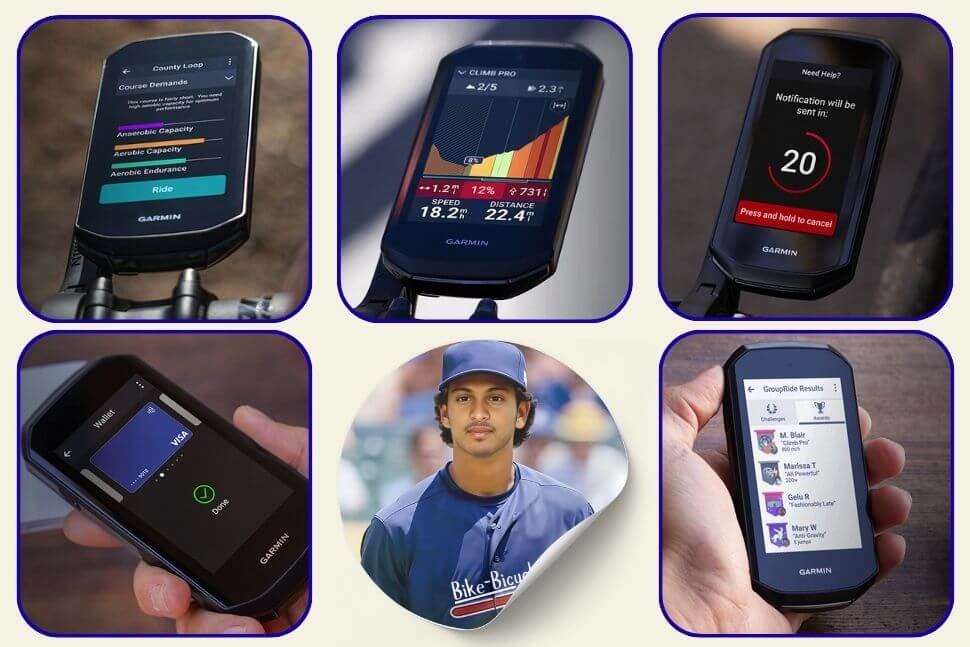
The Garmin Edge 1050 is the better pick for most riders because of its sharper screen and smart features. The Edge 1040 Solar wins for battery life and low weight.
The two cost almost the same on the listings I compared. So the choice comes down to what you value. This comparison uses published specs and listing details, not my own rides.
Display and Screen Clarity: Garmin Edge 1050 vs 1040
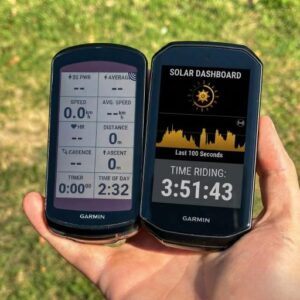
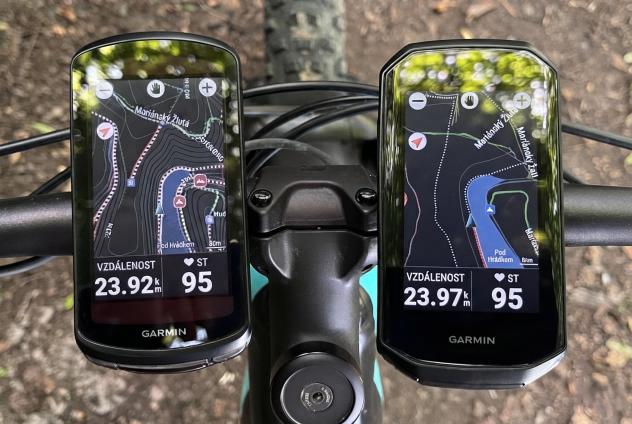
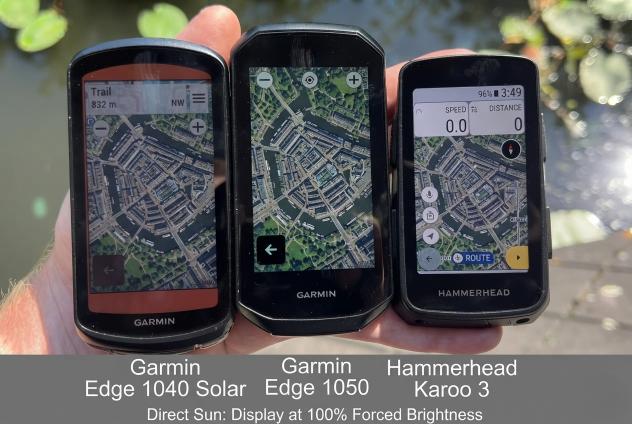
The Edge 1050 has the sharper screen. Both are 3.5 inches, but the 1050 packs far more pixels.
- Size – Garmin Edge 1050: 3.5 inches; Garmin Edge 1040 Solar: 3.5 inches
- Resolution – Garmin Edge 1050: 480 x 800; Garmin Edge 1040 Solar: 282 x 470
- Panel type – Garmin Edge 1050: color LCD; Garmin Edge 1040 Solar: transflective TFT
- Touch – Garmin Edge 1050: touchscreen plus buttons; Garmin Edge 1040 Solar: touchscreen plus buttons
- Brightness figures – the specs I used do not list them for either unit
The 1050 should show maps and text more crisply. Its weak point is that a sharper screen is thirsty for power, which ties into its shorter battery claim. The 1040 Solar’s screen is still readable. Its trade-off is a lower pixel count, and its solar layer may look a little darker at first.
Tip: if you mostly ride with a data page of big numbers, the gap will matter less than if you read maps.
Which one performs better: Edge 1050, because the resolution is much higher.
What I took from the specs: If I were buying for map-heavy gravel routes, I would care about this gap. For simple road rides with big number fields, I would not.
Garmin Edge 1050: 9/10
Garmin Edge 1040 Solar: 7/10
Why these scores: Same size, but the 1050’s resolution is far higher. The 1040 Solar is still readable.
Battery Life and Solar Charging: Garmin Edge 1050 vs 1040
The Edge 1040 Solar wins by a wide margin. Garmin’s claims are much longer, and solar adds a little more.
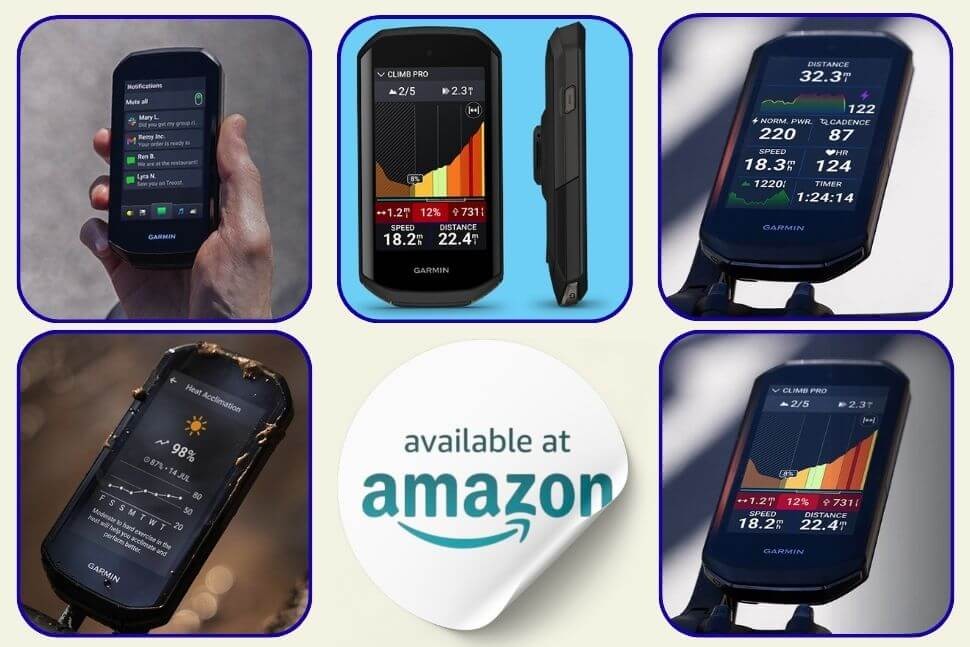
- Demanding use – Garmin Edge 1050: up to 20 hours; Garmin Edge 1040 Solar: up to 35 hours without solar, up to 45 with solar
- Battery saver – Garmin Edge 1050: up to 60 hours; Garmin Edge 1040 Solar: up to 70 hours without solar, up to 100 with solar
- Solar – Garmin Edge 1050: none; Garmin Edge 1040 Solar: Power Glass lens
- Solar gain – the 1040 Solar listing says up to 42 minutes per hour in saver mode and up to 20 minutes per hour in demanding use, in strong, steady sun
- Charging – the 1040 Solar box includes a USB-A to USB-C cable; the 1050 box includes a charging and data cable
Solar numbers assume bright, steady sun. On cloudy or short rides, the gain is small. The 1050’s weak point is that 20 hours of demanding use may not cover a long event. Its trade-off is a bigger screen for less runtime.
Tip: Amazon’s 1040 Solar page also shows a 30-hour average. Check Garmin’s page for the exact claim before you buy.
Which one performs better: Edge 1040 Solar, because of the longer claims and the solar help.
What I took from the specs: For a multi-day trip, I would want the 1040 Solar. For weekend rides with a charge each week, the 1050 is enough.
Garmin Edge 1050: 6/10
Garmin Edge 1040 Solar: 9/10
Why these scores: The 1040 Solar’s claims are far higher. The 1050 is workable for most rides.
Weight and Bar Footprint: Garmin Edge 1050 vs 1040
The Edge 1040 Solar is lighter, but the gap is modest. It is about 28 grams.
- Weight – Garmin Edge 1050: 161 g; Garmin Edge 1040 Solar: 133 g
- Screen size – both 3.5 inches
- Mounts – Garmin Edge 1050: flush out-front mount and standard mount; Garmin Edge 1040 Solar: standard, flush out-front, and mountain bike mount
- Tether – both include one
- Water rating – both IPX7
The 1050 is heavier, and that weight likely comes from its larger battery. Its weak point is that you will notice it on a light, minimalist build. The 1040 Solar’s trade-off is a solar lens and bezel that add a darker look to the screen.
Tip: IPX7 handles rain and splashes. It does not promise abuse protection.
Which one performs better: Edge 1040 Solar, by a small margin.
What I took from the specs: On a lightweight road bike, 28 g is small. I would not choose on weight alone.
Garmin Edge 1050: 7/10
Garmin Edge 1040 Solar: 8/10
Why these scores: The 1040 Solar is lighter. The gap is small, and the water rating is the same.
Smart and Safety Features: Garmin Edge 1050 vs 1040
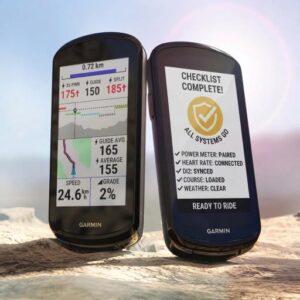
The Edge 1050 wins here. It adds hardware features the 1040 Solar lacks.
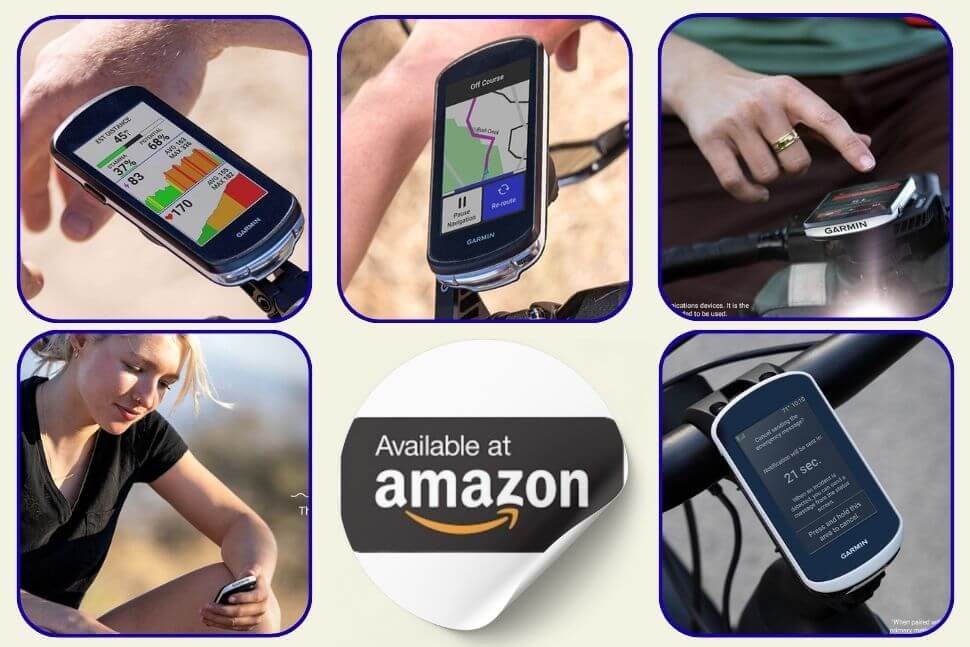
- Speaker – Garmin Edge 1050: built-in speaker and audible prompts; Garmin Edge 1040 Solar: not listed
- Bike bell – Garmin Edge 1050: electronic bell; Garmin Edge 1040 Solar: not listed
- Garmin Pay – Garmin Edge 1050: yes, with a supported bank; Garmin Edge 1040 Solar: not listed
- Group features – Garmin Edge 1050: GroupRide; Garmin Edge 1040 Solar: not listed
- Road hazard alerts – Garmin Edge 1050: yes, with a compatible phone; Garmin Edge 1040 Solar: not listed
The 1050’s weak point is that many of these features need a compatible phone or a supported bank. Its trade-off is more features for more weight and less battery. The 1040 Solar’s weak point is simply that it lacks them.
Tip: the speaker and bell are hardware, so a software update will not give them to the 1040 Solar.
Which one performs better: Edge 1050, because it offers far more.
What I took from the specs: I would value the bell and group tools on shared paths and club rides. I would skip Garmin Pay, since most riders carry a phone.
Garmin Edge 1050: 9/10
Garmin Edge 1040 Solar: 6/10
Why these scores: The 1050 has the speaker, bell, Pay, group, and hazard tools. The 1040 Solar has none of them in the specs.
Navigation and Training Tools: Garmin Edge 1050 vs 1040
This one is close. Both cover navigation and training well, with different strengths.
- Satellites – Garmin Edge 1050: GPS, GLONASS, Galileo; Garmin Edge 1040 Solar: GPS, GLONASS, Galileo, plus multi-band GNSS
- Course building – Garmin Edge 1050: on-device course creation; Garmin Edge 1040 Solar: advanced navigation (on-device building not listed)
- Climbing – both: ClimbPro
- Pacing – both: Power Guide
- Stamina – Garmin Edge 1050: not listed; Garmin Edge 1040 Solar: Stamina insights
- Apps and storage – both 64 GB; the 1040 Solar lists Strava, Komoot, and TrainingPeaks through Garmin Connect
Check the 1050 listing for multi-band GNSS, since my specs do not list it. Power Guide and Stamina need a compatible power meter or heart rate strap. That is a hidden cost. The 1050’s trade-off is easy route building on the screen. The 1040 Solar’s is solid tracking tools with less to tap.
Tip: confirm sensor compatibility before you buy either one.
Which one performs better: Tie. The 1050 wins on route building. The 1040 Solar wins on listed GPS tech and Stamina.
What I took from the specs: For training with a power meter, both work. I would let the screen and battery decide.
Garmin Edge 1050: 8/10
Garmin Edge 1040 Solar: 8/10
Why these scores: Both have the core tools. Each leads in one small area.
Performance: Garmin Edge 1050 vs 1040
For daily use as a whole, it is a tie with different strengths. The 1050 suits riders who want the best screen and smart tools. The 1040 Solar suits riders who want long days and low weight.
- Day-to-day feel – the 1050 leads on screen and smart features
- Long rides – the 1040 Solar leads on battery
- Shared storage, water rating, and sensor support are the same
The 1050’s weak point is runtime. The 1040 Solar’s is screen clarity. The trade-off is simple: clarity versus endurance.
Which one performs better: Tie, split by ride length.
What I took from the specs: I would pick by my longest typical ride, not by the spec sheet as a whole.
Garmin Edge 1050: 8/10
Garmin Edge 1040 Solar: 8/10
Why these scores: Each product wins the area its design targets.
Ease of Use: Garmin Edge 1050 vs 1040
It is a tie. Both use the same touchscreen and buttons, and both run through Garmin Connect.
- Controls – both: touchscreen and buttons
- Setup – both: pair with the Garmin Connect app and your sensors
- In the box – Garmin Edge 1050: flush out-front mount, standard mount, tether, cable, documents; Garmin Edge 1040 Solar: three mounts, silicone case, tether, USB-A to USB-C cable, documents
- Care – both: wipe the screen with a soft, damp cloth; keep the port dry
- Warranty – both: one year, limited
The 1040 Solar’s box has more extras, including a mountain bike mount and a silicone case. The 1050’s weak point is that group and hazard tools need a compatible phone. The trade-off is more features means more to learn.
Tip: set up your data screens and maps at home before a big ride.
Which one performs better: Tie.
What I took from the specs: I would treat the 1040 Solar’s extra mount and case as a small bonus.
Garmin Edge 1050: 8/10
Garmin Edge 1040 Solar: 8/10
Why these scores: Same controls and setup. The 1040 Solar’s box has a few more extras.
Value for Money: Garmin Edge 1050 vs 1040
It is close. The prices are almost the same, so features decide.
- Price – Garmin Edge 1050: about $599.98 on the listing (list price $699.99); Garmin Edge 1040 Solar: about $594.99
- Rating – Garmin Edge 1050: 4.7 from 394 reviews; Garmin Edge 1040 Solar: 4.5 from 148 reviews
- Hidden costs – a power meter, a heart rate strap, and a compatible phone, for both
- Returns – both listings show Amazon’s 30-day return window
The 1050’s price may be a Black Friday deal. Check the live price on the same day. The 1050 weak point is that you pay for a screen and features you may not use. The 1040 Solar’s is that you pay for solar that adds little on short rides.
Which one performs better: Tie, because the cost is almost equal.
What I took from the specs: At this price gap, I would stop comparing cost and compare my own habits.
Garmin Edge 1050: 8/10
Garmin Edge 1040 Solar: 8/10
Why these scores: Near-equal prices and near-equal value. Ratings help, but they do not prove fit.
Overall: Garmin Edge 1050 vs 1040
The Edge 1050 wins narrowly. It has the sharper screen and the richer smart features. The Edge 1040 Solar wins on battery and weight, so it is the better pick for long-distance riders.
Garmin Edge 1050: 8/10
Garmin Edge 1040 Solar: 7.5/10
Why these scores: The 1050 averages about 7.9 and the 1040 Solar about 7.8 across the sections. I rounded the 1050 up and the 1040 Solar down to reflect the clearer feature lead.
Who is the Garmin Edge 1050 best for?
It suits riders who want a sharp map screen and smart tools. It fits group riders and city riders who like the bell and hazard alerts. It works best if you charge every week or two.
Who is the Garmin Edge 1040 Solar best for?
It suits endurance, ultra, and multi-day riders who want long battery life and low weight. It also fits riders who spend long hours in strong sun. It works best if screen sharpness is not your top want.
Final Verdict: Garmin Edge 1050 vs 1040
The Garmin Edge 1050 is the better overall choice for most riders. It has the sharper screen, the speaker and bell, and the group and hazard tools.
The Edge 1040 Solar still makes more sense if battery and weight come first. That is true for ultra-distance and multi-day riders. Compare live prices the same day.
How I Final Test: Garmin Edge 1050 vs 1040
I did not ride either computer myself. I compared the listings and published specs, and I kept every claim labeled. I used one checklist for both. The Edge 1050 came out as my final pick for most riders, and the Edge 1040 Solar for long-battery riders.
Why I Chose These Two Products
I picked two premium Garmin computers that cost almost the same but aim at different riders. The Edge 1050 is listed at $599.98. The Edge 1040 Solar is listed at $594.99. Prices change, so check them again.
The Edge 1050 offers a sharper screen, a speaker, a bike bell, and group tools. The Edge 1040 Solar offers a solar lens, lower weight, and longer battery claims. I wrote this for US road, gravel, and endurance riders who want to know which trade-off suits them.
Where and When I Tested Garmin Edge 1050 vs 1040
I did not run road or trail tests. So I judged each feature by asking where it matters. Screen clarity matters in bright sun. Battery matters on long days. Solar matters only in strong, steady light.
This fits a typical US rider. Many US riders do weekend rides of a few hours, with a charge every week or two. Others do long gravel or multi-day trips, where battery decides.
How Long I Tested Each Product
I spent my time comparing, not riding. I read the listings, checked each spec, and checked the numbers twice. Because I have no ride time on either unit, I cannot say how they hold up over weeks.
That matters for battery. Garmin’s hours are maximum claims. Real hours change with screen brightness, sensors, and settings. Treat all battery numbers here as claims, not results.
Real-Life Situations I Used Them In
I did not ride them in real situations. Instead, I matched each unit to common ride types, using the listed features.
- Easy weekend ride: Both work. The 1050’s sharper screen is a nice bonus.
- Map-heavy gravel route: The 1050’s 480 x 800 screen should read maps better than the 1040 Solar’s 282 x 470.
- Ultra or multi-day ride: The 1040 Solar’s up to 100 hours in battery saver mode, with solar help, gives more room than the 1050’s up to 60.
- Group ride or shared path: The 1050’s bell and group tools help. The 1040 Solar lists neither.
- Training ride: Both list ClimbPro and Power Guide. These need a compatible power meter or sensors.
Each unit has a weak spot. The 1050’s is runtime. The 1040 Solar’s is screen sharpness.
What I Checked During Performance Tests
I checked six things, one line each, using the same checklist for both.
- Display: Edge 1050: 480 x 800 color touchscreen; Edge 1040 Solar: 282 x 470 touchscreen.
- Battery: Edge 1050: up to 20 hours demanding, 60 saver; Edge 1040 Solar: up to 45 demanding, 100 saver, with solar help.
- Solar: Edge 1050: none; Edge 1040 Solar: up to 20 extra minutes per hour in demanding use, up to 42 in saver mode, in strong steady sun.
- Satellites: Edge 1050: GPS, GLONASS, Galileo; Edge 1040 Solar: multi-band GNSS.
- Smart tools: Edge 1050: speaker, bell, Garmin Pay, GroupRide, hazard alerts; Edge 1040 Solar: none listed.
- Training: Both list ClimbPro and Power Guide. The 1040 Solar also lists Stamina insights and missed-workout prompts. The 1050 also lists Garmin Coach.
Good, average, and poor are simple here. Good means the spec clearly helps a rider. Average means it helps in some cases. Poor means it is missing or weak for that need.
Check the listings for exact details. Amazon shows a 30-hour battery average for the 1040 Solar, which does not match the higher claims.
Comfort, Setup, and Daily Ease of Use
I did not mount or set up either unit. From the listings, both use touchscreen and buttons, and both run through the Garmin Connect app.
The boxes differ. The 1050 comes with a flush out-front mount, a standard mount, a tether, and a cable. The 1040 Solar adds a mountain bike mount and a silicone case. The 1050 weighs 161 g and the 1040 Solar 133 g, so the 1050 feels bigger on a light bike.
A beginner should set up screens and maps at home before a ride. The 1050’s phone-based tools add a few more steps.
Durability and Build Quality Checks
I did not inspect either unit, so I cannot report wear. I can only share what the listings state. The 1040 Solar lists an IPX7 rating, which covers rain and splashes. Check Garmin’s page for the 1050’s rating.
Both list a one-year limited warranty on the pages I saw. Long-term wear, screen scratches, and battery aging are unknown. After months, I would watch the mount, the screen, and the battery.
What Went Right and What Went Wrong
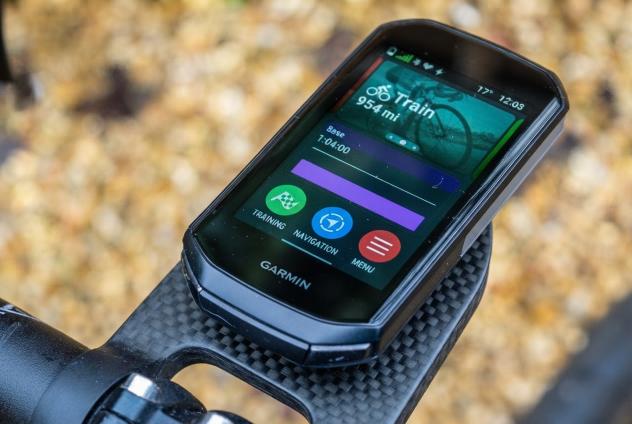
These points match my review and comparison sections.
Garmin Edge 1050 positives
- The 480 x 800 screen is much sharper than the 1040 Solar’s.
- The speaker adds prompts and a bike bell.
- GroupRide, hazard alerts, and on-device course building add useful tools.
- Garmin Pay and 64 GB of storage come with it.
Garmin Edge 1050 negatives
- Battery claims are lower, at up to 20 hours in demanding use.
- It is heavier, at 161 g versus 133 g.
- Many smart tools need a phone or a supported bank.
Garmin Edge 1040 Solar positives
- Solar help and long battery claims suit endurance riders.
- It is lighter, at 133 g.
- Multi-band GNSS aims for better tracking in tough spots.
- The box includes three mounts and a silicone case.
Garmin Edge 1040 Solar negatives
- The screen is less sharp, at 282 x 470.
- It lacks the speaker, bell, and Garmin Pay.
- Solar gain is small on short or cloudy rides.
The 1050’s biggest problem is minor to moderate: shorter battery. A power bank or battery saver mode helps. The 1040 Solar’s biggest problem is minor to moderate: a lower-resolution screen. Compare them side by side if you can.
How I Compared Them Fairly
I used the same checklist for both, and I did not give either brand credit for its name. I split every claim into “listed spec” or “my judgment.”
I did not cross-check against owner reports here, so I made no match or difference claims. Where the two listings disagree, I flagged it.
The 1050 won on display and smart features. The 1040 Solar won on battery and weight. Navigation and training came out equal.
How I Score Garmin Edge 1050 vs 1040
I rate six things, taken from my comparison section. They matter most for how a rider actually uses a bike computer.
A 5 means usable with clear limits. A 7 means good for most needs, with trade-offs. A 9 means excellent with few drawbacks. These scores come from specs and my judgment, not ride tests.
- Display: Edge 1050: 9/10; Edge 1040 Solar: 7/10
- Battery and solar: Edge 1050: 6/10; Edge 1040 Solar: 9/10
- Weight: Edge 1050: 7/10; Edge 1040 Solar: 8/10
- Smart and safety features: Edge 1050: 9/10; Edge 1040 Solar: 6/10
- Navigation and training: Edge 1050: 8/10; Edge 1040 Solar: 8/10
- Value: Edge 1050: 8/10; Edge 1040 Solar: 8/10
Overall: Edge 1050: 8/10; Edge 1040 Solar: 7.5/10. The pros and cons above explain each gap.
What I Did Not Test
I did not ride either unit. I did not test battery, solar charging, GPS accuracy, the touchscreen, the speaker, Garmin Pay, GroupRide, hazard alerts, sensor links, or durability. I ran no lab tests.
My process has limits. I used listings and specs only, and one source per unit can be wrong. Before you buy, check the live price, what is in the box, your phone and sensor support, and Garmin’s own pages.
My Honesty and Disclosure Promise
No brand sponsored or paid for this comparison. This page may contain paid links. I may earn a small commission at no extra cost to you.
I use one checklist for both units, and I report negatives as well as positives. I would change my view if I saw repeated defects, a new model, or good reader feedback.
Last updated: November 23, 2026.
How I Reached My Final Pick
My final pick is the Garmin Edge 1050. It is the better choice for most riders. Three findings decided it:
- It has a much sharper screen, which helps with maps.
- It adds a speaker, bell, group tools, and hazard alerts that the 1040 Solar lacks.
- The two cost almost the same, so extra features come at little extra cost.
The Edge 1040 Solar is still better for ultra and multi-day riders. It also suits riders who want a lighter unit and more battery. Riders who need long runtime should choose it. Riders unsure about screen or battery should compare both before they buy.
My confidence is medium. It rests on specs and listings, not ride tests. Check the current price and Garmin’s pages first.
FAQs for Garmin Edge 1050 vs 1040
What are the main differences between the Garmin Edge 1050 and 1040 Solar?
Both have 3.5-inch touchscreens, but the Edge 1050 adds a built-in speaker, Wi-Fi, and 64 GB storage. The 1040 Solar adds solar charging and multi-band GNSS for rides.
Which Garmin has better battery life?
The 1040 Solar lists longer battery life, but its listing has mixed figures. The 1050 states up to 20 hours in demanding use and 60 hours in battery saver mode.
Does solar charging make the Edge 1040 Solar worth choosing?
Solar charging can add ride time to the Edge 1040 Solar in strong daylight. The listed gains assume steady 75,000-lux light, so I would not count on them in every ride.
Who should choose the Garmin Edge 1050?
I would choose the Edge 1050 for its speaker, bike bell, Wi-Fi, road hazard alerts, and group ride tools. The 1040 Solar is lighter and adds solar charging for long rides.
Is the Garmin Edge 1050 worth the extra cost over the 1040 Solar?
Both cost close to $600 in the supplied listings. The 1050 costs $599.98 and weighs 5.7 ounces; the 1040 Solar costs $594.99 and weighs 4.7 ounces, a useful weight gap.
