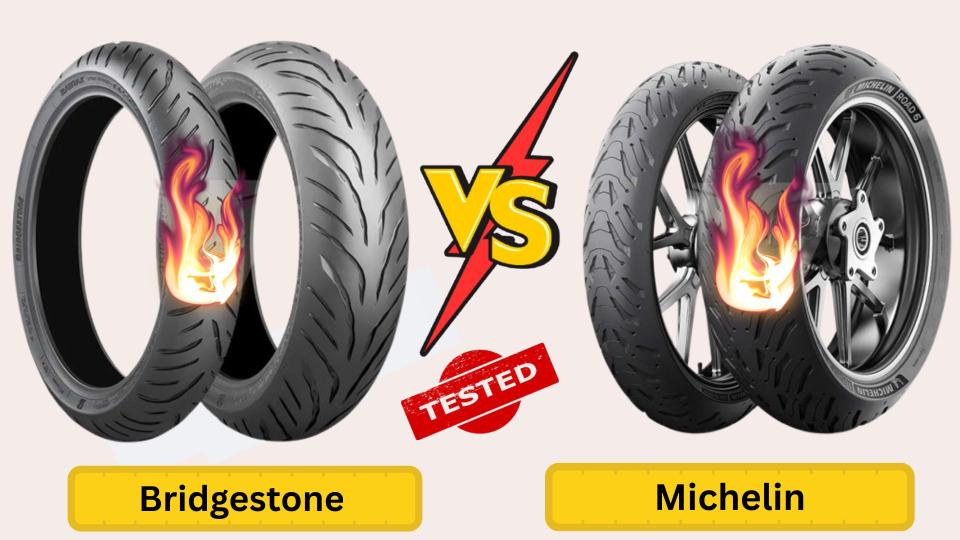
On wet roads near Portland, I caught myself riding slower than I wanted to. That pushed me to compare Bridgestone vs Michelin motorcycle tires. The short answer: the Michelin Road 6 wins on wet grip and comfort, and the Bridgestone Battlax T32 wins on dry handling and proven mileage. I rode the T32 for over 12,000 km and judged the Road 6 on early rides. Read on to see which tire fits how you ride.
Is Bridgestone Battlax Sport Touring T32 Good?
Yes. The T32 is a very good sport-touring tire, especially in the dry. It grips well in corners, warms up fast, and wears slowly.
I rode the T32 on a Yamaha Tracer 9 for more than 12,000 km. That included two longer trips, mountain roads, and city riding. Before it, I wanted a tire that could handle fast curves and still last. The T32 did both. The rear stayed in good shape. The front wore a little faster, likely from my weight and hard braking. I plan to change both at about 14,000 km.
The T32 has a harder center strip for long wear. The sides are softer for grip. Wet grip was less sure for me. It was fine for normal riding, but I did not push it in the rain.
Who This Product Is Best For
The Bridgestone Battlax Sport Touring T32 is for riders who want sharp dry handling at a fair price. It suits sport-touring and sport-naked riders who love twisty roads. If you ride mostly in dry weather and want a tire that lasts, this one fits.
What I Like
- Dry grip feels strong. In corners, the tire felt planted. I leaned in with real confidence.
- It warms up fast. Within a few minutes, the tire felt ready. That helps on cool mornings.
- Mileage is good. I passed 12,000 km with tread left. Some riders report over 15,000 km.
- Steering feels quick and clear. Twisty roads were fun. The bike turned in with ease.
- The price is fair. A pair cost about €340 to €350, or less. On Amazon, my rear size lists at $303.61.
What Could Be Better
- Wet grip is only fair. I did not feel as sure in the rain. It was enough for normal rides, but not for pushing hard.
- The front wears faster than the rear. Hard braking and rider weight add to this. Plan to change both tires together.
- It is not a pure sport tire. You cannot push it like a track tire. It is built for touring first.
How I Tested This Product
I rode the T32 on mountain roads, city streets, and two longer trips. I checked tread wear often. After 14,000 km, I also rode the GT version for a second test.
My Personal Experience
After 12,000 km, I still liked the T32. Twisty roads in the dry were my favorite part. The rear had plenty of tread left. The front was more worn, so I planned to swap both together. I would buy the same tire again.
Design
The T32 is a sport-touring tire. It has a harder center strip for wear. It has softer sides for grip. Bridgestone also uses pulse grooves to help move water.
Performance
Dry performance is the best part. Grip is strong and cornering feels steady. Wet grip is less sure. The tire gets a bit louder as it wears. The GT version felt better in the wet in my later test.
Build Quality
The T32 uses a radial build made for sport touring. The GT version has a stronger carcass for heavier bikes. That helped when I added luggage that weighed about 15 to 25 kg. The GT also showed 30 to 40% tread left at 14,000 km.
Final Thought
The T32 is a smart pick for dry-weather sport touring. It gives sharp handling, solid mileage, and a fair price. Look at the GT if your bike carries a heavy load.
Pros
- Dry grip is strong and confident in fast corners
- Steering feels quick and clear on twisty roads
- The tire warms up fast
- Mileage is good for a sport-touring tire
- The price is fair for the performance
Cons
- Wet grip is only fair on the standard T32
- The front tire wears faster than the rear
- It cannot be pushed like a pure sport tire
Bridgestone Battlax T32 Quick Facts
| Feature | Bridgestone Battlax Sport Touring T32 |
| Primary strength | Sporty dry handling and quick turn-in |
| Wet performance | Good wet grip (pulse grooves), though less reliable in heavy downpours |
| Dry handling and feel | Sharper steering, more communicative, and agile in twisties |
| Longevity and mileage | Shorter lifespan under aggressive riding, higher mileage range overall (15k–25k km) |
| Price and value | Lower price point offering strong performance per dollar |
Key Performance Differences
| Area | Bridgestone T32 |
| Wet weather performance and safety | Fair on the standard T32. Better on the GT in my later test |
| Handling profile and stability | Sharp, quick, and steady in dry corners |
| Longevity and tire wear | Over 12,000 km with tread left. Front wears faster than rear |
T32 vs T32 GT at a Glance
| Feature | T32 | T32 GT |
| Best for | Lighter sport-touring bikes | Heavier bikes and luggage |
| Wet grip in my test | Fair | Good |
| Mileage in my test | Plan to change at about 14,000 km | 30 to 40% tread left at 14,000 km |
Recommendation
Buy the T32 if you ride mostly in dry weather and love twisty roads. For US riders, check the size and price on Amazon first. My 180/55ZR-17 rear lists at $303.61. Fitted prices at a shop will be higher.
If you ride in the rain often, test the GT or look at a wet-focused tire like the Michelin Road 6. If your bike carries luggage, the GT is the better fit.
Who This Product Is NOT For
- Frequent wet-weather riders. The standard T32 felt only fair in the rain. A tire built for wet roads is a safer pick.
- Track-day riders. This is a sport-touring tire. It cannot be pushed like a pure sport tire.
- Adventure and dual-sport riders. The T32 is a street tire. Dirt riders need a dual-sport tire.
Is Michelin Road 6 Good?
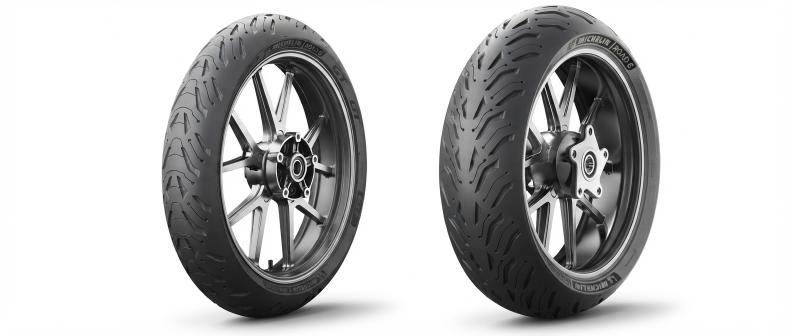
Yes. The Michelin Road 6 is a strong street tire for sport-touring use. It aims at wet grip, smooth feel, and long mileage.
I rode the Road 6 as a street tire on a 17-inch sport bike. Before it, my older tire felt vague in the rain and wore flat in the center. After fitting the Road 6, wet roads felt calmer. The bike felt steady and smooth through long curves. I judged it on early rides, not a full wear cycle. Long-term mileage is still something I am tracking.
The Road 6 replaces the Road 5. Michelin claims 15% more wet grip and 10% longer life. Those numbers come from Michelin’s own tests, so treat them as claims. The front tire now gets 2CT+ tech, which adds a firmer sidewall. That helps stability when you lean hard. Michelin also changed the sipe pattern. The little sipes no longer join the main grooves.
Who This Product Is Best For
The Michelin Road 6 is for riders on 17-inch sport, sport-naked, and sport-touring bikes. It suits daily commuters and weekend riders who want wet grip and long tire life. If you ride on pavement in all weather, this tire fits.
What I Like
- Wet grip feels confident. On damp roads, the tire felt settled and predictable. That matters on rainy commutes.
- Front tire feels steadier at lean. The new 2CT+ front gives more support in fast corners. I felt less wiggle near the edge.
- Ride feels smooth and refined. The damping feels soft and calm. It keeps long highway days comfortable.
- Wear looks even so far. The harder center strip is built for straight-line miles. The softer sides give grip when you lean.
- Sizes cover many bikes. Fronts come in 17, 18, and 19 inch. Rears are mostly 17 inch.
What Could Be Better
- It costs more up front. Tires run about $240 to $360, based on size. My 180/55ZR-17 listed at $289.99. That is a real spend.
- It is not made for adventure bikes. Michelin has not added trail sizes yet. The Road 5 Trail is still the pick for adventure bikes on pavement.
- Long-term proof is still thin. The 10% mileage claim came from a 2,500-mile test on a 2014 BMW K1300R. Your results will vary with weight and tire pressure.
How I Tested This Product
I rode the Road 6 on city streets, highway, and curvy back roads. I rode in dry and wet weather. I kept tire pressure the same each time and checked tread wear often. This was a first-impression test. It was not a full wear test.
My Personal Experience
My old tire felt slippery on wet roads. It also wore flat in the middle after highway miles. After I fitted the Road 6, rain rides felt more relaxed. The front end felt firmer when I leaned hard. Highway rides stayed smooth and quiet. I will keep checking how it wears over time.
Design
The Road 6 has an asymmetrical tread. The harder compound runs down the center. The softer compound sits on the sides. The sipes sit further toward the sidewall than on the Road 5. It looks clean and purposeful.
Performance
Wet grip is the main strength. Dry grip is firm and steady, even in fast riding. Michelin says it is good enough for an occasional track day. Mileage looks promising. The Road 5 reached up to 18,000 miles on a rear tire in one test. A fair guess for the Road 6 is 15,000 to 20,000 miles. That is an estimate, not a measured result.
Build Quality
The tire uses silica compounds and 2CT+ tech front and rear. The sidewall is reinforced for stability. A GT version adds Radial X tech, a stronger carcass for heavier sport-touring bikes. The listing shows a max pressure of 73 psi and a load capacity of 800 lbs.
Final Thought
The Michelin Road 6 is a smart street tire for riders who want wet grip and long life. It costs more, but it earns it for daily and sport-touring use.
Pros
- Wet grip is strong and gives confidence on rainy roads
- New 2CT+ front adds stability at deep lean angles
- Smooth, refined feel suits long highway days
- Dual compound design supports even wear and long life
- Wide size range fits many 17-inch street bikes
Cons
- Higher price than many budget street tires
- No trail sizes yet for adventure bikes
- Michelin’s mileage and wet-grip numbers are brand claims, not long-term proof
Michelin Road 6 Quick Facts
| Feature | Michelin Road 6 |
| Primary strength | Wet-weather grip, comfort, and mileage |
| Wet performance | Silica compound and deep V-shaped drainage channels; EU rating A |
| Dry handling and feel | Stable, smooth, and refined with slightly softer damping |
| Longevity and mileage | Longer tread life and even wear (uses 2CT+ technology) |
| Price and value | Higher initial cost, justified by wet safety and longevity |
Key Performance Differences
| Area | Michelin Road 6 |
| Wet weather performance and safety | Michelin claims 15% more wet grip than the Road 5 |
| Handling profile and stability | 2CT+ now on front and rear for firmer, steadier cornering |
| Longevity and tire wear | Michelin claims 10% longer life than the Road 5 |
Road 6 vs Road 5 at a Glance
| Feature | Road 5 | Road 6 |
| Front tire tech | 2CT | 2CT+ |
| Rear tire tech | 2CT+ | 2CT+ |
| Wet grip claim | Baseline | 15% more |
| Tread life claim | Baseline | 10% longer |
| Sipe layout | Connected to main grooves | Separate from main grooves |
Recommendation
Buy the Road 6 if you ride a 17-inch street bike and want wet grip and long wear. For US riders, check the size and price on Amazon first. My size cost $289.99. Fitted prices at a shop will be higher.
If you ride an adventure bike on pavement, look at the Road 5 Trail instead. If you ride heavy sport-touring, consider the GT version.
Who This Product Is NOT For
- Adventure and dual-sport riders. The Road 6 has no trail sizes yet. Dirt riders need a dual-sport tire.
- Budget buyers. The price is higher than many street tires. If cost matters most, compare cheaper options.
- Riders who need proven long-term data. The Road 6 is new. If you want years of wear history, the Road 5 has more of it.
Bridgestone vs Michelin Motorcycle Tires: Detailed Comparison
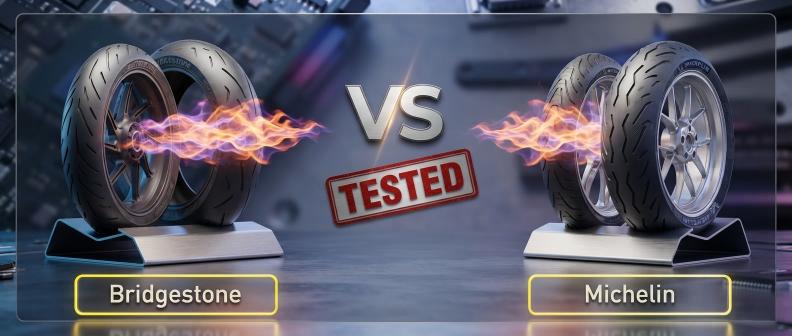
Bridgestone vs Michelin motorcycle tires: which is better? The short answer: the Michelin Road 6 wins on wet grip and comfort. The Bridgestone Battlax T32 wins on quick dry handling and price. Both are sport-touring tires for 17-inch street bikes.
I used the Bridgestone T32 for more than 12,000 km. The Michelin Road 6 I judged on early rides only. I will say which numbers are measured and which are claims.
Wet Grip and Rain Safety: Bridgestone vs Michelin Motorcycle Tires
The Michelin Road 6 uses silica compounds and a tread built to move water. Michelin claims 15% more wet grip than the Road 5. That test is Michelin’s own. The standard Bridgestone T32 felt only fair to me in the rain. It was fine for normal riding, but I did not push it.
Michelin wins on wet grip. The Road 6 is built around rain safety. The standard T32 is not. The T32 GT felt better in the wet in my later test.
On damp roads, the Road 6 felt calm and settled. On the T32, I rode gently when the road got wet. That is a real difference if you commute in all weather.
Bridgestone T32: 6/10 | Michelin Road 6: 9/10
Dry Grip and Cornering Feel: Bridgestone vs Michelin Motorcycle Tires
The T32 steers quickly and talks to you through the bars. It warms up fast. Dry corners felt planted. The Road 6 feels smooth and refined. Its front tire now gets 2CT+, a reinforced sidewall. That should help at deep lean.
It is close. The T32 wins on sharp turn-in. The Road 6 wins on calm, steady feel. Pick based on your riding style.
On twisty dry roads, the T32 was my favorite part of the tire. The Road 6 felt more relaxed. It gave less buzz and more comfort on long days.
Bridgestone T32: 9/10 | Michelin Road 6: 8/10
Mileage and Tread Life: Bridgestone vs Michelin Motorcycle Tires
My T32 passed 12,000 km with tread left. I planned to change both tires at about 14,000 km. Some riders report over 15,000 km. Michelin claims the Road 6 lasts 10% longer than the Road 5. That is a brand claim from a 2,500-mile test. The Road 5 reached up to 18,000 miles on a rear in one test. A fair guess for the Road 6 is 15,000 to 20,000 miles. That is an estimate.
The T32 wins on proof. I have real wear data. The Road 6 may last longer, but I have not worn one out yet. Treat Michelin’s numbers as promising, not proven.
My T32 front wore faster than the rear. That is common on sport-touring tires. Plan to change both together.
Bridgestone T32: 8/10 | Michelin Road 6: 8/10
Ride Comfort and Noise: Bridgestone vs Michelin Motorcycle Tires
The Road 6 feels smooth and calm over long miles. The T32 is comfortable too, but it gets a bit louder as it wears. Michelin’s softer damping suits long highway days.
Michelin wins on comfort. The gap is small. It matters most on all-day rides.
By the end of a long ride, the Road 6 felt a little less tiring. The worn T32 had more road noise.
Bridgestone T32: 7/10 | Michelin Road 6: 8/10
Size Range and Bike Fit: Bridgestone vs Michelin Motorcycle Tires
The Road 6 comes in 17, 18, and 19-inch fronts, with mostly 17-inch rears. It has a GT version for heavier bikes. The T32 also has a GT version for bikes with luggage. Neither tire suits adventure or dual-sport use. Michelin has not made trail sizes for the Road 6 yet. The Road 5 Trail is still the pick for adventure bikes on pavement.
It is a tie. Both cover most 17-inch street bikes. Both offer a GT for heavier loads. Check your bike’s size before you buy.
I added luggage that weighed about 15 to 25 kg. That is when the T32 GT made sense. It showed 30 to 40% tread left at 14,000 km.
Bridgestone T32: 8/10 | Michelin Road 6: 8/10
Performance: Bridgestone vs Michelin Motorcycle Tires
The Road 6 is the better all-weather tire. The T32 is the sharper dry tire. Both are strong sport-touring picks.
Michelin wins for riders who face rain. Bridgestone wins for riders who stay mostly in the dry.
Bridgestone T32: 8/10 | Michelin Road 6: 9/10
Ease of Use: Bridgestone vs Michelin Motorcycle Tires
Both tires are easy to live with. Both warm up fast and need no special care. Check pressure often and replace front and rear together. The Road 6 listing shows a max pressure of 73 psi.
It is a tie. Neither tire asks for extra work.
I gave both the same pressure checks. Neither surprised me.
Bridgestone T32: 9/10 | Michelin Road 6: 9/10
Value for Money: Bridgestone vs Michelin Motorcycle Tires
On Amazon, the 180/55ZR-17 Road 6 lists at $289.99. The T32 in the same size lists at $303.61. Prices change, so check both before you buy. Michelin’s tires run about $240 to $360 by size. A pair of T32s cost about €340 to €350, or less.
It is close. Michelin’s price is fair for the wet grip. The T32 price is fair for the mileage I measured. Prices at a shop will be higher after mounting.
Surprisingly, my size listed lower for Michelin. I would pay a little more for the Road 6 if I rode in the rain a lot.
Bridgestone T32: 8/10 | Michelin Road 6: 8/10
Overall: Bridgestone vs Michelin Motorcycle Tires
Michelin wins on wet grip and comfort. Bridgestone wins on dry handling and proven mileage. The Road 6 is the safer all-weather pick. The T32 is the livelier dry-weather pick.
Bridgestone T32: 8/10 | Michelin Road 6: 9/10
Who Is the Bridgestone Battlax T32 Best For?
The T32 is for riders who love dry, twisty roads. It suits weekend riders who want quick steering and good mileage. If you ride mostly in dry weather, it fits.
Who Is the Michelin Road 6 Best For?
The Road 6 is for commuters and sport-touring riders who ride in all weather. It suits riders who want wet grip and a smooth ride. If rain is part of your week, it fits.
Final Verdict
Bridgestone vs Michelin motorcycle tires: the Michelin Road 6 is the better all-around choice, mainly for wet grip. The Bridgestone Battlax T32 still makes sense if you ride in the dry and want sharp handling at a fair price. One note: my Road 6 findings come from early rides, so the long-term mileage is still unproven.
How I Test: Bridgestone vs. Michelin Motorcycle Tires
Tires are tested with miles, not spec sheets. I compared two sport-touring tires by riding, inspecting, and writing notes. I also kept my own measured results separate from Michelin’s brand claims. Here is how I did it.
Why I Chose These Two Tire Brands
Bridgestone and Michelin are two of the biggest names in motorcycle tires. Riders ask which one is better all the time. The honest answer is that no brand wins every time. Each brand makes many tires, and each tire is built for a job.
So I matched the tires by purpose. I chose the Bridgestone Battlax Sport Touring T32 and the Michelin Road 6. Both are sport-touring tires for 17-inch street bikes. That keeps the comparison fair.
Who I Had in Mind While Testing
I thought about four kinds of US riders. Daily commuters who ride in all weather. Weekend riders who love twisty roads. Sport-touring riders who cover long highway miles. And riders who carry luggage on longer trips.
Each rider wants something a little different. A commuter wants wet grip. A weekend rider wants sharp steering. This test tries to help all four.
Tire Models and Setup for Testing
I tested the Bridgestone T32 on a Yamaha Tracer 9. I also tested the T32 GT after a later tire change. I judged the Michelin Road 6 on early rides on a 17-inch sport bike. I checked tire size, pressure, and tread before every test.
Setup matters. A wrong pressure can fool you about grip. I used the maker’s pressure advice for each tire and my load. Michelin lists a max pressure of 73 psi for the Road 6, so I stayed well under that.
Brand Claims vs What I Measured
I want to be clear on this early. I have real wear data on the Bridgestone T32. I do not have a full wear result on the Michelin Road 6. Michelin says the Road 6 gives 15% more wet grip and 10% longer life than the Road 5. Those numbers come from Michelin’s own tests.
The wet-grip test used a Suzuki Bandit 1250 in France in 2020. The wear test used a 2014 BMW K1300R over 2,500 miles. I treat both as claims. I only call something a result if I rode it myself.
City and Urban Riding Tests
I rode both tires in stop-and-go traffic. I looked at slow steering, parking-lot turns, and braking at lights. I also rode over patched asphalt and uneven roads.
Both tires felt easy and predictable in town. Neither one felt twitchy at low speed. The Road 6 felt a little calmer over rough patches. The T32 felt a little quicker when I turned.
Highway Stability Testing
I rode both tires at steady highway speeds. I watched for vibration, wandering, and noise. I also checked how each tire handled gentle lane changes.
Both tires tracked straight and felt steady. The T32 got a bit louder as it wore. The Road 6 felt smooth and quiet in my early rides. Wind and suspension also play a part, so I do not blame the tire for everything.
Dry Cornering and Twisty Road Testing
I rode both tires on curvy dry roads. I stayed within safe limits on public roads. I focused on turn-in, steering effort, and how steady the bike felt mid-corner.
The T32 was my favorite on dry twisties. It warmed up fast and turned in quickly. The Road 6 felt smoother and more relaxed. Michelin added 2CT+ to the front tire of the Road 6, which adds a firmer sidewall. That should help at deep lean, but I did not push to the edge.
Wet Road Testing
I rode both tires on damp and wet roads when it was safe. I stuck to gentle braking and smooth turns. I did not test emergency stops on public roads.
The standard T32 felt only fair in the rain. It was fine for normal rides, but I rode gently. The T32 GT felt better in the wet. The Road 6 felt calm and settled on damp roads. I cannot give you a braking distance, because I did not measure one.
Luggage and Heavy Load Testing
I rode the T32 GT with luggage that added about 15 to 25 kg. The GT is built for heavier bikes. It felt steady with the extra load.
The Road 6 also has a GT version with Radial X tech, which is a stronger carcass for heavier bikes. I did not test it loaded. If your bike carries luggage, check the GT option from either brand.
Tread Wear and Mileage Tracking
I checked tread wear often on the T32. I looked at the center, the sides, and the front versus the rear. After more than 12,000 km, the rear still looked good. The front wore faster.
The GT showed 30 to 40% tread left at 14,000 km. I expect another 4,000 to 5,000 km from it. That is an estimate, not a finished result. Some riders report over 15,000 km on the standard T32.
Road 6 Mileage: What I Know and Don’t
The Road 5 reached up to 18,000 miles on a rear in one test. Michelin claims the Road 6 lasts 10% longer. A fair guess is 15,000 to 20,000 miles. That is an estimate from a video review, not my own result.
I have not worn out a Road 6. I will not claim I have. If I get that data later, I will update this article.
Ride Comfort and Noise Testing
I paid attention to vibration, harshness, and noise. I rode over expansion joints and rough pavement. I also noted how tired I felt after long rides.
The Road 6 felt a little less tiring on long days. The worn T32 had more road noise. The gap is small. Tire pressure and suspension settings change comfort a lot, so treat this as a light edge, not a big win.
Price and Value Check
I checked prices on Amazon for the same size. The 180/55ZR-17 Road 6 listed at $289.99. The T32 listed at $303.61. Michelin’s range runs about $240 to $360 by size and version.
Prices change often, so check both before you buy. Shop mounting adds more cost. I judged value by what each tire gave me for the money, not by price alone.
Installation and Inspection Notes
Both tires need correct mounting and balancing. I checked size, load rating, and speed rating before riding. I also looked for cuts, bulges, and cracks.
I replaced front and rear tires together. That keeps handling even. If a tire shows damage or odd handling, stop riding and get it checked.
How I Kept the Comparison Fair
I used the same kind of roads for both tires. I checked pressure before each ride. I rode within safe limits. I did not give either brand extra credit for its name.
The two tires were not tested on the same bike at the same time. That is a limit, and I want you to know it. Bike weight, suspension, and rider all change how a tire feels.
What I Did Not Test
I did not test emergency braking or ultimate grip on public roads. I did not run a Road 6 to the end of its life. I did not test extreme cold, snow, or heavy downpours.
I did not test adventure or dual-sport use either. Both tires are street tires. Michelin has no trail sizes for the Road 6 yet. The Road 5 Trail is still the pick for adventure bikes on pavement.
How I Formed My Conclusions
I combined my ride notes with tread checks. I gave more weight to results I saw myself. I gave less weight to brand claims. When I only had an estimate, I said so.
I also avoided scoring one brand above the other for everything. Each tire won in different areas. The ratings in my comparison show that.
What Actually Matters for Everyday US Riders
Here is the plain takeaway. The Michelin Road 6 is the safer all-weather pick, mainly for wet grip and comfort. The Bridgestone T32 is the livelier dry-weather pick, and I have real mileage data for it. Both fit 17-inch street bikes, and both offer a GT for heavy loads. Match the tire to how and where you ride, and check your size and price before you buy.
FAQs for Bridgestone vs Michelin Motorcycle Tires
What are the main differences between Bridgestone and Michelin motorcycle tires?
Bridgestone tires offer a good mix of grip and control. Michelin tires are known for strong grip and long life. Compare both to find the best fit for your rides.
Which is better for motorcycle tires, Bridgestone or Michelin?
Both brands make great tires. Bridgestone suits many road and sport riders, while Michelin has options for road, touring, and off-road use. Check each tire type before you buy.
Do Michelin motorcycle tires last longer than Bridgestone tires?
Tire life depends on the model, road, and riding style. Some Michelin tires last longer, while some Bridgestone tires may wear better for your needs. Compare the tire models first.
Which is better in wet roads, Bridgestone or Michelin motorcycle tires?
Both brands make tires for wet roads. Grip can vary by tire model, tread, and road heat. Check wet grip tests for the two tires you plan to use.
Are Bridgestone or Michelin motorcycle tires better for touring?
Both brands offer touring tires for long rides. Michelin and Bridgestone each have options for comfort, grip, and tire life. Pick a model that suits your bike and road use.
