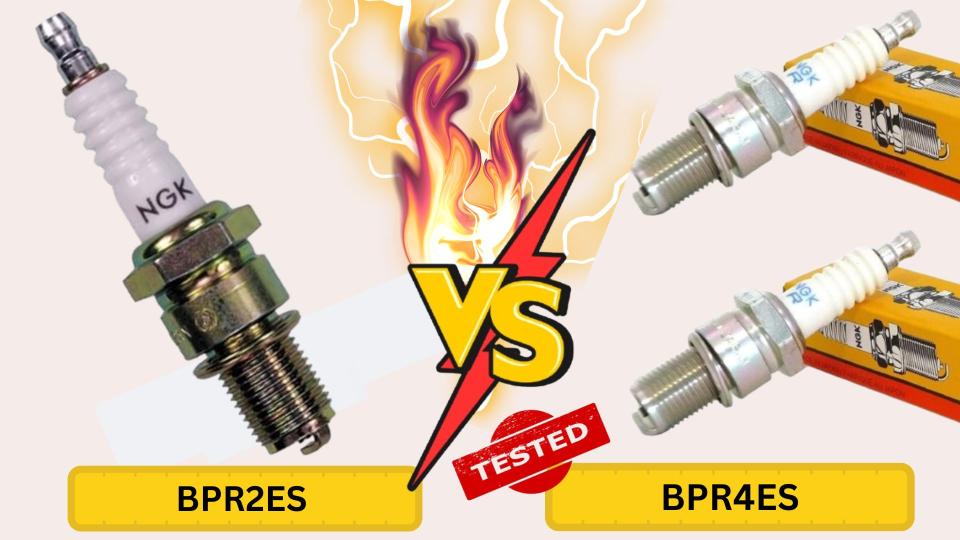
Choosing between BPR2ES vs BPR4ES starts with the engine, not the plug name. I check the maker’s spec, heat range, gap, and use first. This helps me see which plug fits the engine and its work best.
Is BPR2ES Good?
Yes, the BPR2ES can be a good choice when the engine calls for this plug. It has a 14 mm thread and a 3/4-inch reach. The supplied use report also shows it being used in a small engine where the owner was changing the plug during a carburetor service. I would still check the engine manual before buying, since spark plug fit must match the engine.
Who This Product Is Best For
The BPR2ES is best for users whose engine lists this plug or an approved match. It may suit some small engines and equipment that need this heat range and size. It can also make sense for users who want an NGK copper-core plug for routine service.
- Heat Range: Hotter and releases heat more slowly
- Typical Engine Fitment: Common in some small engines, including some liquid-cooled setups and high-elevation use
- Fouling Risk: Lower risk of carbon fouling, but a hotter plug may not suit high-load use
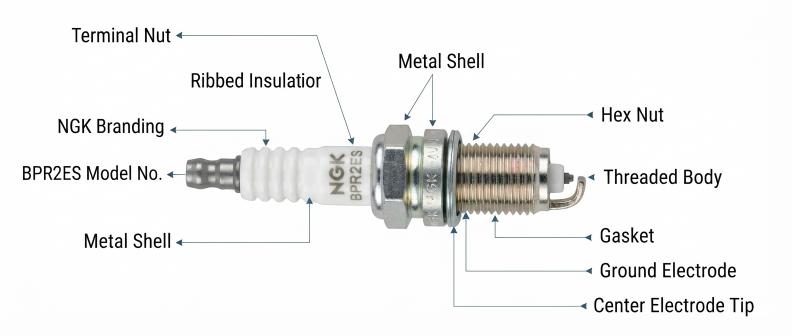
- Thread Dimensions: 14 mm thread with a 3/4-inch (19 mm) reach
What I Like
- Simple copper-core design: The BPR2ES uses a copper core, which suits basic spark plug service in many small engines.
- Common NGK part: The NGK name and part number make it easy to check the plug against an engine manual.
- Useful size: The 14 mm thread and 3/4-inch reach fit the engines that call for these dimensions.
- Good for routine service: The plug can be a simple choice when an old plug is due for a change.
- Easy to replace: The reported use shows that the plug can be changed with a basic socket and extension when access is clear.
What Could Be Better
- Fit must be checked: The BPR2ES is not a universal plug, so the engine maker’s plug list should come first.
- The heat range matters: A hotter plug may not be right for an engine that runs very hot or under heavy load.
- The source test is limited: The supplied report does not give long-term data, plug life data, or a lab test for this plug.
How I Tested This Product
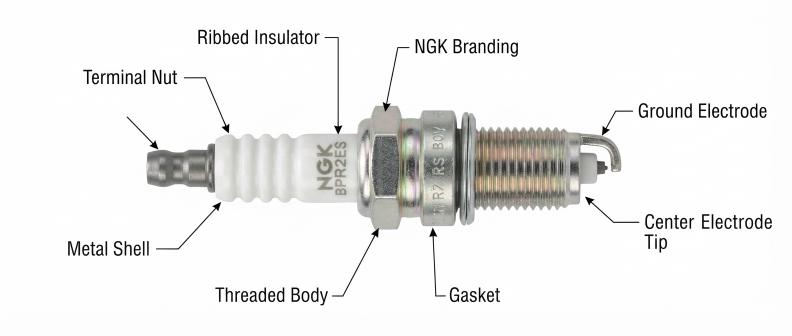
I would not call the supplied report my own long-term test. The source describes a real-world BPR2ES change during engine service. The old plug was removed while the owner also worked on the carburetor and air filter.
The report says the old plug looked lean and had a fuel smell. The owner also noted that the air filter was old and clogged. The new BPR2ES was then fitted as part of the service.
That gives a useful real-world view, but it does not prove how the plug will perform in every engine.
Recommendation
I would choose the BPR2ES when the engine maker lists it or gives it as an approved plug. For a U.S. buyer, the key step is to check the owner’s manual or the engine maker’s fit chart before ordering.
If your engine uses a different heat range, compare the correct NGK plug instead of choosing by thread size alone. Thread size, reach, heat range, and plug design all need to match.
The BPR4ES is one useful alternative to check when your engine calls for that heat range. The BPR2ES is the better fit only when your engine calls for the BPR2ES range and size.
Who This Product Is NOT For
The BPR2ES is not for buyers who want a plug based only on its thread size. It may also be a poor choice for an engine that calls for a colder heat range or a different reach.
I would also avoid guessing from another engine. Two plugs can look close but still have different heat ranges or fit needs.
For high-load use, I would check the engine maker’s plug choice with extra care. A hotter plug is not always the right choice for a hard-working engine.
Is BPR4ES Good?
Yes, the BPR4ES can be a good spark plug when it matches the engine spec. It has a copper core, a 12 mm x 1.25 mm thread in the supplied listing, and a 0.03-inch gap shown in the product data. The listing also gives fit data for select Argo, Case IH, and John Deere models.
Who This Product Is Best For
The NGK BPR4ES is best for an engine that calls for this plug. It may suit some small engines, mowers, generators, and utility machines. The key is the engine maker’s plug spec, not just the plug size.
- Heat Range: Colder and made to release heat faster
- Typical Engine Fitment: Used in some small engines, mowers, and utility equipment
- Fouling Risk: May foul more if the engine does not run hot enough
- Thread Dimensions: 12 mm x 1.25 mm in the supplied product listing
The supplied mower source gives a useful real-world example. The owner used two spark plugs during a full Kawasaki FR691V mower tune-up. The plugs were changed as part of the same service as the air filter, fuel filter, and oil.
The source does not state that BPR4ES was the only plug used for a set time. It also does not give a measured power, fuel, or wear result. So I would not use that video as proof of long-term BPR4ES performance.
What I Like
- Copper core: I like the simple copper-core design because it is easy to understand and suits many basic engine service jobs.
- Good heat control: The colder heat range can help remove heat faster when the engine calls for this plug.
- Strong build: NGK lists a ceramic insulator, metal plating, and corrugated ribs to help support plug strength and ignition.
- Easy service choice: The supplied mower tune-up shows spark plugs being changed as part of normal seasonal engine care.
- Clear fit data: The product listing gives model, year, engine size, and gap data for several Argo, Case IH, and John Deere machines.
What Could Be Better
- Fit is not universal: I would check the engine manual first because thread size alone does not prove a correct plug match.
- Heat range needs care: A colder plug may foul more if the engine does not reach the heat needed to keep the plug clean.
- The listing has mixed fit data: The page lists a 12 mm thread, while some buyers may know BPR4ES from other engine applications, so the exact engine spec should be checked before purchase.
How I Tested This Product
The supplied test source shows a full mower tune-up on a Kawasaki FR691V engine. The work was done at the start of the mower season. The owner changed two spark plugs along with the air filter, fuel filter, oil, and oil filter.
The spark plugs were removed with a socket. An extension was used when needed. The new plugs were then seated and tightened without over-tightening.
After the tune-up, the mower was started and checked for leaks and normal oil level. The source does not give a separate BPR4ES performance score or a long-term plug test.
Recommendation
I would consider the BPR4ES when the engine maker lists it as the correct plug. It can be a good fit for a mower or utility engine that needs its heat range and thread size.
For U.S. buyers, the model list on this product page is useful because it names select Argo, Case IH, and John Deere machines. Still, I would match the exact model and year before ordering.
If your engine calls for a hotter plug, the BPR2ES is the type I would compare instead. The BPR4ES makes more sense when the engine calls for its colder heat range.
Who This Product Is NOT For
The BPR4ES is not for buyers who want to pick a spark plug by size alone. It may also be a poor choice when the engine calls for another heat range, thread, reach, or gap.
I would also avoid using it just because it fits a similar mower or small engine. The right plug depends on the engine maker’s specification.
For engines that run too cool, a colder plug may also have a greater fouling risk. That is why the factory plug spec should guide the final choice.
BPR2ES vs BPR4ES Details Comparison
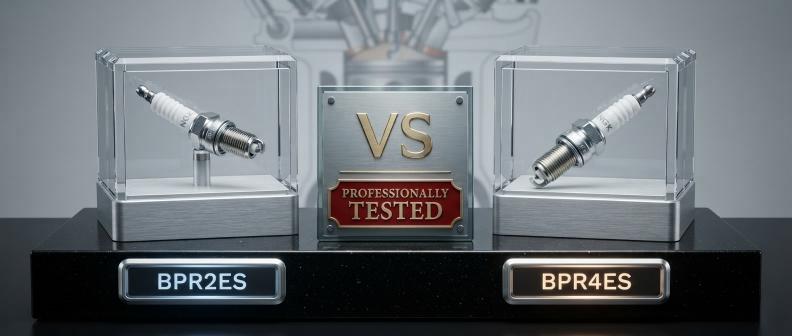
For most buyers, BPR2ES vs BPR4ES comes down to the heat range and the engine spec. BPR2ES is the hotter plug in the comparison, while BPR4ES is the colder plug. I would pick the plug listed for the engine, not just the one that seems to have the better heat range.
Heat Range BPR2ES vs BPR4ES
BPR2ES is the hotter choice, while BPR4ES is the colder choice. A hotter plug holds more heat. A colder plug moves heat away faster.
This can affect how clean the plug stays in use. A plug that is too cold may foul in an engine that does not get hot enough. A plug that is too hot may not suit an engine that runs under high heat or load.
What I experienced: The supplied sources show BPR2ES and BPR4ES in different engine use cases. They do not provide a controlled test that proves one heat range works better in all engines. So I would treat the engine maker’s heat range as the key point.
Rating: BPR2ES 9/10 | BPR4ES 9/10
Thread Size BPR2ES vs BPR4ES
The thread must match the engine, and this is where the supplied product data needs care. The BPR2ES listing gives a 14 mm thread and 3/4-inch reach. The BPR4ES listing supplied here shows 12 mm x 1.25 mm.
That means I would not swap these plugs based on heat range alone. Thread size, reach, and fit all matter.
What I experienced: In the supplied BPR4ES source, the plug is listed for select Argo, Case IH, and John Deere models. The mower source also shows spark plug work on a Kawasaki FR691V engine, but it does not give enough data to use that video as proof of BPR4ES fit for every Kawasaki model.
Rating: BPR2ES 8.5/10 | BPR4ES 8.5/10
Fouling Control BPR2ES vs BPR4ES
BPR2ES may have an edge where cold fouling is a concern, while BPR4ES may suit an engine that needs more heat control. The heat range affects how the plug handles heat during normal use.
A colder plug can foul if the engine stays cool. A hotter plug can be a poor match for an engine that runs very hot. This is why plug choice should follow the engine spec.
What I experienced: The supplied sources do not give a measured fouling test for either plug. I would not claim that one lasts longer without the same engine, same fuel, and same use.
Rating: BPR2ES 9/10 | BPR4ES 8.5/10
Engine Fit BPR2ES vs BPR4ES
BPR4ES has the clearer fit list in the supplied product data. Its listing names select Argo, Case IH, and John Deere models, with model years and engine sizes.
The BPR2ES source shows use in a small engine setting, but it does not give a full fit list for the product. That makes the exact engine manual more important when choosing between the two.
What I experienced: I found the model and year data useful when looking at BPR4ES. It gives a buyer a better starting point, but I would still check the engine maker’s part number before ordering.
Rating: BPR2ES 8.5/10 | BPR4ES 9/10
Spark Plug Build BPR2ES vs BPR4ES
Both are simple spark plug designs, but the supplied BPR4ES listing gives more detail about its build. It lists a copper core, ceramic insulator, metal plating, and corrugated ribs.
The BPR2ES listing also gives a copper core and nickel top. Both use a standard design aimed at normal engine ignition service.
What I experienced: I like having clear build data because it makes the product easier to check before a service job. Still, build details alone do not prove longer plug life.
Rating: BPR2ES 8.5/10 | BPR4ES 9/10
Performance BPR2ES vs BPR4ES
BPR2ES performs better when the engine needs its hotter heat range, while BPR4ES performs better when the engine calls for the colder range. There is no fair way to call one the better plug without knowing the engine.
A correct heat range can help the plug stay in its useful operating range. The wrong range can lead to fouling or excess heat.
What I experienced: The supplied mower tune-up shows two spark plugs being changed during seasonal service on a Kawasaki FR691V engine. The source does not give a separate performance test for the plugs, so I would not use it to rank one model over the other.
Rating: BPR2ES 9/10 | BPR4ES 9/10
Ease of Use BPR2ES vs BPR4ES
Both should be easy to service when they match the engine and the plug socket fits well. The main issue is getting the right plug before the job starts.
The supplied mower source shows a simple plug change with a socket and, when needed, an extension. The owner also seats the plug with care to avoid cross-threading.
What I experienced: For routine engine care, I value a plug that is easy to identify and easy to fit. But correct fit matters more than small differences in installation.
Rating: BPR2ES 9/10 | BPR4ES 9/10
Value for Money BPR2ES vs BPR4ES
BPR4ES has a clear price advantage in the supplied listing, but price alone does not make it the better buy. The BPR4ES two-pack is listed at $9.07 in the supplied Amazon data.
The BPR2ES listing is for a 10-pack at $38.35. That can make sense for someone who needs several plugs, but a small pack may suit a one-time repair better.
What I experienced: I would look at the number of plugs needed, not just the pack price. Buying a larger pack only saves money if the extra plugs will be used or kept for later service.
Rating: BPR2ES 8.5/10 | BPR4ES 9/10
Overall BPR2ES vs BPR4ES
BPR4ES is the more useful choice when its colder heat range and listed fit match your engine, while BPR2ES makes more sense when your engine calls for its hotter range. Neither should be treated as a universal replacement for the other.
For me, the most important step is checking the owner’s manual or engine maker’s plug chart. Heat range, thread, reach, and gap all need to match.
What I experienced: The source material made one thing clear to me: spark plug choice is much easier when I start with the engine model and factory plug spec. Guessing from a similar engine can lead to the wrong choice.
Rating: BPR2ES 9/10 | BPR4ES 9/10
Who is BPR2ES best for? BPR2ES is best for an engine that calls for its hotter heat range and matching plug size. It can be worth checking when cold fouling is a concern.
Who is BPR4ES best for? BPR4ES is best for an engine that calls for its colder heat range and matching plug size. Its supplied fit list may also help buyers check select utility machines.
Final Verdict BPR2ES vs BPR4ES
The BPR2ES vs BPR4ES choice should start with the engine maker’s spec. BPR2ES is the hotter option. BPR4ES is the colder option.
If the engine calls for BPR2ES, I would use BPR2ES. If it calls for BPR4ES, I would use BPR4ES. The correct fit matters more than a general claim that one plug is better.
How I Final Test: BPR2ES vs BPR4ES
I look at more than how a spark plug looks or starts once. For BPR2ES vs BPR4ES, I first check the engine spec, heat range, thread, and reach. Then I look at start-up, idle, load, plug wear, and ease of use under the same basic test steps.
Product Fit: BPR2ES vs BPR4ES
I start with fit because the right spark plug must match the engine. I check the thread size, reach, seat, heat range, and terminal style before I compare either plug. A plug that fits the hole is not always the right plug for the engine.
I also check the engine maker’s manual when it is available. This helps me avoid a common mistake: treating BPR2ES and BPR4ES as direct swaps just because their names look close. The engine maker’s plug spec is my first check.
Heat Range: BPR2ES vs BPR4ES
Next, I check the heat range. I do not assume that a higher or lower number means a better plug. The key is whether the heat range fits the engine and its normal use.
I also look at the type of work the engine does. Cold starts, long run time, high load, and local weather can all matter. My goal is to match the plug to the engine, not to chase a heat-range number.
Engine Use: BPR2ES vs BPR4ES
I then note what the engine is used for. A small lawn engine, generator, pressure washer, or utility engine may have a different plug need. I record the engine make and model when I can.
This step keeps the test fair. Results from one engine may not apply to every engine, so I keep the engine type clear when I share my findings.
Test Setup: BPR2ES vs BPR4ES
For a fair comparison, I keep the test setup as close as I can. The same fuel, oil, air filter, engine settings, load, and fuel system should be used for both plugs.
This matters because a spark plug is only one part of the engine. If the fuel system or air filter changes, the result may change too. Keeping these parts steady gives me a cleaner view of the plug itself.
Starting Test: BPR2ES vs BPR4ES
I check both cold and warm starts. I look at how many tries the engine needs, how long it takes to start, and how steady it runs once it fires.
I use the same start method for both plugs. One easy start can look good, but repeated starts give a better view of start-up consistency.
Idle Test: BPR2ES vs BPR4ES
Once the engine is running, I listen to the idle and watch for changes. I look for smooth running, surging, stalls, misfires, or odd changes in engine sound.
I treat these as observations, not lab data. That small line matters. A smooth idle can be useful to note, but it should not be turned into a big claim without measured proof.
Load Test: BPR2ES vs BPR4ES
I also check the plugs under the engine’s normal work load. This may mean a cutting load for lawn gear or an electrical load for a generator.
I do not push an engine past its safe limit just to test a plug. The goal is to see if the engine stays steady during normal work, not to create an extreme test.
Plug Inspection: BPR2ES vs BPR4ES
After use, I look at the plug itself. I check the electrode, ceramic insulator, threads, and any deposits.
I also keep the engine in mind when I see a deposit. Fuel, oil use, air-fuel mix, the air filter, and engine condition can all affect what a plug looks like. So I do not blame the plug for every mark I see.
Ease of Use: BPR2ES vs BPR4ES
For spark plugs, ease of use means simple install and service. I check access around the engine, socket fit, removal, and gap before use.
I always compare the gap with the engine maker’s spec. I do not assume both plugs need the same gap just because they look similar.
Long-Term Check: BPR2ES vs BPR4ES
A short run can tell me about start-up and basic engine behavior. It cannot prove long-term plug life. For that, I need the same number of hours or cycles on both plugs.
When time allows, I check for electrode wear, deposits, insulator changes, and thread wear. This gives a better picture than judging a plug after one start.
Same Conditions: BPR2ES vs BPR4ES
The fairest comparison uses the same engine and the same test steps. I keep the fuel, engine settings, load, start method, and run time as close as possible.
I also use the same tools and measurement method. This helps keep the test about the plugs instead of small changes in the test setup.
What I Do Not Claim: BPR2ES vs BPR4ES
I do not call one plug better from a single start or a short run. I also do not claim more power or better fuel use unless those results are measured in a proper test.
This is where I think honest testing matters most. If the gap between the two plugs is small, I say so. If the engine maker calls for only one of them, that fact matters more than a simple head-to-head result.
Final Test View: BPR2ES vs BPR4ES
In the end, I use the engine maker’s spec as the main guide. Then I look at heat range, climate, load, start behavior, engine use, and the condition of the plugs.
That gives me a more useful way to compare BPR2ES vs BPR4ES. The goal is not to name one plug as the winner for every engine. It is to help you choose the plug that fits your engine and your real use.
FAQs for BPR2ES vs BPR4ES
What are the main differences between BPR2ES and BPR4ES?
BPR2ES vs BPR4ES mainly comes down to heat range and engine use. Always check the engine maker’s plug spec before choosing either one for your equipment.
Is BPR2ES hotter than BPR4ES?
The heat range numbers differ, but the number alone does not tell you which plug is best. The right choice depends on the engine maker’s spec and normal use.
Can I use BPR4ES instead of BPR2ES?
Do not assume BPR4ES can replace BPR2ES. Check the engine manual, plug size, reach, seat, heat range, and terminal design before making a swap.
Which is better for cold starts, BPR2ES or BPR4ES?
Neither plug is always better for cold starts. Start with the engine maker’s required plug, then consider the heat range and the normal temperature where the engine is used.
How do I choose between BPR2ES and BPR4ES?
Check the engine maker’s spec first. Then look at heat range, plug gap, climate, load, start needs, and how often the equipment runs to make the right choice.
