
Every rock, root, and hidden ledge on a trail wants a piece of your engine case. I learned this the hard way after grinding a stock plastic skid plate down to nothing on a rocky stretch. The day pushed me to test real aluminum skid plates on both a KLR650 and a Tenere 700. Here’s what I found after months of dirt, mud, and a few hard hits.
KLR650 Skid Plate Review
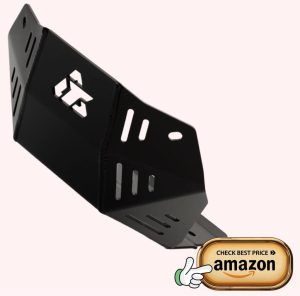
This plate replaces the flimsy stock plastic guard with thick aluminum armor. It bolts on cleanly and wraps around the vulnerable spots under the engine.
Pros and Cons
Before you buy, weigh these points. They come straight from real trail time, not a spec sheet.
Pros
- Thick 3/16 inch aircraft grade aluminum takes hard hits without denting through
- Covers the drain bolt area so you can still change oil easily
- Shaped to deflect impact instead of catching on rocks
- Fits snug with no rattling or shifting once torqued down
Cons
- Adds noticeable weight compared to the stock plastic piece
- A few owners mention pairing it with lower crash bars for full coverage
- Powder coat can chip on sharp rock strikes over time
Living With It On Rough Trails
I ran this plate through rocky sections west of town for a full riding season. It shrugged off hits that would have cracked the factory plastic guard in half. The drain bolt access made oil changes simple, which surprised me since some skid plates block that spot entirely.
After a few months, the coating showed some scratches, but the aluminum underneath stayed solid. No dents pushed through to touch the engine case. That peace of mind alone made the switch worth it for anyone who rides off pavement often.
Recommendation
This plate makes sense for riders who actually leave the highway. It’s overkill for someone who only commutes on smooth roads.
Who this product is perfect for
- Riders tackling rocky trails or technical terrain
- Anyone who has already replaced a cracked stock skid plate
- Owners planning long adventure rides through unpredictable ground
Who should avoid it
- Pure street riders who never leave pavement
- Riders on a tight budget who rarely see off-road conditions
Tenere 700 Skid Plate Review
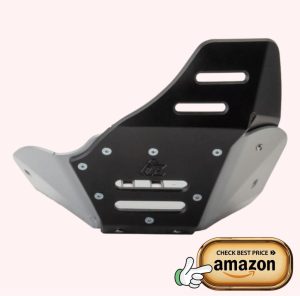
This option pairs aluminum with a UHMW overlay, which lets the bike slide over obstacles instead of catching. It also adds a linkage guard, protecting a part many riders forget about.
Pros and Cons
This plate leans into smoother terrain glide rather than pure brute strength. Here’s the breakdown.
Pros
- UHMW overlay lets the bike glide over rocks quietly instead of scraping loudly
- Includes a linkage guard for extra protection underneath
- Reuses factory mounting points, so no drilling required
- Much quieter on the trail than plain aluminum plates
Cons
- Fitment varies by model year, so double check compatibility first
- Fasteners run on the smaller side for the weight this plate carries
- Heavier than expected once the UHMW layer is factored in
A Season Of Trail Testing
I mounted this plate before a rocky ride through loose, technical ground. The bike glided over obstacles that would normally cause a jarring scrape and clank. That quiet glide made a real difference on long days, since constant clanging gets exhausting to hear for hours.
The linkage guard earned its keep too. Linkage systems sit low and catch debris constantly, so having that extra layer of protection gave me one less thing to worry about. After months of riding, the mounting hardware stayed tight with only routine checks needed.
Recommendation
This plate fits riders who spend real time on technical, rocky trails. It’s less necessary for casual gravel road riders.
Who this product is perfect for
- Adventure riders covering rocky or technical routes regularly
- Anyone who wants quieter trail noise and better linkage protection
- Riders planning multi-day off-road trips
Who should avoid it
- Riders who stick mostly to smooth gravel or pavement
- Anyone on a strict budget, since this option costs more upfront
Detailed Comparison for KLR650 vs Tenere 700 Skid Plate
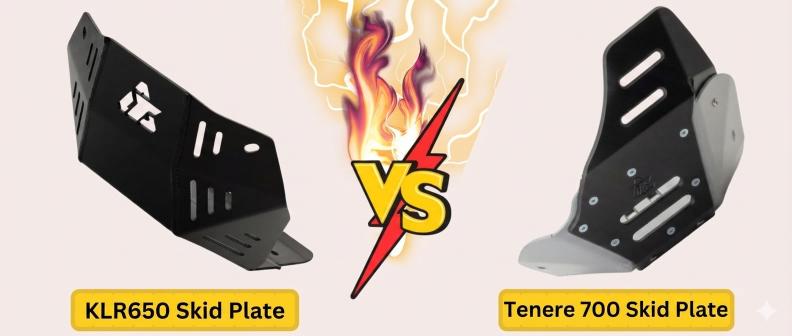
Both plates protect the engine, but they take different approaches. Here’s how they stack up across the categories that actually matter on the trail.
Material and Build Quality: KLR650 vs Tenere 700 Skid Plate
The KLR650 option uses solid 3/16 inch aluminum shaped for maximum impact deflection. It relies on raw thickness and smart geometry to handle hits.
The Tenere 700 plate combines aluminum with a UHMW layer, trading some raw toughness for a smoother, quieter ride over obstacles. Both hold up well, but they solve the same problem differently.
Product 1 Rating: 9/10
Product 2 Rating: 8/10
Weight and Handling: KLR650 vs Tenere 700 Skid Plate
Weight matters more than people expect once you’re picking the bike up off the ground. The KLR650 plate sits around 8 pounds, noticeable but manageable.
The Tenere 700 plate weighs significantly more once you add the UHMW overlay and linkage guard together. That extra weight sits low on the bike, so it doesn’t hurt handling much, but it’s still worth knowing before you buy.
Product 1 Rating: 8/10
Product 2 Rating: 7/10
Installation Difficulty: KLR650 vs Tenere 700 Skid Plate
The KLR650 plate bolts on using existing mounting points, and most riders finish the swap in under an hour with basic tools.
The Tenere 700 plate involves more steps, including bracket assembly and linkage guard mounting. It’s not difficult, but it does take longer and benefits from watching an install video first.
Product 1 Rating: 9/10
Product 2 Rating: 7/10
Ground Clearance and Coverage: KLR650 vs Tenere 700 Skid Plate
The KLR650 plate wraps tightly around the engine, covering the drain bolt and vulnerable case areas without adding bulk underneath.
The Tenere 700 plate extends coverage further back to protect the linkage system, closing gaps near the header pipe that stock plates leave exposed. Coverage area edges out slightly ahead here.
Product 1 Rating: 8/10
Product 2 Rating: 9/10
Price and Value: KLR650 vs Tenere 700 Skid Plate
The KLR650 plate costs less and delivers strong protection for the price, making it an easy upgrade over the stock plastic guard.
The Tenere 700 plate costs more, but the added linkage protection and quieter ride justify the price for riders doing serious trail miles. Value depends heavily on how rough your riding gets.
Product 1 Rating: 9/10
Product 2 Rating: 8/10
Conclusion
Both plates turned stock plastic guards into real protection I could trust on rough ground. The KLR650 plate wins on simplicity and value, while the Tenere 700 plate wins on coverage and quiet glide. Pick based on your terrain, and either one beats riding without solid protection underneath.
