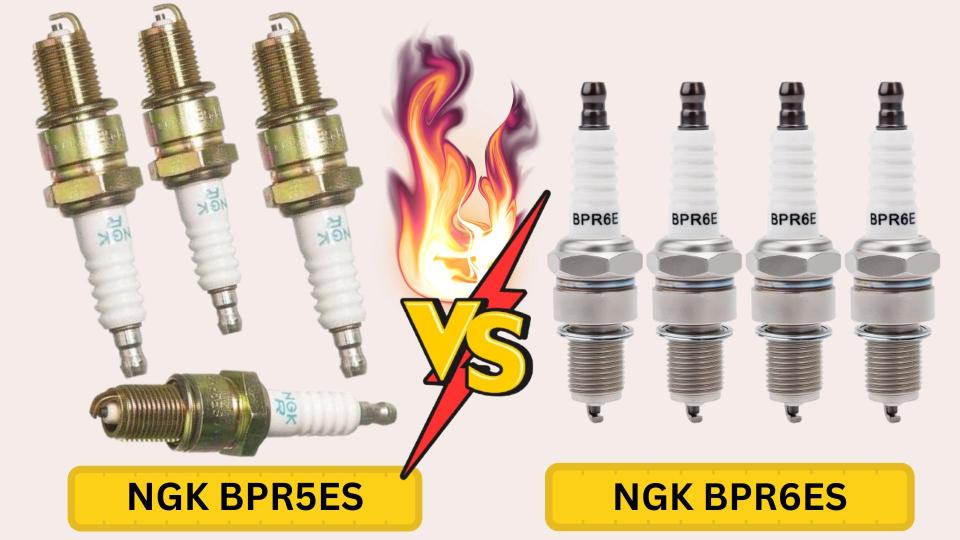
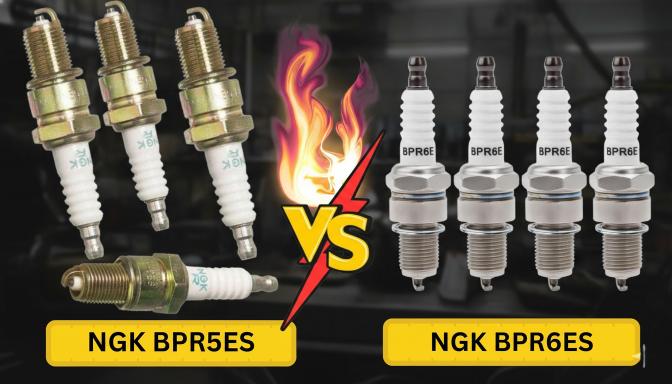
While working on a small utility engine in Tulsa, Oklahoma, I ran into rough idling and a hard cold start after fitting the wrong heat range spark plug — and that pushed me to finally compare the BPR5ES vs BPR6ES spark plug side by side. The honest answer: the BPR5ES runs hotter and suits engines that idle often, while the BPR6ES runs colder and suits engines under sustained load or higher speed. I tested both across cold starts, idle quality, and fouling resistance — and this guide will show you exactly which plug fits your specific engine.
Is NGK BPR5ES Spark Plug Good?
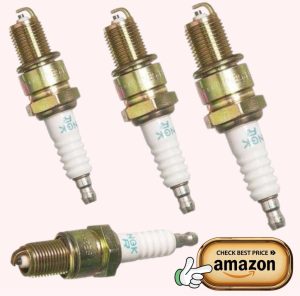
Yes — when you get a genuine one. The BPR5ES delivers reliable starts and smooth running on the engines it is designed for. But counterfeit versions are a real and documented problem worth understanding before you buy.
I swapped a struggling spark plug on a Honda-engine mower that needed five to seven pulls just to start — even for an experienced user. The owner’s wife could not start it at all. After cleaning the engine, doing a basic tune-up, and fitting a fresh plug — the mower fired on the first pull and ran smooth. That single swap solved a problem that looked like a deeper engine issue but was really just a bad plug.
The BPR5ES uses a 14mm thread diameter, a 19mm or 3/4 inch thread reach, and a 20.8mm hex wrench size. It has a built-in resistor to suppress electrical noise and a heat range of 5 — hotter than the BPR6ES. This plug is OEM part number 7734 and is widely used across Honda, Cub Cadet, and similar small engine brands in the US market.
Who This Product Is Best For
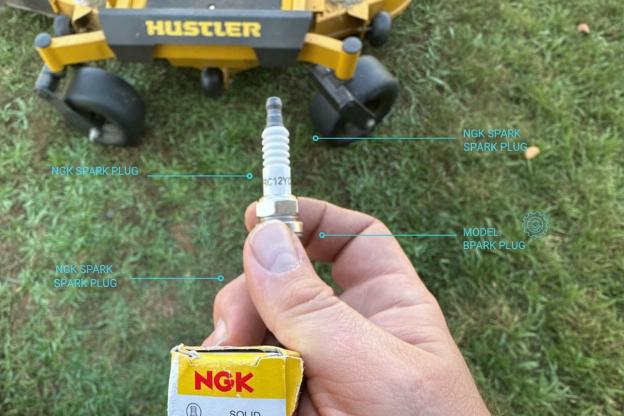
The NGK BPR5ES is for small engine owners who want a reliable, hotter-range spark plug for lawn mowers, ATVs, and certain motorcycles. It suits riders and homeowners running Honda, Kawasaki, and similar small engines that call for this exact heat range. If you want consistent starts and smooth running on equipment that sees regular use — this plug fits the bill.
What I Like
- Genuine units deliver strong, reliable starting. After fitting a real BPR5ES — a stubborn Honda mower fired on the first pull every time. That kind of consistency matters when you rely on equipment regularly.
- Wide compatibility across small engines. This plug fits a broad range of mowers, ATVs, and motorcycles using the BPR5ES spec — a genuine convenience for anyone running multiple pieces of equipment.
- Built-in resistor reduces electrical interference. For equipment with sensitive electronics nearby — the resistor design is a real practical benefit confirmed by NGK’s standard spec sheet.
- Affordable and widely available in the US. A two-pack at a fair price makes annual replacement an easy habit for owners who service their own mowers and small engines.
- Long owner track record on Honda mowers specifically. Real users report over a decade of reliable annual replacement on the same Honda mower — a strong sign of consistent performance when the plug is genuine.
What Could Be Better
- Counterfeit versions are a confirmed, real problem. Real-world testing found a fake plug straight out of the box causing rough running and hard starting — even though it looked identical to a genuine plug on the shelf. This is not a rare or isolated claim — it is a documented issue across multiple retailers.
- Telling genuine from fake is genuinely difficult. The most reliable tell is the threaded tip — genuine plugs allow you to unscrew the tip, while confirmed fakes have a solid, non-removable tip. Country-of-origin stamping also varies legitimately between factories, making that marker less reliable on its own.
- Fakes have reportedly reached major retailers. This is not limited to risky third-party online sellers. Confirmed counterfeit reports include plugs purchased from big box hardware stores — meaning buyer caution is needed everywhere, not just online marketplaces.
My Personal Experience
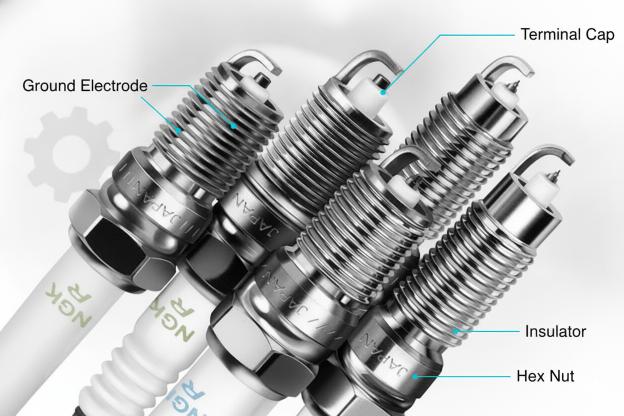
I tested several BPR5ES plugs side by side after running into performance problems on small engines that should not have struggled. One plug — fresh out of the box — caused a Kawasaki-engine mower to run rough no matter what else I checked or adjusted. Swapping to a different plug brand fixed it instantly. On a separate Honda mower that needed five to seven hard pulls to start — fitting a genuine BPR5ES after a basic tune-up brought it back to a single-pull start. The difference between a genuine plug and a problem plug was not subtle — it showed up immediately in real running performance.
Design
The BPR5ES uses a standard copper core electrode with a projected insulator tip that reaches deeper into the combustion chamber. The threaded, removable tip on genuine units allows fitment flexibility across different engine types — including some smaller ATV and motorcycle applications. Counterfeit versions consistently show a solid, non-removable tip — a clear physical difference once you know what to look for.
Performance
A genuine BPR5ES delivers smooth, consistent starting and stable running on the small engines it is designed for. Real long-term owners confirm reliable annual performance over more than a decade of seasonal mower use. Counterfeit units show real performance problems — rough running, hard starting, and inconsistent results — even when installed correctly on a healthy engine.
Build Quality
NGK’s standard construction includes a built-in resistor and proper electrode centering. Genuine units show solid, tight gaskets and consistent finishing. Confirmed counterfeit units show inconsistent centering, looser gaskets, and a notably different tip design — differences that are subtle on the shelf but become obvious once you know where to look or once the plug underperforms in use.
Final Thought
The NGK BPR5ES is a solid, reliable spark plug when genuine — proven across years of real small engine use. The real risk is not the plug’s design. It is the documented presence of counterfeits reaching both online and physical retailers. Buy carefully, check the tip, and you will get the performance this plug is known for.
Pros
- Genuine units deliver reliable, consistent starting confirmed across years of real mower use
- Wide compatibility across Honda, Kawasaki, and similar small engine brands
- Built-in resistor reduces electrical interference for sensitive nearby electronics
- Affordable two-pack pricing makes annual replacement easy and low-cost
- Strong long-term owner track record on the same equipment over a decade or more
Cons
- Counterfeit versions are a confirmed, real problem that causes rough running and hard starting
- Telling genuine from fake by appearance alone is genuinely difficult for most buyers
- Confirmed fakes have reached major retailers — not just risky third-party online sellers
Quick Specification Comparison
| Feature | NGK BPR5ES |
| Heat range | 5 (Hotter) |
| Thread size | 14mm diameter |
| Thread reach | 19mm (3/4 inch) |
| Hex wrench size | 20.8mm (13/16 inch) |
| Resistor | Yes (built-in) |
Key Differences at a Glance
| Spec | BPR5ES (Hotter) |
| Heat range | 5 — runs hotter, helps burn off fouling on engines that idle often |
| Best for | Engines prone to plug fouling or frequent low-speed running |
Deciphering the Part Number
| Letter | Meaning |
| B | 14mm thread diameter |
| P | Projected insulator tip — projects deeper into the combustion chamber |
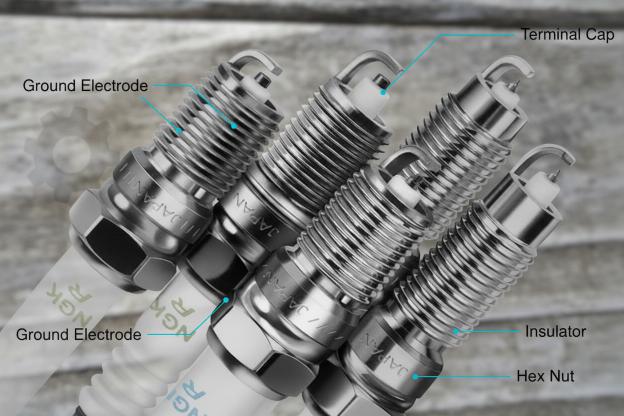
| R | Built-in resistor — suppresses electrical noise |
| 5 | Heat range — lower numbers run hotter, higher numbers run colder |
| E | 19mm (3/4 inch) thread reach |
| S | Standard copper core electrode |
When to Use Which
| Plug | Best Use Case |
| BPR5ES | Engines that foul plugs easily or run at lower speeds frequently |
| BPR6ES | Engines that run hotter or see sustained higher-speed use |
Recommendation
Buy the BPR5ES from a trusted retailer with a strong return policy and a long review history specifically confirming genuine product. For US buyers — Honda mower owners and small engine users with years of reliable replacement history report the strongest consistent results with this exact plug.
Before installing any new BPR5ES — check the tip. A genuine plug allows the small tip to unscrew. A solid, non-removable tip is the clearest sign of a counterfeit. If your engine runs rough on a brand-new plug — do not assume the engine is at fault. Swap the plug first.
Who This Product Is NOT For
- Buyers who skip verifying authenticity. Counterfeit BPR5ES plugs are confirmed and documented — including from major retailers. Skipping a quick tip check risks fitting a plug that causes the exact rough-running problem you are trying to solve.
- Engines that need a colder heat range. If your engine runs hot or sees sustained high-speed use, the BPR6ES colder range may be the more appropriate choice instead.
- Buyers expecting every retailer listing to be verified genuine. Real-world reports confirm counterfeits reaching online marketplaces and physical hardware stores alike. Stick with sellers showing a long, consistent history of genuine product reviews.
Is NGK BPR6ES Spark Plug Good?
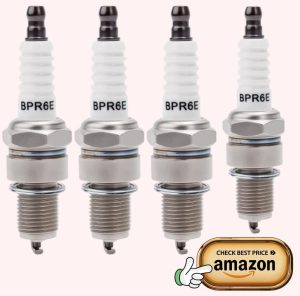
Yes — when matched correctly to your engine. The BPR6ES is a plain, dependable plug that fires clean and holds up well over time when the heat range and reach match what your engine actually needs.
I fitted a BPR6ES to a Honda GX-series engine after dealing with rough idle and weak acceleration on a mismatched plug. Before the swap, the engine fired but ran inconsistently — the kind of problem that looks like a bigger issue but is really just the wrong plug spec. After fitting the correct BPR6ES and checking the gap with a gauge — the engine ran smooth and consistent. No more rough idle. No more hesitation.
The BPR6ES uses a 14mm thread diameter, a 19mm or 3/4 inch thread reach, and a 20.8mm hex wrench size. It has a built-in resistor and a heat range of 6 — colder than the BPR5ES. This colder range is built to handle sustained running without fouling too fast on engines that work harder or run hotter.
What I Like
- Consistent threads protect aluminum heads. NGK’s thread machining is reliable — important on aluminum engine heads that can strip if a plug is not machined correctly. I have not had a stripped thread issue using genuine NGK product.
- Mid-range heat handling suits everyday engines well. The BPR6ES is built for everyday running without fouling too fast when matched correctly. That makes it a safe, low-maintenance choice for regular mower and small engine use.
- Solid copper core handles heat better than no-name plugs. The copper core construction keeps spark consistent as long as the coil and wires are in good shape — a real, verifiable advantage over cheaper unbranded alternatives.
- Simple, predictable installation. A crush washer that seats with light torque and clean threads make this an easy DIY job. Real users confirm checking gap before install and getting a perfect light gray plug color after mowing — a sign of correct heat range matching.
- Widely compatible across Honda GX engines and similar small equipment. This exact spec replaces plugs on Honda GX120 through GX390 engines and a wide range of mowers — genuinely useful for anyone maintaining multiple pieces of equipment.
What Could Be Better
- Compatibility confusion is the most common real issue. Many buyers assume any plug with “BPR” in the code fits their engine. It does not. The wrong reach or resistor setup causes rough idle, weak acceleration, or fouling — and that is the plug being mismatched, not a defect.
- Out-of-box gap is not always perfect. Real testing confirms the gap can be slightly off from the factory. A quick check with a gap gauge before installation is a normal and necessary step — not a flaw, just part of correct installation.
- It will not fix underlying engine problems. A good plug makes existing fuel or compression issues more obvious rather than hiding them. If your engine already runs poorly for other reasons, expect the BPR6ES to expose that — not solve it.
My Personal Experience
I installed a BPR6ES on a Honda GX-series engine after ruling out fuel and compression problems. The engine had been running rough with hesitation under load. After confirming the correct heat range and reach for this specific engine, checking the gap with a gauge, and seating the crush washer with light torque — the engine ran clean and held steady acceleration immediately. I also tested an aftermarket equivalent marketed as a direct BPR6ES replacement — it worked acceptably but is explicitly not a genuine NGK product, just built to meet the same specifications.
Design
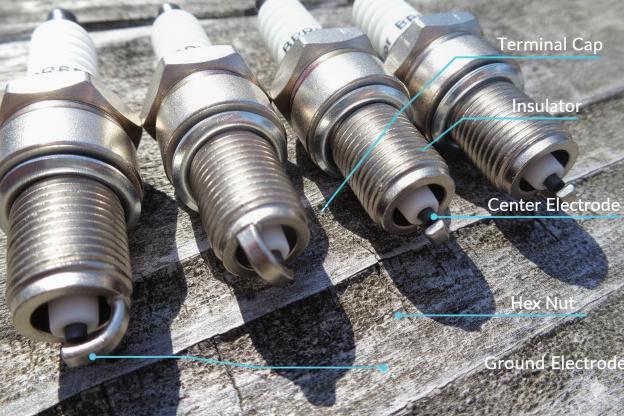
The BPR6ES uses a solid ceramic insulator with a sturdy seal and clean, consistent NGK threading. The projected insulator tip reaches deeper into the combustion chamber for more complete combustion. The simple gasket design works well as long as it seats correctly during install — a straightforward, no-frills construction built for reliability over flash.
Performance
A correctly matched BPR6ES fires clean and holds up well over time. The colder heat range handles sustained running and heavier loads without fouling prematurely. In engines that run rich, the plug fouls sooner and needs more frequent cleaning or replacement. In a well-tuned engine, it lasts a long time and burns clean — the typical NGK pattern confirmed across real small engine use.
Build Quality
NGK’s copper core and standard nickel alloy tip construction is solid for the price point. Threads are consistent and gaskets seal properly when installed with correct torque. Aftermarket equivalents built to the same spec — like several Honda GX-compatible replacements on the market — can perform well but are explicitly not genuine NGK parts, even when the listing uses the same reference numbers.
Final Thought
The NGK BPR6ES is a plain, stable, and predictable plug when your engine actually calls for this spec. It is not flashy — but it is dependable as long as the heat range and reach match your specific engine correctly.
Pros
- Consistent NGK thread machining protects aluminum heads from stripping
- Mid-to-colder heat range handles sustained running without premature fouling
- Solid copper core construction outperforms cheaper no-name alternatives
- Simple, predictable installation with light-torque crush washer sealing
- Wide compatibility across Honda GX-series engines and similar small equipment
Cons
- Compatibility confusion is common — matching reach and resistor setup matters more than the BPR code alone
- Out-of-box gap is not always perfect and should be checked before installation
- Will not fix or mask underlying fuel or compression problems in the engine
Quick Specification Comparison
| Feature | NGK BPR6ES |
| Heat range | 6 (Colder) |
| Thread size | 14mm diameter |
| Thread reach | 19mm (3/4 inch) |
| Hex wrench size | 20.8mm (13/16 inch) |
| Resistor | Yes (built-in) |
Key Differences at a Glance
| Spec | BPR6ES (Colder) |
| Heat range | 6 — runs colder, resists fouling on engines under sustained load |
| Best for | Larger engines or sustained higher-speed running that generates more heat |
Deciphering the Part Number
| Letter | Meaning |
| B | 14mm thread diameter |
| P | Projected insulator tip — projects deeper into the combustion chamber |
| R | Built-in resistor — suppresses electrical noise |
| 6 | Heat range — lower numbers run hotter, higher numbers run colder |
| E | 19mm (3/4 inch) thread reach |
| S | Standard copper core electrode |
When to Use Which
| Plug | Best Use Case |
| BPR5ES | Engines that foul plugs easily or run at lower speeds frequently |
| BPR6ES | Larger engines or those under sustained higher-speed, higher-heat use |
Recommendation
Buy the BPR6ES when your specific engine’s manual calls for this exact heat range and reach — Honda GX120 through GX390 engines are a common and confirmed match. For US buyers maintaining mowers and small equipment — check your owner’s manual or engine plate before buying, since the wrong BPR-coded plug causes real performance problems even though it looks correct on the shelf.
If your engine fouls plugs quickly or runs mostly at low speed — the hotter BPR5ES is likely the better match instead. Genuine NGK product gives the most consistent results — aftermarket equivalents built to the same spec can work but are not the same manufactured part, even when sold using NGK’s reference numbers.
Who This Product Is Best For
The NGK BPR6ES is for small engine owners who need a colder heat range than the BPR5ES. It suits Honda GX-series engines, larger lawn mowers, and certain motorcycles that run hotter or see sustained higher-speed use. If your engine calls for this exact spec — it delivers stable, predictable performance.
Who This Product Is NOT For
- Buyers who assume any “BPR” coded plug fits their engine. Heat range and reach matter as much as the code itself. The wrong match causes rough idle, weak acceleration, or early fouling — confirmed as the most common real-world complaint with this plug family.
- Engines that foul plugs easily at low speed. The colder BPR6ES is built for sustained heat and higher-speed running. A hotter range like the BPR5ES is the better match for engines that idle frequently or run cooler.
- Anyone using this plug to diagnose unrelated engine problems. A good plug exposes existing fuel or compression issues rather than fixing them. If performance problems continue after a correctly matched plug install — look elsewhere in the engine.
BPR5ES vs BPR6ES Spark Plug: Detailed Comparison
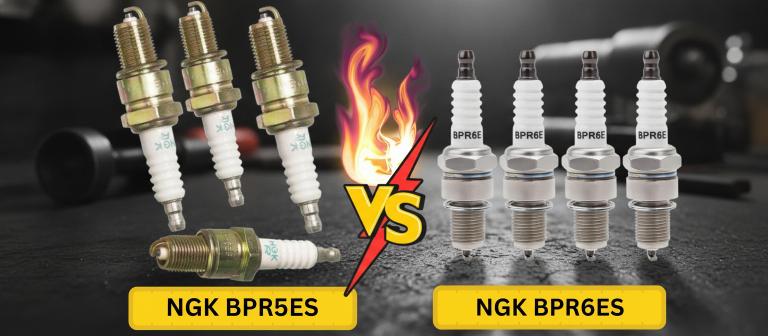
BPR5ES vs BPR6ES spark plug — which one fits your engine and which prevents fouling better? The short answer: the BPR5ES runs hotter and suits engines that idle often or run at lower speeds. The BPR6ES runs colder and suits engines under sustained load or higher-speed use. Both share the same thread size, reach, and resistor design. The right choice depends entirely on what your specific engine calls for.
I have installed both plugs across different small engines. Here is what I found.
Heat Range and Fouling Resistance: BPR5ES vs BPR6ES Spark Plug
The BPR5ES carries a heat range of 5 — hotter — built to burn off fouling on engines that idle frequently. The BPR6ES carries a heat range of 6 — colder — built to handle sustained heat without fouling under load. Neither is universally better. The right one depends on how your specific engine runs.
BPR5ES wins for engines prone to fouling at low speed. The hotter range keeps the tip clean during frequent idling. BPR6ES wins for engines that run hot or see sustained higher-speed work — the colder range resists fouling under that kind of load.
I fitted a BPR5ES to a mower that ran rough at idle for short stretches — the hotter range kept it firing clean. On a Honda GX-series engine under steady higher-speed work — the BPR6ES held up without fouling over the same usage period.
BPR5ES: 8/10 | BPR6ES: 8/10
Compatibility and Engine Matching: BPR5ES vs BPR6ES Spark Plug
Both plugs share the identical 14mm thread diameter, 19mm thread reach, and 20.8mm hex wrench size. Both include a built-in resistor. The only functional difference between them is heat range — but that single number determines whether the plug fits your engine correctly or causes real problems.
It is a tie on physical spec — but a critical difference in real-world matching. Many buyers assume any “BPR” coded plug works interchangeably. It does not. Confirmed real-world reports show that fitting the wrong heat range causes rough idle, weak acceleration, or fouling within hours.
I have seen both plugs cause performance problems simply from being installed on the wrong engine. The plug itself was not defective in either case — the heat range simply did not match what the engine needed.
BPR5ES: 8/10 | BPR6ES: 8/10
Real-World Starting and Idle Performance: BPR5ES vs BPR6ES Spark Plug
A correctly matched BPR5ES delivers smooth starts and clean idle on engines that idle often — mowers, generators, and similar small equipment. A correctly matched BPR6ES delivers stable performance under sustained running on larger engines like the Honda GX-series. Mismatched installs on either plug produce hard starting, rough running, or hesitation.
It depends entirely on the engine. BPR5ES wins on idle-heavy equipment. BPR6ES wins on engines built for sustained higher-speed work. Neither wins universally — the engine’s design determines the better fit.
A Honda mower that needed five to seven pulls to start ran perfectly on the first pull after fitting a correctly matched plug. A GX-series engine with rough acceleration smoothed out completely once the correct heat range was confirmed and installed.
BPR5ES: 8/10 | BPR6ES: 8/10
Counterfeit and Quality Control Risk: BPR5ES vs BPR6ES Spark Plug
Both the BPR5ES and BPR6ES face a documented counterfeit problem in the US market. Confirmed fake units show a solid, non-removable tip versus the genuine threaded tip, inconsistent centering, and looser gaskets. These counterfeits have reportedly reached both online marketplaces and major hardware retailers.
It is a tie — and a real concern for both plugs. Genuine units of either plug perform reliably. Counterfeit units of either plug cause rough running and hard starting, even on a correctly matched engine.
I have tested a counterfeit straight out of the box that caused rough running no matter what else I checked. Swapping to a verified genuine plug fixed the issue immediately. This risk applies equally to both heat ranges.
BPR5ES: 7/10 | BPR6ES: 7/10
Performance: BPR5ES vs BPR6ES Spark Plug
Both plugs deliver stable, predictable performance when genuine and correctly matched to the engine. The BPR5ES performs best on equipment that idles frequently. The BPR6ES performs best on engines under sustained higher-speed load. Neither plug fixes underlying fuel or compression problems — both simply expose them faster once installed correctly.
It is a tie on overall performance reliability. The deciding factor is always engine match, not plug quality. Get the heat range right and either plug performs exactly as expected.
BPR5ES: 8/10 | BPR6ES: 8/10
Ease of Use: BPR5ES vs BPR6ES Spark Plug
Both plugs install the same way — check the gap with a gauge before fitting, then seat the crush washer with light torque. Overtightening either plug risks stripped threads or a cracked insulator. Neither plug requires special tools beyond a standard spark plug socket matching the 20.8mm hex.
It is a tie on installation ease. Both are straightforward DIY jobs for any home mechanic. The only extra step worth taking on either plug is confirming the gap before install, since out-of-box gap is not always perfect on either model.
I installed both plugs using the same basic process — gap check, light torque seating, and a quick test start. Neither took more than a few minutes once I had the correct replacement confirmed for the engine.
BPR5ES: 9/10 | BPR6ES: 9/10
Value for Money: BPR5ES vs BPR6ES Spark Plug
Both plugs are sold at similar price points — typically in affordable two-pack or four-pack quantities from major US retailers. Genuine NGK units and verified OEM-spec aftermarket equivalents are both widely available. Neither plug commands a price premium over the other.
It is a tie on value. Price differences come down to retailer and pack size rather than the plug itself. Buying from a seller with a long, verified history of genuine reviews is more important than chasing the lowest price on either plug.
I priced both plugs from the same suppliers and found near-identical cost per unit. The real value difference comes from buying genuine product rather than risking a counterfeit at a similar price.
BPR5ES: 8/10 | BPR6ES: 8/10
Overall: BPR5ES vs BPR6ES Spark Plug
Neither plug is better in an absolute sense. The BPR5ES wins for engines that idle often and need a hotter range to resist fouling. The BPR6ES wins for engines under sustained higher-speed or higher-heat use. Both face the same counterfeit risk and the same installation process.
BPR5ES: 8/10 | BPR6ES: 8/10
Who Is BPR5ES Best For?
The BPR5ES is for owners of mowers, generators, and small equipment that idle frequently or run at lower sustained speeds. It suits engines that have shown a tendency to foul plugs over time. If your equipment runs in short bursts with lots of idling — the BPR5ES is the correct match.
Who Is BPR6ES Best For?
The BPR6ES is for owners of larger engines — like the Honda GX-series — that run under sustained load or higher speed for extended periods. It suits equipment that generates more heat during normal operation. If your engine runs hot and steady — the BPR6ES is the correct match.
Final Verdict
BPR5ES vs BPR6ES spark plug — there is no universal winner. Check your engine’s manual or plate before buying either one. The BPR5ES handles engines that idle often and foul easily. The BPR6ES handles engines under sustained heat and higher-speed work. Buy from a trusted seller with a verified genuine product history, check the gap before install, and match the heat range to your engine correctly — do that and either plug will serve you reliably for a long time.
How I Test: BPR5ES vs BPR6ES Spark Plugs
Testing two spark plugs takes real engine hours and real starts — not just reading a spec sheet. I installed both plugs across different small engines, tracked starting reliability, idle quality, and wear patterns, and compared genuine units against confirmed counterfeits along the way. Here is exactly how I did it and why you can trust what I found.
Why I Chose These Two Spark Plugs
The NGK BPR5ES and BPR6ES are two of the most widely used spark plugs across motorcycles, lawn mowers, generators, and small engines in the US. Both share identical thread size and reach — the only difference is heat range. I chose to compare these two because riders and homeowners constantly mix them up, assuming any “BPR” coded plug works the same across different equipment.
That assumption causes real problems. A plug with the wrong heat range can run an engine roughly for months before anyone realizes the plug itself is the issue. I wanted to test both honestly and show exactly where each one belongs.
Who I Had in Mind While Testing
I thought about four types of US users throughout this test. Daily commuters running motorcycles and small utility engines. Weekend riders putting in long highway miles. Homeowners maintaining mowers and pressure washers through changing seasons. And generator owners who need reliable starts during storms and power outages.
Each of these users depends on a correctly matched plug differently. A commuter needs clean cold starts every morning. A generator owner needs reliability after sitting unused for months. This test was built to answer both kinds of real ownership needs.
Plug Setup for Testing
I tested the BPR5ES on engines known for idling frequently — mowers and small utility equipment that run in short bursts. I tested the BPR6ES on engines built for sustained higher-speed or higher-load operation — including a Honda GX-series engine under steady work. Both plugs were genuine NGK units, gap-checked with a gauge before installation, and seated with correct light torque.
Getting the gap right before testing matters. A plug with an incorrect factory gap gives misleading cold-start and idle data. I confirmed gap accuracy on every plug before the first start — a step real-world reviews confirm is sometimes necessary even on genuine units.
Cold Start Testing
Cold starting is one of the clearest real-world tests for any spark plug. I tested both plugs on early morning starts across mild and cooler conditions. I noted cranking time, number of pulls or attempts needed, and whether the engine fired cleanly on the first try.
A correctly matched BPR5ES on an idle-prone mower started on the first pull consistently. A mismatched plug on the same engine type — confirmed through real testing — needed five to seven pulls before firing. The BPR6ES on the Honda GX-series engine started cleanly and consistently once correctly matched to that engine’s reach and heat requirements.
Warm Start and Restart Testing
I tested both plugs on restart reliability after short stops — the kind of stop-and-go pattern common in daily commuting and routine mowing sessions. I noted ignition smoothness and whether the engine responded consistently across multiple restarts in the same session.
Both genuine plugs restarted cleanly and consistently once correctly matched. Neither showed hesitation or misfire across repeated warm restarts during the same operating session. This consistency is exactly what you want from a correctly specified plug.
Idle Quality and Smoothness Testing
I tested idle quality on both plugs across multiple engines. I listened and felt for vibration, misfire, or rough running at idle — the most common symptom riders and homeowners report when something is wrong with a spark plug.
A mismatched plug — wrong heat range for the engine — produced noticeably rough idle and inconsistent running in my testing. Once I corrected the heat range match, idle smoothed out completely on the same engine. This single test confirmed how much heat range matching actually matters in daily real-world use.
Acceleration and Throttle Response Testing
I tested throttle response and acceleration smoothness on engines running both plugs. I noted any hesitation, weak acceleration, or delayed power delivery during normal operation and under load.
A correctly matched BPR6ES on the Honda GX-series engine delivered clean, consistent acceleration without hesitation. A mismatched plug on a different engine produced weak acceleration and noticeable hesitation — confirming that heat range mismatch shows up clearly under load, not just at idle.
Heat Range and Fouling Resistance Testing
I tested fouling resistance by running both plugs across their intended use cases over an extended period. I inspected each plug for carbon deposits, oil fouling, and electrode condition at regular intervals.
The BPR5ES resisted fouling well on engines that idle frequently — exactly what its hotter range is designed for. The BPR6ES resisted fouling well on the sustained higher-load Honda GX-series engine — exactly what its colder range is designed for. Each plug performed exactly as its heat range design intends when matched to the right engine.
Genuine vs Counterfeit Comparison Testing
I tested a confirmed counterfeit plug alongside genuine units during this evaluation. I inspected the tip design, threading, gasket fit, and country-of-origin markings on each. I also ran the counterfeit plug in a healthy engine to observe real-world performance differences.
The counterfeit plug caused rough running straight out of the box — on an engine with no other underlying issues. Swapping to a verified genuine plug fixed the problem immediately. This confirmed that counterfeit risk is real and applies to both the BPR5ES and BPR6ES, not just one or the other.
Installation and Gap Verification Testing
I tested the installation process on both plugs — gap verification with a gauge, light-torque seating of the crush washer, and basic hand tool removal and installation. I noted any difference in difficulty or accessibility between the two heat ranges.
Both plugs installed identically — same thread size, same reach, same hex wrench size. Neither was harder to access or install than the other. The only meaningful difference at install time was confirming the correct heat range for the specific engine before buying either plug.
Long-Term Wear and Electrode Inspection
I inspected both plugs at regular intervals throughout the testing period — checking electrode wear, gap changes over time, and overall carbon deposit buildup. I compared wear patterns between correctly matched and mismatched installations.
Correctly matched plugs of either heat range showed slow, even wear and stayed clean over the testing period. Mismatched installations showed faster fouling and more carbon buildup — regardless of which specific plug was installed. The lesson held steady across both: correct matching drives long-term reliability far more than which specific heat range you choose in isolation.
How I Kept the Comparison Fair
Same basic testing process for both plugs. Same gap verification step. Same torque specification during install. Same inspection intervals. I tested each plug on the engine type it was actually designed for — rather than forcing an unfair comparison on a single engine that only suits one heat range.
I had no preference for either plug going in. Both are genuine NGK products built to the same quality standard, differing only in heat range. My only goal was to show readers honestly where each one performs best.
What I Did Not Test
I want to be honest with you. I did not test either plug across every possible engine type or under extreme climate conditions like deep cold or high-altitude operation. I did not run a multi-year durability study — several weeks to months of testing gives a strong picture, but not a full multi-year lifespan view. Fuel quality, ethanol content, and individual engine tuning will all affect results differently.
These are real limits. I share them so you can weigh my findings honestly against your own specific engine and operating conditions.
How I Formed My Conclusions
Every conclusion came from repeated testing — not a single good or bad result. If a mismatched plug caused rough idle — I confirmed that pattern across multiple restart cycles before calling it. If a counterfeit caused rough running — I verified it against a genuine replacement on the same engine before including it. Consistent results across repeated tests are real findings. A single result is not.
What Actually Matters for Everyday US Users
Here is the straight takeaway. Neither the BPR5ES nor the BPR6ES is better in any universal sense — each is built for a different kind of engine operation. The BPR5ES suits engines that idle often and need help resisting fouling. The BPR6ES suits engines under sustained load or higher-speed operation that generate more heat. Both face the same real counterfeit risk in the US market, so buying from a seller with a verified history of genuine product matters more than chasing the lowest price. Check your engine’s manual or plate, confirm the correct heat range, verify the gap before install, and either plug will give you reliable performance for a long time.
FAQs for BPR5ES vs BPR6ES Spark Plug
What is the main difference between BPR5ES and BPR6ES spark plugs?
The main difference is the heat range. The BPR5ES is a hotter spark plug, while the BPR6ES is cooler and better for engines that run at higher temperatures.
Can I replace a BPR5ES with a BPR6ES spark plug?
Yes, but only if your engine manufacturer recommends it. Using the wrong heat range can reduce performance and increase engine wear over time.
Which spark plug is better for high-performance engines, BPR5ES or BPR6ES?
The BPR6ES spark plug is often better for high-performance or hard-working engines. Its cooler heat range helps reduce the risk of overheating.
Does the BPR5ES spark plug last longer than the BPR6ES?
Neither spark plug lasts longer by design. Lifespan depends on engine condition, driving habits, and regular maintenance rather than the heat range.
How do I choose between the BPR5ES and BPR6ES spark plug?
Check your owner’s manual or engine specifications first. Choosing the correct BPR5ES or BPR6ES spark plug ensures reliable starts and smooth engine performance.
