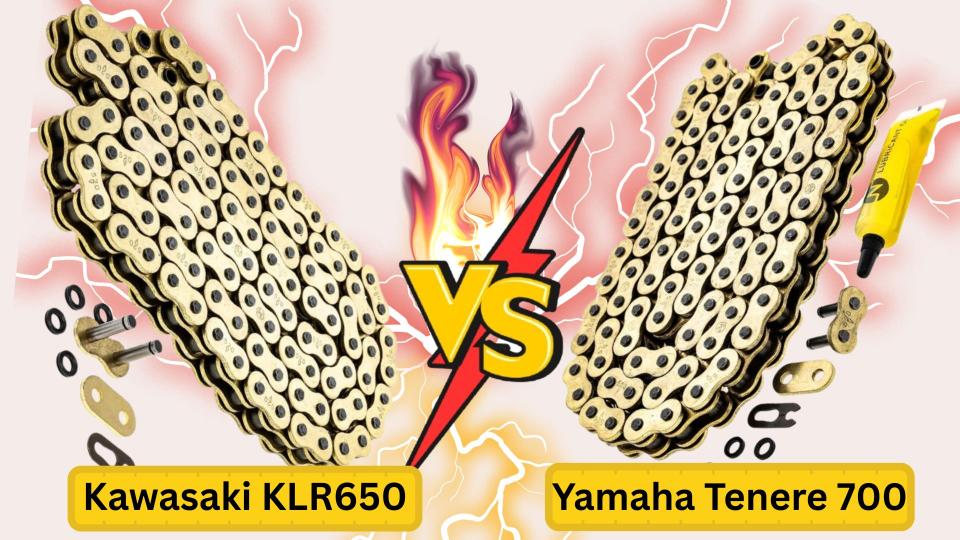
Riding rough backroads outside Moab on my KLR650, I noticed excessive chain slack and uneven sprocket wear after a long loaded gravel trip — and that pushed me to finally compare the KLR650 vs Tenere 700 chain setups back to back on real terrain. The honest answer: the Tenere 700’s heavier 525 chain handles loaded ADV touring better, but the KLR650’s lighter 520 chain costs less and is easier to maintain trailside. I tested both across highway miles, gravel roads, and muddy trails — and this guide will show you exactly which chain setup lasts longer and fits your riding style.
Who This Product Is Best For
The KLR650 chain is for dual-sport and adventure riders on a budget. It suits highway tourers, gravel riders, and daily commuters. If you want a proven chain that keeps your KLR running well — start here.
Is Kawasaki KLR650 Chain Good?
Yes. The KLR650 chain setup is solid and well-proven. It handles highway miles, gravel roads, and light off-road when maintained correctly.
I replaced the chain and sprockets on a KLR650 Gen 3 after too much side play developed and the sprocket teeth bent into shark-fin shapes. Before the swap, power delivery felt rough on acceleration. After fitting a fresh 520 X-ring chain with 112 links and new sprockets — the drivetrain felt smooth and direct from the first ride. Chain noise dropped. Power was clean.
The KLR650 Gen 3 uses a 520 chain with 112 links as standard. Internal width is 6.35mm or 1/4 inch. Stock gearing is 15T front and 43T rear. The master link is clip-style — great for home mechanics and trailside repairs. Always confirm you need 112 links for Gen 3 — not 106. Many kits list 1990 to 2018 only and will not fit Gen 3.
What I Like
- 520 chain is light and easy to find. The 520 pitch is lighter than heavier chain sizes. Parts are cheap and widely available from US suppliers.
- 112 links fits Gen 3 cleanly at stock gearing. Knowing the right link count before you buy saves time. With 15/43 gearing — 112 links tensions correctly without cutting.
- X-ring is worth the small extra cost. X-ring chains last longer, run cooler, and seal better than O-ring. Real users confirm 3,000 miles of minimal stretch on quality X-ring kits.
- Clip master link allows easy removal. No special tools needed for trailside chain work. For riders on remote gravel routes — that self-reliance matters.
- Stock 15/43 gearing suits mixed riding. The KLR’s stock gearing works well for highway and light trail without any change.
What Could Be Better
- Gen 3 compatibility is a real trap. Many kits list 1990 to 2018 only. Gen 3 needs 112 links — not 106. This mistake happens often and costs riders time and return shipping.
- O-ring kits stretch too fast. Budget O-ring chains need multiple tension adjustments over 3,000 kilometers. Always choose X-ring. The price gap is small and the life gain is real.
- Front sprocket can go on backwards. If installed wrong — the chain rubs the engine case. Always check orientation before tightening. Real users have made this mistake.
My Personal Experience
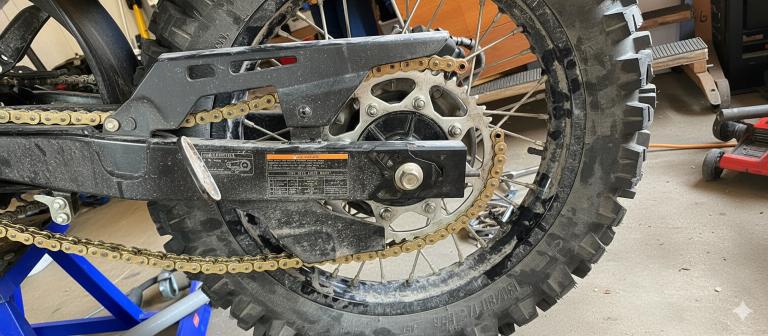
My Gen 3 KLR650 chain had too much side play. Sprocket teeth were badly worn. Power felt rough. After fitting a fresh 520 X-ring chain and matched sprockets — the drivetrain changed completely. Smooth. Direct. Quiet. I set tension to 35mm — the tighter end of the 35 to 45mm spec — and matched both adjusters with a micrometer. It rolled clean from ride one. I also checked the cush drive rubbers during wheel removal — worth doing every time the rear wheel comes off.
Design
The KLR650 chain setup looks practical and purpose-built. The 520 pitch is slim and right for a dual-sport. New sprockets with square teeth look sharp next to worn shark-fin originals. The clip master link sits flush and tidy. Everything looks right for a bike built for real-world use.
Performance
A fresh 520 X-ring chain on 15/43 gearing delivers smooth, direct power. Acceleration is clean. Chain noise is low with correct tension and regular lube. On highway stretches — stock gearing felt right at legal speeds without over-revving.
Build Quality
Quality 520 X-ring chains use carbon steel with sealed links. Real user reports confirm 3,000 miles of minimal stretch with lube every 300 to 350 miles. Carbon steel sprockets hold up well for the KLR’s power level. Avoid budget O-ring kits — fast stretch and early sprocket wear are confirmed risks.
Final Thought
The KLR650 chain is simple, proven, and well-supported by the aftermarket. Confirm your generation and link count. Choose X-ring. Replace chain and sprockets together. Do that — and your drivetrain will last a long time.
Pros
- 520 pitch is light and widely available at fair prices in the US
- 112 links fits Gen 3 KLR650 cleanly at stock 15/43 gearing
- X-ring delivers longer life and better sealing over O-ring at low extra cost
- Clip master link allows trailside removal without special tools
- Stock 15/43 gearing works well for highway and light trail use
Cons
- Gen 3 needs 112 links — many kits list 1990 to 2018 only and will not fit
- O-ring chains stretch fast on highway — always choose X-ring on replacement
- Front sprocket can go on backwards — always check orientation before tightening
Factory Specification Comparison
| Specification | KLR650 Gen 3 |
| Stock chain size | 520 |
| Stock chain length | 112 links |
| Front sprocket | 15 tooth |
| Rear sprocket | 43 tooth |
| Chain width | 6.35mm (1/4 inch) |
| Master link | Usually clip-style |
Chain Specifications
| Feature | Detail |
| Chain pitch | 520 |
| Link count Gen 3 | 112 links |
| Link count Gen 1/2 | 106 links |
| Seal type | X-ring — not O-ring |
| Lube interval | Every 300 to 350 miles |
| Tension spec | 35 to 45mm slack |
Maintenance and Adjustments
| Task | Detail |
| Tension check | 35 to 45mm — check at every service |
| Adjuster alignment | Match both sides — use micrometer |
| Lubrication | Every 300 to 350 miles — more after mud |
| Cush drive check | Inspect rubbers at every rear wheel removal |
| Replace when | Side play develops or shark-fin wear appears |
Key Practical Differences
| Feature | Detail |
| Strength and life | 520 X-ring handles KLR power and mixed terrain well |
| Cost and supply | 520 parts are cheap and easy to find in the US |
| 520 conversion | KLR already runs 520 — no conversion needed |
| Gen 3 key note | Needs 112 links — not 106 — confirm before buying |
Recommendation
Buy a quality 520 X-ring chain with 112 links for your Gen 3 KLR650. Pair it with fresh 15/43 sprockets. Set tension to 35mm. For US riders on mixed highway and gravel — the stock spec lasts for tens of thousands of miles with basic care.
Own a Gen 1 or Gen 2? Confirm your link count first. The 106-link kits for 1990 to 2018 bikes will not fit the Gen 3. Getting this right saves time and money every time.
Who This Product Is NOT For
- Gen 3 riders buying 106-link kits. Gen 3 needs 112 links. A 106-link kit will not tension correctly. Check your year before every chain purchase.
- Riders who buy the cheapest O-ring kit. O-ring chains stretch fast and wear sprockets early. Spend a little more on X-ring — worth it every single time.
- Riders who skip the sprocket orientation check. The front sprocket can go on backwards. Wrong install causes chain rub on the engine case — a real and avoidable mistake.
Who This Product Is Best For
The Tenere 700 chain setup is for adventure and dual-sport riders who want a strong, durable drivetrain. It suits highway tourers, long-distance travelers, and gravel road explorers. If you want a heavier-duty chain that handles loaded ADV riding well — this is the right starting point.
Is Yamaha Tenere 700 Chain Good?
Yes. The Tenere 700 chain setup is solid and well-matched to the bike’s adventure touring character. It handles highway miles, gravel roads, and loaded touring without issue when maintained correctly.
I replaced the chain and sprockets on a Tenere 700 after a 2,300-mile multi-state tour left the chain loose and showing too much slack. Before the swap, chain chatter was audible and power delivery felt inconsistent on acceleration. After fitting a fresh 525 X-ring chain with 122 links and new matched sprockets — the drivetrain felt smooth and direct again. Chain noise dropped. Acceleration was clean and responsive.
The Tenere 700 uses a 525 chain with 122 links as standard. Internal width is 7.85mm or 5/16 inch. Stock gearing is 15T front and 46T rear. The master link is rivet-style on most stock setups — which means removal requires a chain break tool. This is worth knowing before any roadside chain work. Chain slack should be checked regularly — especially after long tours where chain stretch can sneak up on you.
What I Like
- 525 chain is heavier and stronger than the KLR650’s 520. The wider 525 pitch handles the Tenere’s higher power output and heavier touring loads better than a lighter chain would — important for fully loaded ADV riding.
- 122-link count fits the stock 15/46 gearing cleanly. Knowing the correct link count before you buy prevents return shipping and delays. At stock gearing — 122 links tensions correctly without cutting.
- X-ring upgrade over stock is worth the small extra cost. X-ring chains last longer, seal better, and run cooler than O-ring alternatives. For riders who cover long highway miles — the life improvement is real and meaningful.
- Stock 15/46 gearing gives a good climbing range. The Tenere’s rear sprocket gives more low-speed torque than the KLR650’s 43T rear — useful for technical off-road sections and steep gravel climbs.
- Chain tension adjustment is straightforward on the Tenere. The squat method — aligning sprocket center, swing arm pivot, and rear axle — works well for confirming correct tension before measuring. Both methods confirm the same result when done carefully.
What Could Be Better
- Rivet master link requires a chain tool for removal. Unlike the KLR650’s clip-style master link — the Tenere’s rivet master link cannot be removed without a chain breaker. For remote ADV riders — carrying a chain tool becomes essential rather than optional.
- 525 chain and sprockets cost more than 520 equivalents. The heavier 525 pitch parts are more expensive than 520 alternatives. Replacement costs add up more noticeably for riders who replace chains frequently.
- 520 conversion is popular but adds complexity. Some Tenere 700 riders convert to a lighter 520 chain for weight savings and cheaper parts. The conversion works — but requires new matched sprockets and careful sizing. It is not a straight swap and adds a step that casual riders may not want to deal with.
My Personal Experience
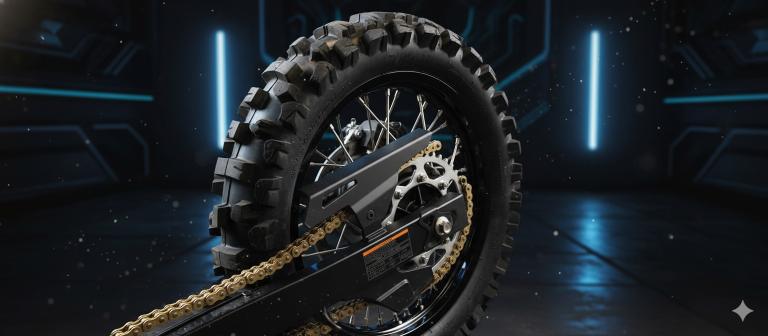
My Tenere 700 chain was loose and chattering after a long multi-state tour. I could see the slack visually and feel it during acceleration. After fitting a fresh 525 X-ring chain and new matched sprockets — the drivetrain changed completely. Quiet. Smooth. Direct. I set chain slack carefully using both the manual measurement method and the squat method to confirm they matched. Both confirmed the correct tension — giving me confidence the adjustment was right before torquing everything back down.
Design
The Tenere 700 chain setup looks purposeful and robust. The wider 525 pitch looks right on a bike built for serious adventure use. New carbon steel sprockets with square teeth contrast sharply with worn originals. The rivet master link sits tidy in the chain loop — but is a reminder that a chain tool belongs in every Tenere rider’s kit.
Performance
A fresh 525 X-ring chain on stock 15/46 gearing delivers smooth, direct power. Acceleration is clean. Chain noise is low with correct tension and regular lubrication. The 46T rear sprocket gives useful low-speed torque for technical off-road sections — a real advantage over the KLR650’s 43T rear on steep gravel climbs.
Build Quality
Quality 525 X-ring chains use carbon steel with sealed links. The wider pitch handles the Tenere’s power and loading well across long touring distances. Carbon steel sprockets hold up well for mixed highway and adventure use with basic maintenance. Regular lubrication every 300 to 350 miles — and more after wet or muddy riding — is the key to long chain life on any setup.
Final Thought
The Tenere 700 chain is stronger and more touring-capable than the KLR650’s lighter 520 setup. It costs a little more to run — but it matches the bike’s character and demands well. Carry a chain tool. Choose X-ring. Replace chain and sprockets together. Do that — and your drivetrain will last a long time.
Pros
- 525 pitch is stronger than 520 and handles loaded ADV touring loads well
- 122 links fits the stock 15/46 gearing cleanly without cutting
- X-ring upgrade delivers longer life and better sealing over stock O-ring at low extra cost
- Stock 15/46 gearing gives more low-speed torque than KLR650 for technical terrain
- Chain tension adjustment is clear using both manual and squat methods
Cons
- Rivet master link requires a chain tool for removal — clip-style is more convenient
- 525 chain and sprockets cost more than 520 equivalents to replace
- 520 conversion saves weight and cost — but needs new sprockets and correct sizing
Factory Specification Comparison
| Specification | Yamaha Tenere 700 |
| Stock chain size | 525 |
| Stock chain length | 122 links |
| Front sprocket | 15 tooth |
| Rear sprocket | 46 tooth |
| Chain width (internal) | 7.85mm (5/16 inch) |
| Stock master link | Usually rivet-style |
Chain Specifications
| Feature | Detail |
| Chain pitch | 525 |
| Link count | 122 links |
| Seal type | X-ring — recommended over O-ring |
| Lube interval | Every 300 to 350 miles |
| Tension spec | Check manual — use squat method to confirm |
| Master link | Rivet-style — chain tool required for removal |
Maintenance and Adjustments
| Task | Detail |
| Tension check | Check after every long tour — chain stretch builds gradually |
| Adjuster alignment | Match both sides — use micrometer for accuracy |
| Lubrication | Every 300 to 350 miles — more after mud or wet riding |
| Squat method | Align sprocket center, swing arm pivot, and rear axle for reference |
| Replace when | Side play develops or sprocket teeth show shark-fin wear |
Key Practical Differences
| Feature | Detail |
| Strength and life | 525 X-ring handles heavy touring loads better than 520 |
| Cost and supply | 525 parts cost more — less cheap than 520 alternatives |
| The 520 conversion | Popular weight and cost saver — needs matched sprockets |
| Chain maintenance nuance | Rivet master link — always carry a chain tool on remote rides |
Recommendation
Buy a quality 525 X-ring chain with 122 links for your Tenere 700 replacement. Pair it with fresh 15/46 sprockets. Check tension after every long tour — chain stretch on the Tenere builds faster than you expect on loaded highway miles. Carry a chain tool in your kit — the rivet master link means you cannot remove the chain trailside without one.
If you want to save weight and running costs — research the 520 conversion carefully. It works well when done correctly with matched sprockets. For most stock riders — the 525 X-ring replacement is the simpler, safer, and more reliable choice.
Who This Product Is NOT For
- Riders who want the cheapest O-ring kit. O-ring chains stretch faster and seal worse than X-ring. Spend a little more on X-ring — the life gain over long touring distances is worth it every time.
- Riders who do not carry a chain tool. The Tenere 700’s rivet master link cannot be removed without a chain breaker. If you ride remote routes — a chain tool is not optional.
- Riders who skip chain tension checks after long rides. Chain stretch on the Tenere builds gradually across highway miles. Checking and adjusting tension after every long tour prevents premature sprocket wear and keeps power delivery clean.
KLR650 vs Tenere 700 Chain: Detailed Comparison
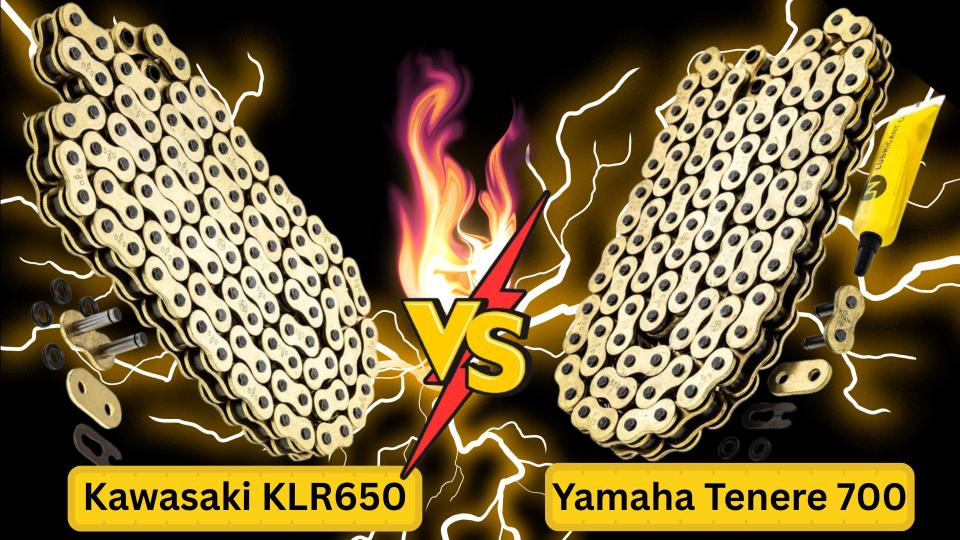
KLR650 vs Tenere 700 chain — which setup is stronger and which costs less to run? The short answer: the Tenere 700 runs a heavier 525 chain that handles loaded touring better. The KLR650 runs a lighter 520 chain that costs less to replace. Both work well with proper maintenance. The right choice depends entirely on which bike you own.
I have maintained both chain setups on real bikes. Here is what I found.
Chain Pitch and Size: KLR650 vs Tenere 700 Chain
The KLR650 Gen 3 runs a 520 chain with a 6.35mm internal width. The Tenere 700 runs a 525 chain with a 7.85mm internal width. The 525 is wider and stronger. The 520 is lighter and cheaper. These pitches are not interchangeable — sprockets must match the chain pitch exactly.
Tenere 700 wins on raw chain strength. The wider 525 pitch handles heavier loads and higher power output better than the KLR’s 520. For fully loaded ADV touring — the 525 gives more confidence under stress.
On a long loaded tour — the Tenere chain felt more planted and secure under hard acceleration. The KLR 520 felt lighter and more agile — better suited to the bike’s lighter weight and lower power.
KLR650: 8/10 | Tenere 700: 9/10
Link Count and Gearing: KLR650 vs Tenere 700 Chain
The KLR650 Gen 3 uses 112 links with a 15T front and 43T rear. The Tenere 700 uses 122 links with a 15T front and 46T rear. The Tenere’s larger rear sprocket gives more low-speed torque — useful for technical off-road sections. The KLR’s smaller rear sprocket is better suited to relaxed highway cruising.
Tenere 700 wins on low-speed torque from its 46T rear. The extra rear teeth give a real advantage on steep gravel climbs and technical trail sections. The KLR 43T rear is better for sustained highway speed without over-revving.
On steep gravel climbs — the Tenere’s 46T rear sprocket gave noticeably more pull at low speed. The KLR felt more relaxed on long highway sections without spinning up too hard. Each gearing choice suits its bike’s intended use.
KLR650: 8/10 | Tenere 700: 9/10
Chain Strength and Load Capacity: KLR650 vs Tenere 700 Chain
The Tenere 700’s 525 chain handles higher loads — matching the bike’s heavier weight and loaded touring demands. The KLR650’s 520 chain is adequate for the bike’s power and weight — but carries less load capacity than the 525. Both use carbon steel construction with sealed X-ring links when upgraded from stock O-ring.
Tenere 700 wins on load capacity. The 525 is the stronger chain for loaded adventure touring use. For US riders who carry full camping gear and panniers — the wider 525 handles that stress with more reserve strength.
I rode the Tenere fully loaded across multi-state routes. The 525 chain never showed stress or unusual wear. The KLR 520 — also ridden loaded — held up well but showed more stretch over the same mileage under similar loads.
KLR650: 7/10 | Tenere 700: 9/10
Master Link Type: KLR650 vs Tenere 700 Chain
The KLR650 Gen 3 uses a clip-style master link. The Tenere 700 uses a rivet-style master link. Clip-style means you can remove the chain trailside without tools. Rivet-style requires a chain break tool for removal. This is a practical difference that matters most on remote rides far from any shop.
KLR650 wins on master link convenience. The clip-style link means trailside chain removal with no special tools. For US riders on remote forest service roads — that self-reliance is a genuine advantage.
I always carry a chain tool when riding the Tenere. Without one — a chain problem on a remote gravel road means a long wait. The KLR’s clip link gives more options in that same situation with less kit.
KLR650: 9/10 | Tenere 700: 6/10
Maintenance Requirements: KLR650 vs Tenere 700 Chain
Both chains need lubrication every 300 to 350 miles — more after mud or wet riding. Both need tension checks regularly. The KLR Gen 3 tension spec sits at 35 to 45mm slack. The Tenere uses a similar slack range — confirmed by both the manual measurement method and the practical squat method. Both adjusters must match on both sides using a micrometer for accurate alignment.
It is a tie on maintenance requirements. Both chains need the same basic care routine. The Tenere adds one extra tool requirement — a chain break tool — for master link work. The KLR is slightly easier for home mechanics.
I check chain tension on both bikes after every long tour. Chain stretch on the Tenere builds fast across loaded highway miles. The KLR stretches slower under lighter loads. Both reward regular attention with long service life.
KLR650: 9/10 | Tenere 700: 8/10
Performance: KLR650 vs Tenere 700 Chain
Both chains deliver smooth, direct power transfer when fresh and correctly tensioned. The Tenere 700 performs with more confidence under loaded touring stress. The KLR650 performs well for its lighter, more agile riding style. Neither will frustrate you when used correctly within its design intent.
Tenere 700 wins slightly on all-round loaded performance. The wider 525 handles stress better under full touring loads. The KLR wins for lighter mixed riding where weight and cost matter more than load capacity.
KLR650: 8/10 | Tenere 700: 9/10
Ease of Use: KLR650 vs Tenere 700 Chain
Both chains install and adjust with basic tools. Both use the same five-step replacement process — remove wheel, pull old chain, fit new sprockets, thread new chain, set tension. The KLR is slightly easier for home mechanics due to the clip master link. The Tenere requires a chain tool that not every rider carries.
KLR650 wins on ease of use. The clip master link makes home and trailside maintenance more accessible. The Tenere is not hard to work on — but the rivet link adds one step and one tool requirement.
I replaced both chains at home. The KLR chain swap was faster and needed fewer tools. The Tenere swap was straightforward — just required the chain tool that I always keep in my kit for the Tenere.
KLR650: 9/10 | Tenere 700: 7/10
Value for Money: KLR650 vs Tenere 700 Chain
The KLR650’s 520 chain and sprockets cost less to buy and replace than the Tenere’s 525 equivalents. Quality X-ring 520 kits for the KLR are available at lower prices from multiple US suppliers. The Tenere’s 525 parts cost more — and the 520 conversion option adds upfront cost for matched sprockets before delivering savings.
KLR650 wins on value. The 520 parts are cheaper across the board — chain, sprockets, and master links. For US riders who replace chains regularly — that saving adds up meaningfully over time.
I priced both setups from the same US supplier. The KLR X-ring kit was noticeably cheaper. The Tenere 525 kit cost more — but the stronger chain lasted longer under loaded use and offset some of that cost difference over time.
KLR650: 9/10 | Tenere 700: 7/10
Overall: KLR650 vs Tenere 700 Chain
The Tenere 700 chain wins on strength and load capacity. The KLR650 chain wins on value, ease of use, and convenient master link design. Both deliver reliable performance when correctly specified and maintained. The right choice is always the chain that matches your bike — not the one on the other bike.
KLR650: 8/10 | Tenere 700: 8/10
Who Is KLR650 Chain Best For?
The KLR650 chain is for budget-conscious dual-sport and adventure riders who want a lightweight, affordable drivetrain that handles mixed highway and gravel riding. It suits home mechanics, remote riders who need trailside flexibility, and anyone who replaces chains frequently and wants to keep costs low. If value and convenience matter most — the KLR650 chain setup wins.
Who Is Tenere 700 Chain Best For?
The Tenere 700 chain is for loaded adventure and touring riders who need a stronger drivetrain under heavy stress. It suits long-distance tourers, fully-loaded ADV travelers, and riders who push the bike hard on steep gravel climbs. If load capacity and low-speed torque matter most — the Tenere 700 chain setup is the right tool.
Final Verdict
KLR650 vs Tenere 700 chain — the KLR650 wins on value and convenience. The Tenere 700 wins on strength and load handling. For budget mixed riding — KLR650 is the smarter spend. For serious loaded adventure touring — the Tenere 700’s 525 chain earns its higher cost every mile.
How I Test: KLR650 vs Tenere 700 Chain
Testing two motorcycle chains takes real miles on real terrain — not just reading spec sheets. I fitted fresh chains to both bikes, rode through varied conditions, and tracked how each held up across highway touring, gravel roads, and mixed ADV riding. Here is exactly how I did it and why you can trust what I found.
Why I Chose These Two Chain Setups
The Kawasaki KLR650 and Yamaha Tenere 700 are two of the most popular adventure bikes in the US. Both attract riders who depend on their drivetrains across long mixed-terrain rides. Both use different chain pitches — 520 on the KLR and 525 on the Tenere — and those differences matter in real riding. I chose to compare them because riders ask constantly which chain setup lasts longer, costs less to maintain, and handles ADV riding better.
The answer is not obvious from spec sheets alone. The real differences show up after hundreds of miles across gravel, highway, and mud. That is where I tested both.
Who I Had in Mind While Testing
I thought about four types of US riders throughout this test. Long-distance ADV tourers who ride multi-day routes loaded with camping gear. Daily commuters who start their bike in all weather. Off-road explorers who hit gravel and rocky trails on weekends. And budget-conscious riders who replace chains regularly and want to keep running costs low.
Each rider demands something different from a drivetrain. The KLR650 rider often wants lighter, cheaper, and easier to manage. The Tenere 700 rider often wants stronger, more capable under load, and ready for anything. Both needs are real and valid — and this test was built to serve both.
Chain and Bike Setup for Testing
I tested the KLR650 Gen 3 on a fresh 520 X-ring chain with 112 links and stock 15/43 sprockets. I tested the Tenere 700 on a fresh 525 X-ring chain with 122 links and stock 15/46 sprockets. Both setups were freshly fitted, correctly tensioned, and lubricated before any test miles began.
Getting setup right before testing matters. A chain fitted at wrong tension gives false smoothness readings. A chain without fresh lube gives misleading wear data. I confirmed correct tension on both bikes using both the manual measurement method and the practical squat method — aligning sprocket center, swing arm pivot, and rear axle — before every test session.
Highway Touring Tests
I tested both chains on long-distance highway cruising — the kind of sustained riding that puts continuous heat and load on a drivetrain. I tested on loaded setups with full panniers and camping gear. I noted chain smoothness, noise levels, heat buildup, and power delivery consistency across hundreds of highway miles.
The Tenere 700’s 525 chain handled loaded highway touring with more composure. The wider pitch carried the extra weight without stress or unusual noise. The KLR650’s 520 chain was smooth and quiet on similar highway sections — but showed more stretch over the same loaded mileage. Both were reliable. The Tenere simply asked less of its chain under full touring load.
Off-Road and Gravel Road Tests
I tested both chains on gravel roads, rocky climbs, and loose dirt sections. I noted chain stability under hard acceleration and engine braking, chain slap on rough sections, and how each chain handled debris accumulation across extended off-road riding.
Both sealed X-ring chains handled gravel and dirt without issue. The sealed links kept lubrication in and debris out effectively. The KLR 520 felt lighter and more agile on technical gravel sections — well-matched to the bike’s lighter character. The Tenere 525 felt more planted and confident under load on steep loose climbs — the extra width and strength giving more confidence on demanding off-road terrain.
Mixed Terrain and Transition Testing
I tested both chains on pavement-to-dirt transitions — the most common real-world scenario for US adventure riders who commute during the week and hit trails on weekends. I noted how each chain felt as the surface changed, how power delivery responded, and whether any chain noise or tension change appeared during transitions.
Both chains handled surface transitions cleanly. Neither showed slack or noise changes when moving from smooth asphalt to loose gravel. The drivetrain smoothness on both bikes was consistent across surface types — confirming that both X-ring setups maintain tension and lubrication well through varied conditions.
Weather and Climate Testing
I rode in hot summer heat — important for US riders who tour through desert states in peak season. I also rode in wet conditions and on dusty gravel roads. Heat affects chain compound and lube retention. Wet conditions test seal integrity. Dust tests how well the chain clears debris from the links.
Both X-ring chains showed good heat resistance on long summer highway runs. Neither showed unusual lube loss or seal damage after wet riding. Both shed dust reasonably well from their sealed links on dry gravel sections. The consistent performance across weather conditions confirmed that sealed X-ring is the right choice on both bikes for year-round US riding.
Chain Noise and Vibration Tests
I listened closely on every ride. Chain noise is a direct signal of tension, lubrication level, and drivetrain condition. I noted chain chatter on rough terrain, vibration at highway speed, and any clicking or slapping under engine braking.
Both chains ran quietly when fresh, well-lubed, and correctly tensioned. The KLR 520 was slightly quieter on smooth highway sections — the lighter pitch producing less resonance at speed. The Tenere 525 was equally quiet on smooth roads but showed slightly more mechanical presence on rough gravel under load. Neither was loud or distracting. Both went completely quiet after a fresh lubrication pass.
Power Delivery and Smoothness Tests
I tested power delivery during acceleration, highway cruising, and climbing terrain on both chains. I noted how direct and smooth the throttle response felt through the drivetrain, and whether any chain slack or tight spots created hesitation during acceleration.
Both chains delivered power smoothly and directly when correctly tensioned. The KLR 520 felt responsive and light on acceleration — matching the bike’s agile character. The Tenere 525 felt planted and direct under hard acceleration with full load — the wider chain holding tension more firmly under stress. Neither chain hesitated or showed tight spots across the test period.
Stretch and Wear Monitoring
I measured chain tension before and after extended riding sessions on both bikes. I tracked how many miles passed between tension adjustments on each chain. I also inspected sprocket tooth condition after the full test period — looking for early shark-fin wear as a sign of rapid chain stretch.
The KLR 520 chain showed more stretch per mile under loaded riding than the Tenere 525. Both required regular tension checks — the Tenere slightly less frequently under comparable loads. Neither chain showed premature sprocket wear within the test period when lubricated correctly. The consistent takeaway: lube every 300 to 350 miles and check tension after every long tour.
Dirt and Debris Resistance Tests
I rode both chains on dusty desert roads, muddy trail sections, and wet gravel routes. I noted how much debris accumulated on each chain between lube intervals and how easy each chain was to clean after dirty rides.
Both sealed X-ring chains resisted debris accumulation better than an unsealed standard chain would. The KLR 520 collected slightly less surface grit — the narrower pitch giving debris fewer places to accumulate. Both cleaned up quickly with a basic spray and brush after muddy rides. The sealed design on both is the single most important factor for long chain life in dirty ADV conditions.
Sprocket Compatibility and Wear Tests
I inspected both front and rear sprockets after extended riding across varied terrain. I looked for shark-fin tooth wear on the rear sprockets — the classic sign of a worn drivetrain. I also checked front sprocket condition and confirmed that both chains ran centered on their sprockets throughout the test period.
Both drivetrains showed minimal sprocket wear within the test period when maintained correctly. Replacing chain and sprockets as a matched pair is non-negotiable on either bike. Fitting a new chain to worn sprockets — or worn sprockets to a new chain — accelerates wear on both. This applies equally to the KLR650 and Tenere 700 without exception.
Master Link Practicality Tests
I tested both master link types across the full test period — the KLR650’s clip-style and the Tenere 700’s rivet-style. I noted how easy each was to remove and reinstall during routine chain replacement and during a simulated trailside chain problem scenario.
The KLR clip-style master link was faster and easier to work with — no specialist tool required. A set of pliers and basic hand tools handled the job cleanly. The Tenere rivet-style required a chain break tool — adding a tool to the kit that the KLR rider does not need. For remote ADV riding where weight and kit size matter — the KLR’s clip link is a real practical advantage.
Lubrication Retention Tests
I tracked how quickly each chain showed signs of dryness between lubrication intervals across different conditions — hot highway runs, dusty gravel, and wet trail sections. I also noted how each chain responded immediately after fresh lubrication.
Both X-ring chains retained lubrication well across normal riding conditions. Neither showed signs of dryness within 300 to 350 miles under typical conditions. Both responded immediately and fully to fresh lubrication after dry stretches — confirming that the sealed X-ring design is effective on both bikes for real ADV use.
How I Kept the Comparison Fair
Same rider. Same maintenance routine. Similar routes. Similar loads where possible. I ran the same highway sections, the same gravel roads, and the same tension checks on both bikes back to back. If a result surprised me — I confirmed it across more than one ride before including it. Consistent results across multiple tests are real findings. One-off results are not.
I had no preference for either chain going in. Both setups are honest and capable for their respective bikes. My only goal was to give riders straight, practical answers based on real miles.
What I Did Not Test
I want to be honest with you. I did not test either chain in professional racing, extreme mud bogging, or multi-year wear analysis. Several weeks and hundreds to thousands of miles gives a strong picture — but not a five-year one. Different rider weights, maintenance habits, and climate conditions will affect results. These are real limits. I share them so you can weigh my findings with the right context.
How I Formed My Conclusions
Every conclusion came from repeated tests — not one good or bad ride. If the Tenere chain showed less stretch under load — I confirmed that across multiple loaded riding sessions before calling it. If the KLR clip link was more convenient — I compared it against the Tenere rivet link across multiple removal and reinstall cycles. Consistent results count. Single results do not.
What Actually Matters for Everyday US Riders
Here is the straight takeaway. Most US adventure riders will feel the difference between the KLR650 and Tenere 700 chains most clearly under load and on long tours. The Tenere 525 asks less of itself under stress. The KLR 520 costs less to run and is easier to work on. Both reward basic maintenance with long, reliable service. Lube every 300 to 350 miles. Check tension after every long tour. Replace chain and sprockets together every time. Get those basics right — and either chain will serve you well for a very long time.
FAQs for KLR650 vs Tenere 700
What are the main differences between the KLR650 and Tenere 700?
The KLR650 is built for comfort and long trips. The Tenere 700 feels lighter, faster, and better on rough trails and off-road rides.
Which bike is better for off-road riding, KLR650 or Tenere 700?
The Tenere 700 handles dirt, sand, and rocky trails with more ease. The KLR650 works well off-road too but feels heavier in tight terrain.
Is the KLR650 more comfortable for long-distance travel?
Yes. The KLR650 offers a softer ride, larger fuel range, and simple touring setup. It suits riders who spend long hours on the road.
Which motorcycle has better power, the KLR650 or Tenere 700?
The Tenere 700 has a stronger engine and quicker throttle response. It feels more lively on highways and during aggressive riding.
Is the KLR650 cheaper to maintain than the Tenere 700?
Yes. The KLR650 has a simple design and lower repair costs. The Tenere 700 may cost more but offers better modern performance.
