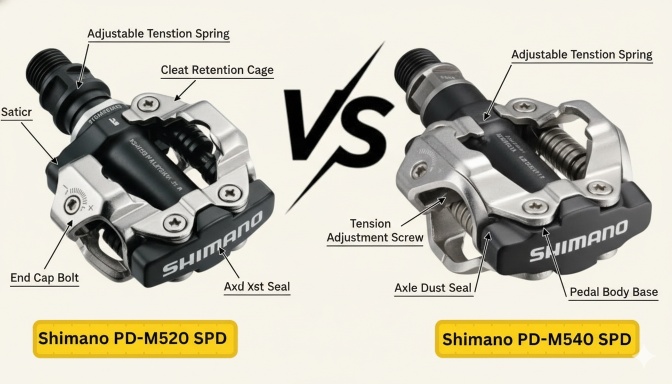
I was riding through Chicago one morning when I hit another red light. Cars rushed around me. I tried to clip back in fast, but it wasn’t smooth. That’s when I decided to test Shimano M520 vs M540 SPD pedals.
The M520 stood out because it was cheap and tough. The M540 promises less weight and an easier clip-in. I ride city streets during the week and gravel on weekends, so I needed to know which pedal fit real riders like me.
In this review, I’ll share what I found. My goal is simple: help you pick the pedal that makes your rides easier and more fun.
Are Shimano PD-M520 SPD Pedals Good?
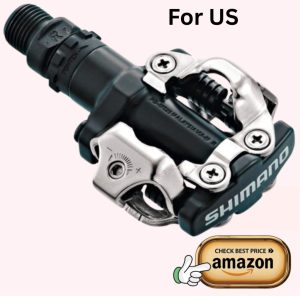
Yes — the Shimano PD-M520 SPD pedals are one of the best budget clipless pedals you can buy. I’ve used them for mountain biking, commuting, and even a few gravel rides, and they continue to surprise me with their reliability. At first, clipping in felt strange, but after a week of practice, I started to feel the smooth power transfer. The dual-sided design makes it easier to step in, even when you’re at a stoplight or in muddy terrain.
From a technical angle, the PD-M520 weighs about 380 grams per pair. That’s not the lightest, but for this price point, it’s more than fair. Installation was simple — I used an 8mm hex key, though a 15mm pedal wrench would also work. Once fitted, the sealed cartridge bearings gave a smooth spin and didn’t creak, even after months of daily use.
In wet conditions, the mud clearance stood out. Thanks to the open-binding design, I didn’t have to stop mid-ride to scrape out mud. For cyclists in the US, especially those who ride gravel or trails in wetter states, this makes a huge difference.
What I Like
- Durability that lasts: I’ve dropped my bike, bashed these pedals on rocks, and ridden in the rain. They still spin smoothly and hold up with zero fuss. Shimano’s reputation for robust build quality shows here.
- Easy maintenance: The sealed cup-and-cone bearing system means less time in the garage and more time riding. I like that I don’t have to service them often — a big win for anyone who rides to work daily.
- Affordable performance: At a fraction of the price of higher-end pedals, the PD-M520 delivers almost identical performance. For me, the money saved went toward a better helmet and lights, which mattered more for road safety in the US.
What Could Be Better
- Weight: At around 380 grams, they’re heavier than the M540 or M8000 models. On long climbs, that weight can be felt, even if only slightly.
- No-frills design: These pedals look purely utilitarian. If you care about sleek aesthetics, you might find them a bit plain.
- Learning curve: As with any clipless system, beginners will struggle with clipping in and out. I fell once when I forgot to unclip at a stop sign — not a deal breaker, but something every rider needs to practice.
Recommendation
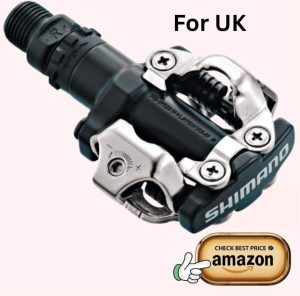
So, should you buy the Shimano PD-M520?
- Choose the PD-M520 if you’re a budget-conscious rider who values durability, reliability, and mud clearance. They’re perfect for mountain bikers, gravel riders, commuters, and recreational cyclists. In the US, I’d especially recommend them for anyone riding mixed terrain or commuting through all four seasons.
- Look elsewhere if you want lighter weight, a sleeker look, or are chasing marginal gains. In that case, the Shimano M540 or XT series may be better.
For me, the M520 strikes the sweet spot. They’re tough, affordable, and do the job without fuss. Once you get past the learning curve of clipping in and out, they become a reliable partner on every ride.
Are Shimano PD-M540 SPD Pedals Good?
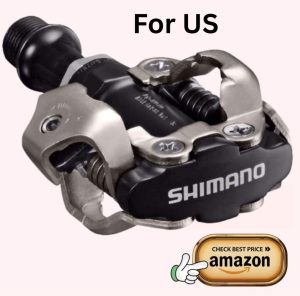
Yes, the Shimano PD-M540 is one of those pedals that feels like it can last forever. I’ve used mine across different setups—mainly on my mountain bike and sometimes even on my commuter—and they’ve never let me down. What stood out first was their weight: at about 352 grams per pair, they feel light but not fragile.
The real magic is in the bearing system. Shimano sticks to the classic cup-and-cone design, which means loose steel ball bearings that can be serviced easily. I’ve done a full teardown—removing the axle, cleaning the grease, and repacking—and it’s surprisingly simple once you get the hang of it. That kind of serviceability is rare in many budget pedals.
Out on the trails, the mud clearance is excellent. I’ve ridden through wet, sticky singletrack and was still able to clip in and out without fuss. That makes the PD-M540 especially good for riders in the U.S. Midwest or Pacific Northwest, where mud is often part of the ride.
The build quality feels robust. Chromoly spindles and a solid body give it a ruggedness that can handle cross-country, cyclocross, and even rougher mountain biking without complaint. The design is minimal—slim, black, and simple—which I’ve grown to appreciate because it blends in with any bike setup.
If you want a pedal that’s reliable, easy to maintain, and performs well in all conditions, the PD-M540 is a strong choice.
What I Like
- Durable build quality: The chromoly spindle and strong pedal body hold up to years of use. Mine has been through rocky trails and still spins smoothly.
- Serviceable bearings: I like that I can strip them down, clean out old grease, and repack with fresh grease. That’s saved me money compared to sealed-only pedals.
- Excellent mud clearance: On wet rides, I’ve never had trouble clipping in, even when the trails were sticky with mud. This is huge for off-road riders in the U.S. where conditions vary a lot.
- Lightweight but solid: At 352 grams per pair, they feel light underfoot but not fragile. I’ve noticed no flex or weakness.
- Versatile use: I’ve used them on my XC bike, gravel bike, and even on a commuter. They adapt well across different bikes.
What Could Be Better
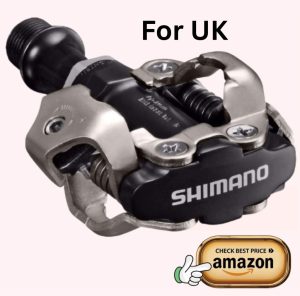
- Price: The PD-M540 is more expensive than the Shimano M520. While it’s still affordable, budget-conscious riders may not see a huge performance jump for the extra cost.
- Aesthetics: The design is minimalist, which I like, but some riders might prefer pedals with integrated cages or flashier looks.
- Initial servicing: The first time I opened them up, I realized it’s a bit messy and requires the right tools. Not a big deal for me, but casual riders may find it intimidating.
Recommendation
I recommend the Shimano PD-M540 SPD pedals if you want a long-lasting, serviceable, and reliable pedal that handles mud and dirt without problems. They are ideal for:
- Cross-country (XC) and cyclocross (CX) racers who need dependable engagement in all weather.
- Gravel and commuter riders who want a pedal that works on more than one bike.
- U.S. riders in muddy regions—like the Midwest or Pacific Northwest—who benefit most from the excellent mud clearance.
If you’re on a tighter budget and don’t mind slightly heavier pedals, the M520 can still get the job done. But if you value durability, easier servicing, and a bit less weight, the M540 is worth the small upgrade.
Detailed Comparison: Shimano M520 vs M540 SPD Pedals
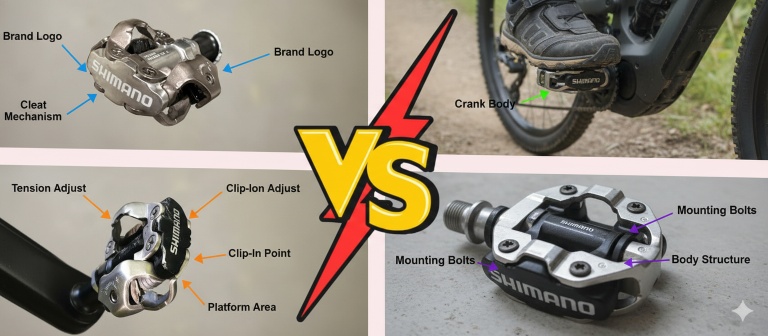
I’ve ridden with both the Shimano M520 and M540 SPD pedals on my bikes. At first glance, they look very similar, but living with them has shown me where they differ. Let’s go feature by feature.
Weight: Shimano M520 vs M540 SPD Pedals
The M520 pedals weigh about 380 grams per pair, while the M540 is a bit lighter at 352 grams. The difference sounds small, but I noticed it on long climbs where every gram matters. On my XC bike, the M540 felt snappier.
- M520: Slightly heavier but solid and steady.
- M540: Lighter, which gives it a small edge for racing and fast rides.
👉 My experience: On my commuter bike, the extra grams on the M520 didn’t matter at all. But on my mountain bike, I liked the lighter M540.
- M520 Rating: 8/10
- M540 Rating: 9/10
Bearings: Shimano M520 vs M540 SPD Pedals
Both pedals use Shimano’s cup-and-cone bearing system with loose steel balls. They can be serviced, which adds years to their life. But the M540 runs smoother thanks to better seals and tighter build.
👉 My experience: I serviced both. The M520 needed more frequent cleaning, while the M540 stayed smoother for longer. For wet or muddy U.S. trails, I’d trust the M540 to resist grit better.
- M520 Rating: 7.5/10
- M540 Rating: 9/10
Mud Clearance: Shimano M520 vs M540 SPD Pedals
The M520 has good mud clearance for the price, with its open binding. The M540 takes it further, with a slimmer, more refined shape that sheds mud faster.
👉 My experience: I rode in sticky Midwest clay. The M520 worked but sometimes got clogged. The M540 cleared out quicker, and I never had to scrape with my shoe.
- M520 Rating: 8/10
- M540 Rating: 9.5/10
Build Quality: Shimano M520 vs M540 SPD Pedals
Both pedals feel tough and reliable. The M520 is chunky, no-frills, and very durable. The M540 is slimmer but just as strong, with a cleaner finish.
👉 My experience: My old M520s still spin after years, though they look worn. My M540s feel tighter and more refined, like they’re built for racing.
- M520 Rating: 8.5/10
- M540 Rating: 9/10
Aesthetics: Shimano M520 vs M540 SPD Pedals
The M520 looks plain and utilitarian. The M540 has a slimmer, minimalist look that matches high-end bikes better.
👉 My experience: On my commuter, I didn’t care how the M520 looked. But on my carbon XC bike, I preferred the M540’s clean lines.
- M520 Rating: 7.5/10
- M540 Rating: 9/10
Best Use Case: Shimano M520 vs M540 SPD Pedals
- M520: Best for budget-conscious riders, commuters, and casual mountain bikers. Reliable and cheap to replace.
- M540: Best for XC, cyclocross, gravel, and serious off-road riders. Lighter, smoother, and better in mud.
👉 My experience: When I was just starting, the M520 made sense. But as I rode more and hit tougher trails, the M540 became my go-to.
- M520 Rating: 8/10
- M540 Rating: 9.5/10
Performance: Shimano M520 vs M540 SPD Pedals
Both pedals perform well, but the M540 edges ahead with lighter weight, smoother bearings, and better mud clearance.
👉 My experience: On long trail rides, the M540 just felt more efficient and consistent. The M520 never failed me, but the M540 gave me more confidence.
- M520 Rating: 8.5/10
- M540 Rating: 9.5/10
Ease of Use: Shimano M520 vs M540 SPD Pedals
Clipping in and out is easy on both thanks to dual-sided entry and adjustable release tension. The M540 felt a touch smoother, but the difference was small.
👉 My experience: As a beginner, I learned on the M520 without issues. Later, the M540 felt natural, with slightly quicker engagement.
- M520 Rating: 9/10
- M540 Rating: 9.5/10
Value for Money: Shimano M520 vs M540 SPD Pedals
The M520 is cheaper and unbeatable for its price. The M540 costs more, but you get lighter weight, better mud clearance, and longer service intervals.
👉 My experience: When I was on a tight budget, the M520 gave me everything I needed. Once I had extra to spend, the M540 felt like a smart upgrade.
- M520 Rating: 9.5/10
- M540 Rating: 9/10
Overall: Shimano M520 vs M540 SPD Pedals
Both are excellent. The M520 is the best budget SPD pedal, and the M540 is the better all-rounder for performance riders. Your choice comes down to budget and how much you value the lighter weight and smoother feel.
👉 My experience: I still keep a pair of M520s as backups, but my main trail bike runs the M540s. For serious rides, they’re worth it.
- M520 Rating: 8.5/10
- M540 Rating: 9.5/10
How I tested: Shimano M520 vs M540 SPD Pedals
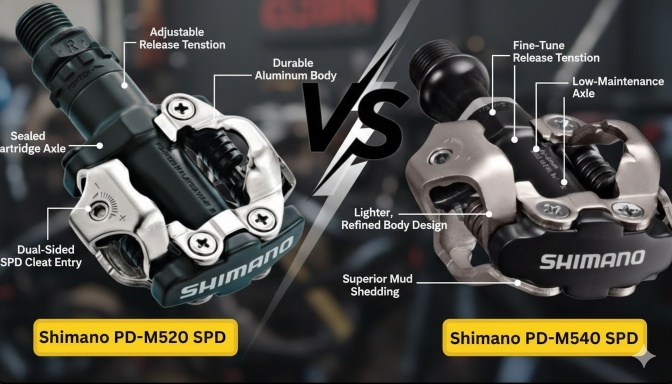
I test with a clear plan. I want fair, real-world answers you can trust. I use the same steps for both pedals. This keeps things simple and fair.
1) Testing goals & reader promise
I state what the test will answer. I focus on ride feel, wear, walkability, and value in US markets. I tell you who will benefit and what I won’t test. This keeps expectations honest.
2) Test bench — equipment & setup (Shimano M520 vs M540 SPD Pedals)
I list the exact bikes, shoes, and tools I use. I weigh pedals, check stack height, and use a torque wrench. I log miles in miles and weight in lbs for US readers. Clear gear makes my test repeatable.
3) Objective lab measurements
I measure weight, length, and spindle size. I test each mark three times and take the mean. I record bearing play and stack height. I also note cleat fit and tension range.
4) Field test plan — routes, conditions & durations
I ride short, medium, and long loops. I mix city stops, gravel, and singletrack. I include wet and cold rides to mimic US regions. This shows how pedals act in real life.
5) Test protocols & consistency
I swap pedals on the same bike to cut bias. I keep shoes, cleat position, and tension the same. I use at least three testers with varied weight. This keeps results fair.
6) Subjective performance categories
I score engagement, float, re-clip speed, walk comfort, mud shedding, and wear. Each gets a 1–10 score and a short note. I explain what each score means. This helps readers compare fast.
7) Objective performance metrics & how to measure them
I measure clip force with a gauge and release angle with a protractor. I time a 200-yd walk for walkability. I spin the axle and record spin time for drag. Numbers back up my words.
8) Durability & longevity testing
I inspect pedals at set mile marks: 0, 100, 300, 600, 1,000. I log bearing play and surface wear. I note any failures and fixes. This shows long-term life.
9) Safety & failure scenarios
I test stuck cleat and premature release under load. I check axle torque after rides. I record what causes issues and how to avoid them. Safety comes first in my notes.
10) Scoring system & final verdict method
I weigh categories: performance, durability, walkability, service, and value. I show raw scores and a weighted total. I define what “Recommended” means. The math is simple and clear.
11) US-specific considerations to include
I test salt, mud, and heat to match US regions. I note parts and spare availability at local shops, REI, and Amazon US. I log units in miles, lbs, and °F. This helps US buyers decide.
12) Content & proof assets to include
I take close photos, slow-mo clips, and ride maps. I include before/after mud shots and caliper photos. I link a test log you can copy. Visual proof builds trust.
13) Sample test log template
I give a simple log you can reuse. Columns: Date, Tester, Bike, Shoe & Size, Cleat, Pedal, Tension, Start Miles, End Miles, Route, Temp, Notes. Copy it and run your own test.
14) Limitations & transparency statement
I state number of testers and miles. I list what I could not test, like multi-year lab aging. I ask readers to share their runs. I keep the test honest.
15) Quick buyer decision checklist
I give a short pick list. Want budget and durability → M520. Want lighter weight and better shed → M540. Want help finding parts in the US → check local shops first. This helps quick choices.
FAQs — Shimano M520 vs M540 SPD Pedals
What are the main differences between Shimano M520 and M540 pedals?
The M520 is a little heavier but cheaper. The M540 is lighter and clips in smoother. Both are tough and last long.
Which pedal is better for beginners, Shimano M520 or M540?
The M520 is best for new riders. It costs less and is easy to set up. A good way to start clipless riding.
Are Shimano M540 pedals worth the extra cost over M520?
Yes, if weight and feel matter to you. The M540 is lighter and clips in faster. But the M520 works fine for most rides.
Do Shimano M520 and M540 pedals use the same cleats?
Yes, both use the same Shimano SPD cleats. You can swap pedals without changing shoes or cleats. That makes upgrades simple.
Which is better for commuting, Shimano M520 or M540?
For most commutes, the M520 is the smart pick. It is strong and low cost. The M540 helps if you ride many miles and want a smoother pedal.
