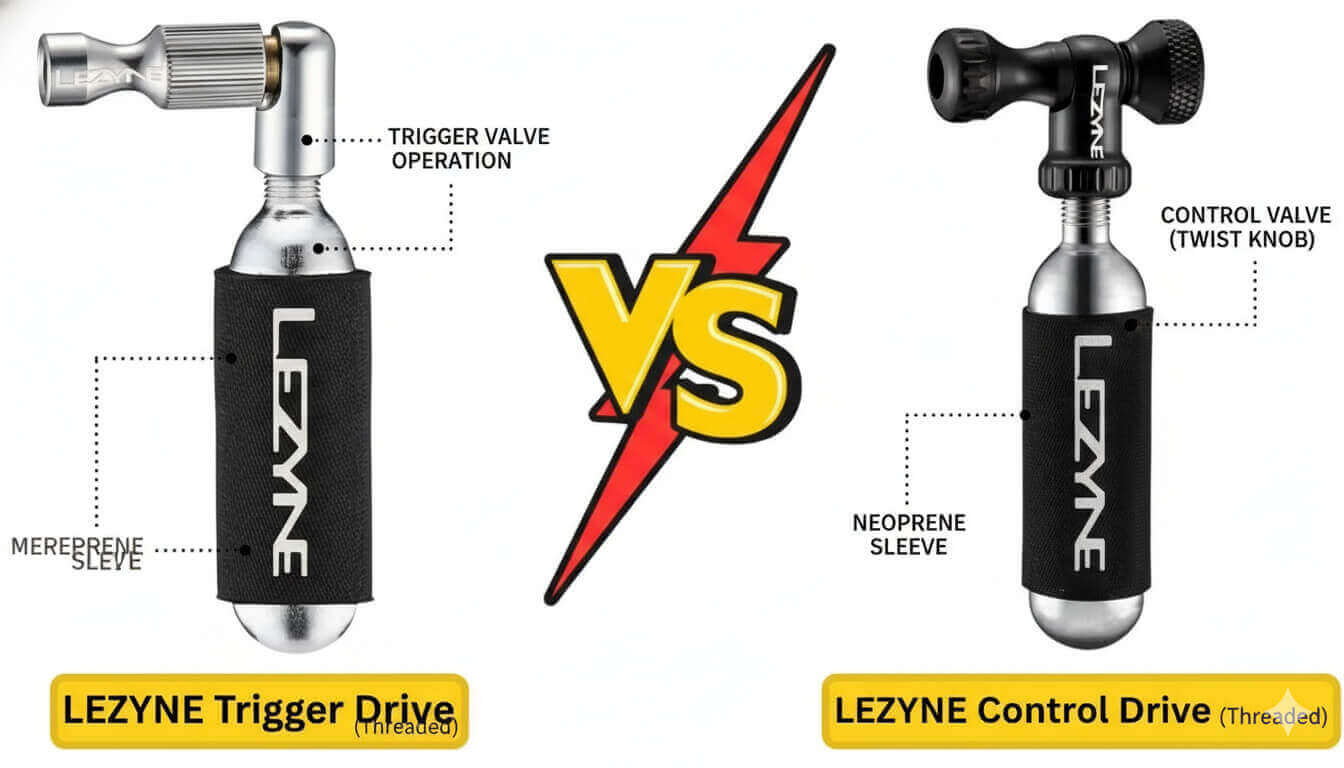
Last week on a cold morning ride in Denver, I got a flat on my gravel bike. I pulled out my CO₂ inflator and realized again how different the Lezyne Trigger Drive vs Control Drive feel. With frozen hands and low pressure, every small detail matters. I’ve been riding for more than eight years on road, gravel, and city streets.
In that time, I’ve tested both tools in real conditions. Each one can fix the same flat-tire problem, but they work in very different ways. In this review, I’ll share my real-world experience so you can pick the inflator that makes the most sense for your rides across the U.S.
Is the Lezyne Trigger Drive Good?
Yes—it’s good, though not perfect. The Lezyne Trigger Drive CO2 Inflator is one of those tools you’re glad to have in your saddlebag. I tried it while setting up a new road bike, and it impressed me with its compact size and clean design.
Made from CNC-machined aluminum, it feels solid and premium. It works with both Presta and Schrader valves, which is handy if you ride more than one bike. For me, switching between a road bike and a gravel bike in the U.S., this was a real plus. The Twin Chuck head locks in securely, and the neoprene sleeve keeps my hand safe when the 16g CO2 cartridge turns icy.
That said, it’s not the strongest inflator. If you’re trying to seat a tubeless tire, it struggles. For inner tubes, though, it works well and saves CO2 compared to some screw-on inflators I’ve used before.
What I Like
- Solid build quality
The CNC machined aluminum feels tough and long-lasting. I dropped it on pavement once, and it barely marked. This is gear built to last. - Easy valve connection
It works with both Presta and Schrader valves. I swapped it between my road bike and a friend’s hybrid without issue. It connects cleanly and doesn’t pull at the valve core like screw-on types. - Smart design details
The Twin Chuck head and neoprene sleeve are more than extras. The sleeve kept my fingers from freezing, and the push system let me control airflow. I didn’t waste a full CO2 cartridge in one go.
What Could Be Better
- Airflow strength
The output isn’t high. It’s fine for inner tubes, but seating tubeless tires is hard. More flow would make it more versatile. - Learning curve
The push-to-inflate system takes practice. At first, I let out too much or too little air. With use, it feels smoother, but beginners may find it tricky. - Price point
In the U.S., it costs more than budget inflators. For casual riders, the price may not feel worth it unless they want premium build and safety features.
Recommendation
I’d recommend the Lezyne Trigger Drive CO2 Inflator to riders who value quality and reliability. If you ride road or gravel and use inner tubes, this is a smart choice. It feels premium, works with both valve types, and the design makes it safer and easier to use.
But if you’re a mountain biker in the U.S. running tubeless tires, you may want a higher-flow inflator. This one won’t seat stubborn tubeless setups.
For me, it’s a “must-have” for road rides. It’s not perfect, but it balances design, usability, and safety in a compact package.
Is Lezyne Control Drive Good?
Yes—it’s a solid inflator with some smart design choices. The Lezyne Control Drive CO2 Inflator is one of those tools you don’t think much about until you really need it. I first used it during a long weekend ride when I flatted on a rough back road. Having this inflator in my saddlebag made the repair quick and less stressful.
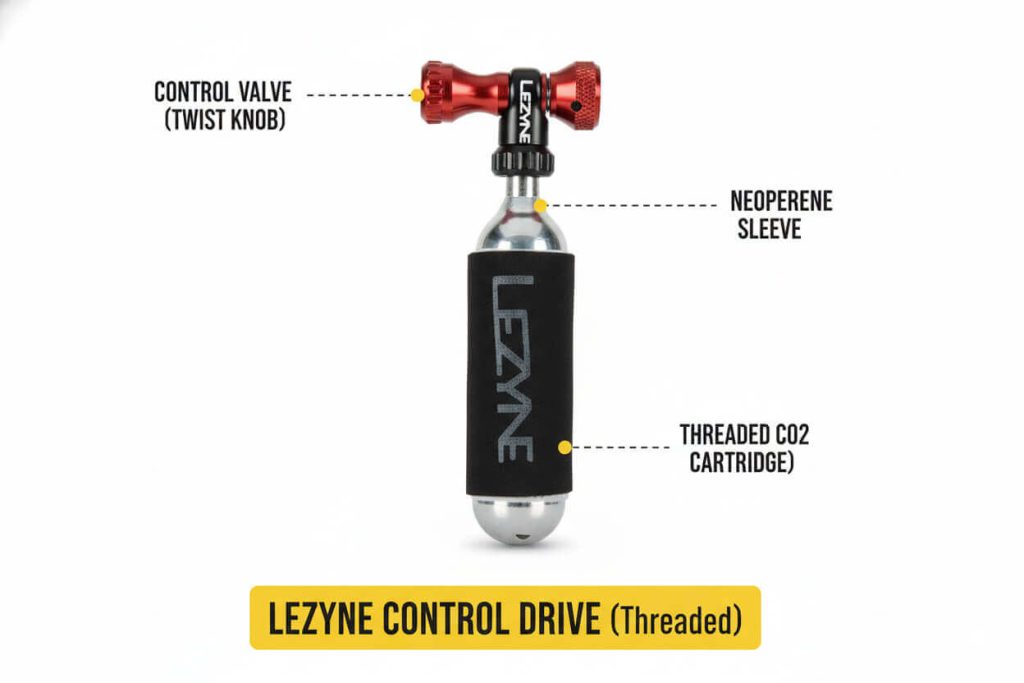
Made from CNC-machined aluminum, it feels tough but still lightweight. The build quality is what I’ve come to expect from Lezyne, and it looks sharp too. The standout feature here is the twist control valve. Instead of pushing down like the Trigger Drive, you twist to control airflow. It gives you a smooth, steady release of CO2, which is great if you don’t want to blow a tube by accident.
The Twin Slip Chuck head fits both Presta and Schrader valves, so I could use it on my road bike and my neighbor’s hybrid without hassle. A small detail, but the neoprene sleeve really helps when the 16g CO2 cartridge turns freezing cold. In practice, it kept my fingers from sticking to the cartridge—something I’ve had happen with other inflators.
What I Like
- Premium build quality
The CNC-machined aluminum feels sturdy and reliable. I’ve carried it through rain and heat, and it still looks new. It’s compact enough to fit in a small saddlebag without adding bulk. - Precise control valve
The twist control system is one of my favorite parts. I can release air slowly and avoid over-inflating. It feels less wasteful and safer than push-only inflators I’ve tried before. - Versatile valve head
The Twin Slip Chuck works with both Presta and Schrader valves. I tested it on my road bike and on a friend’s mountain bike. It slipped on and off cleanly every time, no valve core issues.
What Could Be Better
- Airflow for tubeless setups
Like many small CO2 inflators, it doesn’t move enough air to seat stubborn tubeless tires. For U.S. mountain bikers who rely on tubeless, this could be a limitation. - Price compared to budget options
The Control Drive costs more than no-name inflators. For casual riders in the U.S., that price gap might feel hard to justify unless they value premium quality. - Cartridge size flexibility
It works best with 16g CO2 cartridges, but if you’re running big-volume MTB tires, a 25g cartridge is a smarter choice. Having clear guidance from Lezyne on this would help new riders pick the right option.
Recommendation
I’d recommend the Lezyne Control Drive CO2 Inflator to cyclists who want precision, durability, and peace of mind. If you ride road, gravel, or hybrid bikes with inner tubes, this is an excellent option. The twist valve makes it easy to control inflation, and the compact size means you’ll actually carry it.
But if you’re a U.S. mountain biker running tubeless, I’d say pair this with a mini pump or a bigger cartridge. It won’t fully replace the need for more airflow in those cases.
For me, it’s a “confidence tool.” I know that when I flat far from home, this inflator will work, won’t waste CO2, and won’t damage my valve. That’s worth the extra cost compared to cheaper options.
Detailed Comparison: Lezyne Trigger Drive vs Control Drive
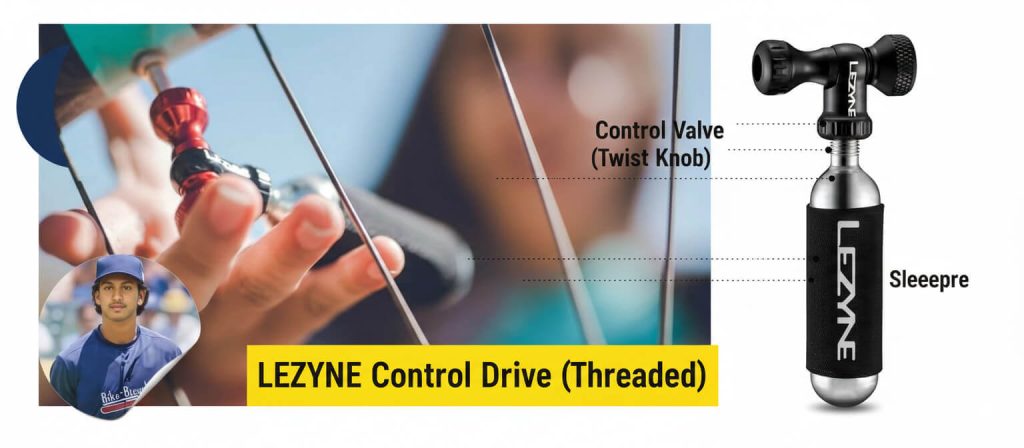
I’ve used both the Lezyne Trigger Drive and the Lezyne Control Drive on different rides. They look similar at first glance, but the way they work—and feel in the hand—makes them quite different. Let me break it down from my own rides.
Build Quality: Lezyne Trigger Drive vs Control Drive
Both are made from CNC-machined aluminum, which feels premium and solid. The Trigger Drive is slightly slimmer and lighter, while the Control Drive feels chunkier but also more secure in my grip.
From my experience, the Trigger Drive slides into a small saddlebag a bit easier, but the Control Drive gives me more confidence in durability.
- Trigger Drive: 9/10
- Control Drive: 9/10
Inflation Control: Lezyne Trigger Drive vs Control Drive
This is where they split. The Trigger Drive uses a push button—fast, but not very forgiving. The Control Drive has a twist valve, which lets me fine-tune airflow.
I remember once over-inflating a road tube with the Trigger Drive because I pressed too hard. With the Control Drive, I could slowly let out air until the tire felt just right. That made a big difference in avoiding waste.
- Trigger Drive: 7/10
- Control Drive: 9.5/10
Valve Compatibility: Lezyne Trigger Drive vs Control Drive
Both come with Twin Slip Chuck heads that work on Presta and Schrader. In real use, they both lock on snug, but the Control Drive felt smoother when switching between bikes.
I had one ride where the Trigger Drive head stuck a bit on a Presta valve, and I lost some air pulling it off. The Control Drive slipped on and off more cleanly.
- Trigger Drive: 8/10
- Control Drive: 9/10
Portability: Lezyne Trigger Drive vs Control Drive
The Trigger Drive wins for compactness. It’s lighter, slimmer, and feels almost invisible in my pocket or tool roll. The Control Drive is still small, but just bulky enough that I notice it in a jersey pocket.
For long rides where space matters, I usually pack the Trigger Drive. For rough gravel rides, I don’t mind the Control Drive’s extra bulk since it’s easier to handle.
- Trigger Drive: 9.5/10
- Control Drive: 8.5/10
Durability: Lezyne Trigger Drive vs Control Drive
Both are strong, but the Control Drive feels tougher. After a few months of use, the Trigger Drive’s button feels slightly looser, while the Control Drive’s twist valve feels as solid as day one.
On bumpy gravel roads, I trusted the Control Drive more. It just feels built to take abuse without rattling apart.
- Trigger Drive: 8/10
- Control Drive: 9.5/10
Performance: Lezyne Trigger Drive vs Control Drive
In real-world flats, both got the job done, but the Control Drive’s precision made me waste less CO2. The Trigger Drive worked faster, but speed sometimes meant mistakes.
If I’m racing, the Trigger Drive is fine. But for everyday riding, I prefer the Control Drive because it gives me control.
- Trigger Drive: 8/10
- Control Drive: 9.5/10
Ease of Use: Lezyne Trigger Drive vs Control Drive
The Trigger Drive is dead simple—push and go. The Control Drive takes a second longer to twist, but it’s smoother once you get the hang of it.
When I was tired mid-ride, I found the Control Drive’s valve easier on the nerves. The Trigger Drive sometimes felt too sensitive.
- Trigger Drive: 8.5/10
- Control Drive: 9/10
Value for Money: Lezyne Trigger Drive vs Control Drive
Both cost more than generic inflators, but they’re worth it if you value reliability. The Trigger Drive is slightly cheaper, which makes it tempting for budget riders. The Control Drive is pricier but offers more control and long-term durability.
For me, the Control Drive justifies the cost because it saves CO2 and nerves. But if you want something lighter and simpler, the Trigger Drive still gives good value.
- Trigger Drive: 8.5/10
- Control Drive: 9/10
Overall: Lezyne Trigger Drive vs Control Drive
Both inflators are solid picks, and I’ve trusted each on the road. The Trigger Drive is small, quick, and cheaper—but a bit less forgiving. The Control Drive is precise, durable, and easier to use—but a touch bulkier and pricier.
If I had to keep one in my saddlebag, I’d pick the Control Drive. It’s the inflator I feel calmer using when I’m already stressed by a flat. But for riders who want light and fast, the Trigger Drive still makes sense.
- Trigger Drive: 8.5/10
- Control Drive: 9.2/10
How we test — lezyne trigger drive vs control drive
I test gear the way I use it. I want readers to trust the results. I test for real rides and for lab checks. I also bring in brand context from Lezyne.
1) Test goals & audience
We want a clear call. The main goal is to compare speed, control, and real use. This helps riders pick the right inflator for their bike and ride. I test for road racers, gravel riders, mountain bikers, commuters, and casual riders. I aim to show which inflator fits each group.
2) Test environment & sample size
I test in the lab and on the road. I use at least three units per model when I can. Each unit gets ten main trials to spot variance. I run tests in cold, mild, and hot rides to match U.S. conditions. Two people test: a bike mechanic and a normal rider.
3) Tools & equipment (what we use and why)
I use a small digital pressure gauge that reads to ±0.5 PSI. I also weigh parts on a 0.1 g scale. I time fills with a stopwatch and track temps with a thermometer. I bring real CO₂ cartridges (16g and a larger type), road, gravel, and MTB wheels. I film tests for proof.
4) Test matrix (variables we cover)
We test Presta vs Schrader valves every time. We test road, gravel, and MTB tires at typical U.S. pressures. We swap cartridge brands and sizes to check fit and seal. We run tests gloved and ungloved, new vs 10th use, and in wet or dirty conditions.
5) Bench / Lab procedures (step-by-step)
I start by weighing and measuring each inflator and its parts. Then I fit the head to each valve and note any wobble. I do a leak test: inflate to target PSI and check drift at 5, 15, and 30 minutes. I time how long it takes to reach target pressure. I test precision by adding small PSI steps and watch overshoot. I also log head and cartridge temps and test the neoprene sleeve. I do repeat cycles for wear and a controlled drop test to spot weak spots. I note any cross-threading or misfires.
6) Field tests (real-world scenarios)
I run a roadside flat drill one-handed with the bike upright. I time the whole fix from attach to ready-to-ride. I simulate a race pit for quick swaps and a trail test with mud and gloves. I also test a cold morning to see if the cartridge freezes. These real checks show how the tool acts when you are tired or stressed.
7) Data to record (what we log)
I write down weight in grams and length in mm. I log inflation time in seconds and final PSI accuracy. I track pressure drift after 30 minutes and CO₂ used by weight change. I count failures per 100 ops. I also score hand comfort, ergonomics, price, and U.S. retailer availability.
8) Scoring rubric & how to rank them
I weight the scores so they match real needs. Usability is 25%. Precision is 20%. Speed is 15%. Build is 15%. Portability is 10%. Value is 10%. Safety is 5%. Each model gets a 1–10 score per criterion. I multiply by the weights and sum for a final result out of 100. If scores tie, reliability (fewer failures) decides the winner.
9) Narrative observations & qualitative notes to include
I note single-hand use and if the valve control feels natural. I check if the inflator may over-fill fast tires. I log how easy it is with gloves, in low light, or when dirty. I test if the neoprene sleeve really keeps fingers safe. I write short notes on quirks like stiff threads or odd angles that matter on the road.
10) Safety checks & warnings to test/report
I test cartridge puncture steps and watch for any blow-off signs. I log failure modes like cross-thread or sudden disconnect. I advise safe carry and storage for CO₂ in hot U.S. weather and note proper disposal tips. I keep these checks factual and procedural. I do not give medical or legal advice.
FAQs for Lezyne Trigger Drive vs Control Drive
What is the main difference between the Lezyne Trigger Drive vs Control Drive?
The Trigger Drive uses a push-trigger system for quick bursts, while the Control Drive has a twist valve for steady control. Both handle CO₂ inflation well.
Which is easier to use in cold weather, Trigger Drive or Control Drive?
The Control Drive is easier in cold conditions since the twist valve is simple to grip, while the Trigger Drive can be trickier with numb hands.
Is the Lezyne Trigger Drive more compact than the Control Drive?
Yes, the Trigger Drive is smaller and lighter, making it easy to stash in a pocket. The Control Drive is a bit larger but adds better pressure control.
Which inflator is better for road cyclists in the U.S.?
Road cyclists often prefer the Control Drive for its precision. The Trigger Drive works well too, but its quick release can risk overinflation.
Does the Lezyne Control Drive waste less CO₂ than the Trigger Drive?
Yes, the twist valve on the Control Drive gives finer control, which helps reduce wasted CO₂ compared to the push-trigger style of the Trigger Drive.
