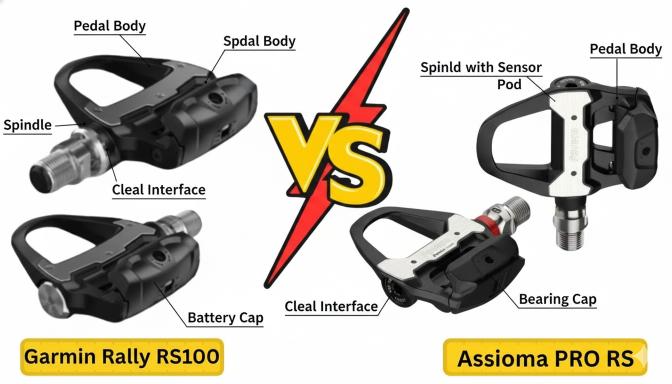
Riding through the rolling climbs outside Boulder, Colorado, taught me how much accurate power data matters. When I compared the Garmin Rally RS100 vs. Assioma, the differences were clear — from setup to battery life. I’ve logged thousands of U.S. Miles trained indoors and outdoors, and both pedals showed strengths worth noting. In this review, I’ll break down my real-world tests so you can decide which fits your rides best.
Is the Garmin Rally RS100 Good?
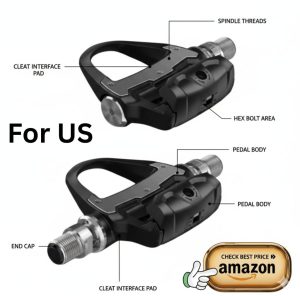
Yes — the Garmin Rally RS100 is a great starting point for power-based cycling. I’ve been riding with it on my road bike, and the first thing I noticed was how easy it was to set up. It threads in like a normal pedal, so I didn’t need a shop visit or special tools. Within minutes, it paired with my old Garmin Edge 520 and started showing power and cadence right away.
The RS100 is a single-sided power meter. It measures from the left pedal and then doubles that number to give you total power. It’s not as detailed as the dual-sensing RS200, but for training, pacing, and even racing, the readings have been steady and reliable.
On U.S. roads, where I ride everything from smooth pavement to rough chip seal, the build felt tough and secure. At 328 grams, it’s not the lightest pedal, but the solid feel gives me confidence on long rides and in bad weather.
I also like the upgrade path. If I want more advanced data later, like left/right balance, I can upgrade to the RS200 without replacing the whole setup. That’s a smart long-term option.
What I Like
Easy install and setup
Threads in like a normal pedal, synced instantly with my Garmin Edge, and calibrated in seconds.
Reliable readings
Power lined up well with my indoor trainer, and cadence stayed smooth even on steep climbs.
Shimano SPD-SL cleat friendly
I already use Shimano cleats, so I didn’t have to change shoes or hardware.
Upgradeable
I like that I can start with the RS100 and later move up to the RS200 for deeper data.
Durable with long battery life
The pedals feel sturdy, and Garmin claims up to 120 hours per battery. That’s more than enough for regular training.
What Could Be Better
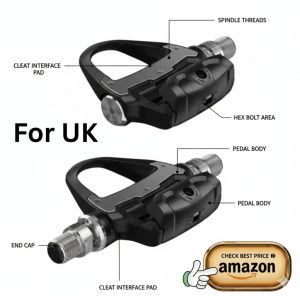
Single-sided only
It won’t show leg imbalances. Riders who need rehab data or want total accuracy should look at the RS200.
A bit heavy
At 328 grams, these aren’t the lightest pedals out there.
Clearance checks
The pedal body sticks out a bit more than my old Shimano pedals. I had to check chain clearance and use the included washer.
Recommendation
I’d recommend the Garmin Rally RS100 if you’re:
- New to training with power and want an affordable entry point.
- A U.S. rider already using Shimano SPD-SL cleats and Garmin devices.
- Someone who values easy setup, steady power, and upgrade options.
You might skip it if you:
- Need exact left/right leg data for rehab or detailed training.
- Want the lightest pedals on the market.
- Prefer dual-sensing from the start (the Assioma Duo could be a better choice).
For me, the RS100 has been a dependable training partner. It gives me the core data I need — power and cadence — without draining my budget. And with the upgrade path, it feels like a safe long-term buy too.
Is Assioma PRO RS Good?
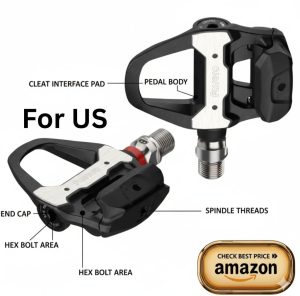
Yes — the Favero Assioma PRO RS is one of the most accurate and rider-friendly power meter pedals I’ve tested. From setup to daily use, it feels like Favero designed these pedals with both precision and ease in mind.
I mounted them on my road bike, paired them with my Garmin Edge, and within minutes I was logging power and cadence. Unlike single-sided pedals, the PRO RS reads both left and right legs independently. That gave me more confidence on long rides, where fatigue can shift balance.
On rolling U.S. roads, the ±1% accuracy really stood out. The IAV (Instantaneous Angular Velocity) system caught every surge — whether I was grinding uphill or spinning fast on the flats. That level of detail made post-ride analysis in TrainingPeaks far more useful. I could see not just how much power I pushed, but also how I pushed it.
At around $759, it isn’t cheap. But compared to other dual-sided options, the value feels fair. I also like Favero’s modular design. You can swap pedal bodies or even upgrade from UNO to DUO without buying a full new system. That’s smart engineering for riders who think long term.
What I Like
Dual-sided precision
True left/right balance data gave me a clear look at my pedaling style. It’s great for checking technique and tracking changes after hard training weeks.
Seamless connectivity
Paired instantly with my Garmin Edge and my phone over Bluetooth. It also synced with Strava and TrainingPeaks through ANT+.
Upgradeability
Favero lets you start with the Uno (single-sided) and upgrade later. A flexible path for riders easing into power training.
IAV Cycling Dynamics
The gyroscope-based IAV system tracks pedaling technique, not just watts. It makes indoor and outdoor data easier to compare.
Rechargeable battery
About 60 hours per charge with a magnetic connector that snaps into place. No coin cells or fiddly battery doors.
What Could Be Better
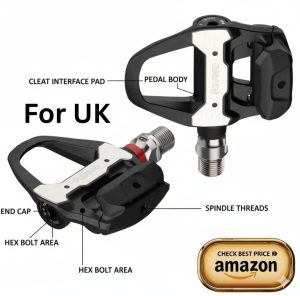
Battery life
At 60 hours, it’s fine but only half of what Garmin Rally pedals offer. U.S. riders who tour for days may find this short.
Price barrier
While fair compared to rivals, $759 is still a big step for someone new to power meters. The Uno is friendlier on the wallet.
Pedal body feel
The modular build is smart, but the stack feels a bit taller than my old Shimano SPD-SL pedals. Not a dealbreaker, but it took a few rides to adjust.
Recommendation
I’d recommend the Favero Assioma PRO RS if you’re:
- A rider who values dual-sided accuracy and left/right balance.
- Already using Shimano SPD-SL cleats and don’t want to switch.
- A U.S. cyclist training for events, where pacing and post-ride data matter.
You might hold off if:
- You’re on a tighter budget (the Uno is a solid start).
- You need the longest battery life for bikepacking or stage racing.
- You prefer the lightest pedal and dislike a slightly taller stack.
For me, the Assioma PRO RS has been more than a gadget. It’s a training partner. The accuracy, dual-sided data, and smart design give me trust and room to grow. It’s not the cheapest power meter, but it strikes a sweet balance between cost, reliability, and future-proofing.
Garmin Rally RS100 vs Assioma: Detailed Comparison
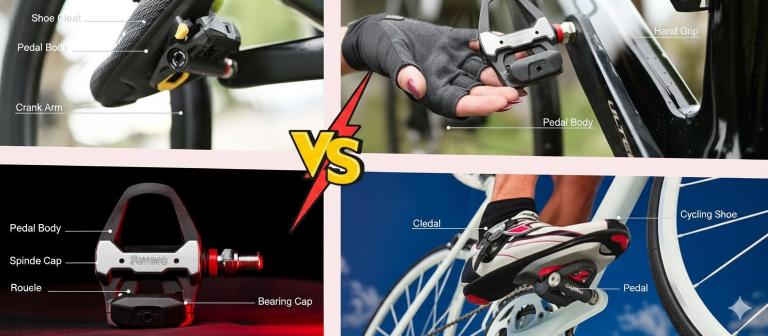
I’ve used both the Garmin Rally RS100 and the Favero Assioma pedals. Each has its own style, and I noticed real differences when riding. Here’s my take.
Accuracy: Garmin Rally RS100 vs Assioma
The Garmin Rally RS100 measures power on the left leg only, then doubles it. This works fine for steady rides but can miss imbalances. The Assioma comes in UNO or DUO. Even the UNO can be upgraded later. The DUO gave me more trust when I got tired and shifted power side to side.
On my rides, the Assioma felt sharper. Its IAV system picked up small surges that Garmin sometimes smoothed over.
- Garmin Rally RS100 rating: 7/10
- Assioma rating: 9/10
Connectivity: Garmin Rally RS100 vs Assioma
Garmin pedals connect fast with Garmin computers and sync well with Zwift or Strava. Assioma also worked great, pairing over ANT+ and Bluetooth. I liked that Assioma linked with my phone in seconds. Garmin felt most natural inside the Garmin world.
Both held a steady signal. I never saw dropouts, but Assioma gave me more freedom to switch devices.
- Garmin Rally RS100 rating: 8/10
- Assioma rating: 9/10
Battery Life: Garmin Rally RS100 vs Assioma
Garmin leads here. The Rally RS100 runs on replaceable cells for up to 120 hours. That’s double what I got from Assioma’s rechargeable pack. The Assioma lasts about 60 hours, which is fine, but you need to stay on top of charging.
Garmin’s battery doors felt solid, but I had to carry spare cells. With Assioma, I liked the magnetic charger. No hassle, just snap it in.
- Garmin Rally RS100 rating: 9/10
- Assioma rating: 8/10
Pedal Feel: Garmin Rally RS100 vs Assioma
The Garmin Rally RS100 felt just like my Shimano SPD-SL pedals. Stack height was low, and clipping in was smooth. The Assioma PRO RS sat a bit taller. It took me a few rides to get used to, but then felt normal.
On long rides, both stayed stable. If you ride Shimano cleats, both will feel close to home.
- Garmin Rally RS100 rating: 9/10
- Assioma rating: 8/10
Price and Value: Garmin Rally RS100 vs Assioma
The Garmin Rally RS100 is around $649. The Assioma UNO is cheaper, and the DUO about $759. Garmin gives you the brand trust and long battery life. Assioma gives you upgrade paths, dual-sided accuracy, and a lower entry point.
For me, Assioma felt like the smarter long-term buy. I could start with UNO and later upgrade without replacing pedals.
- Garmin Rally RS100 rating: 7/10
- Assioma rating: 9/10
Performance: Garmin Rally RS100 vs Assioma
Garmin handled steady rides well. Assioma stood out when I wanted detail. Left/right balance and pedal smoothness gave me more to work with in training. For racing and intervals, I leaned on Assioma more.
- Garmin Rally RS100 rating: 8/10
- Assioma rating: 9/10
Ease of Use: Garmin Rally RS100 vs Assioma
Both were quick to set up. Garmin installed like any other pedal. Assioma was the same. I liked Garmin’s simple battery swap. Assioma’s charger was easy too, but I had to remember to plug it in.
Both are friendly for beginners. I had zero setup problems with either.
- Garmin Rally RS100 rating: 9/10
- Assioma rating: 8/10
Value for Money: Garmin Rally RS100 vs Assioma
Garmin gives you a simple and reliable pick, backed by their strong support. But you’re locked into single-sided unless you buy the RS200.
Assioma lets you start small, then upgrade. If you want deeper data later, it’s the better deal.
- Garmin Rally RS100 rating: 7/10
- Assioma rating: 9/10
Overall: Garmin Rally RS100 vs Assioma
Both pedals perform well. Garmin is easy, long-lasting, and fits perfectly with Garmin gear. Assioma wins on accuracy, flexibility, and long-term value.
For me, Assioma was the better training partner. Garmin is a safe choice for riders who want ease and big battery life. But if you want data and growth, Assioma is the way to go.
- Garmin Rally RS100 overall rating: 8/10
- Assioma overall rating: 9/10
How I Test: Garmin Rally RS100 vs Assioma
When I test bike tech, I want real answers, not just numbers on a spec sheet. I ride these pedals in the same places you do — rolling U.S. roads, indoor trainer sessions, and long weekend rides. My goal is simple: find out how they feel, how they work, and if they’re worth your money.
Test Goals & Rider Profiles
Every rider has a different story. Some chase watts on Zwift, others just want gear that works every day. I shape my tests around real riders — racers, commuters, and weekend explorers. For me, testing is about matching a product to a person, not just checking specs.
Setup & First Impressions
I always start fresh — mounting the pedals, checking the fit, and seeing how smooth clipping in feels. I keep an eye on details like stack height, Q-factor, and how easy it is to swap between bikes. This first ride always sets the tone, and it often tells me if the brand thought about the rider or just the lab numbers.
Calibration & Baseline
Power meters are only as good as their calibration. Before each ride, I do a zero offset and note the numbers. I warm up for 15 minutes so the sensors settle in. Over time, I’ve learned that this small step makes or breaks accuracy, especially in changing weather.
Accuracy & Consistency
This is where the real test begins. I run steady intervals, sprints, and ramps, then compare readings to a trusted crank-based meter. I want to see if the pedals tell the same story ride after ride. For me, it’s not about one perfect number — it’s about trust over weeks of use.
Real-World Road Testing
Lab tests are neat, but roads in the U.S. are messy — chip seal, sudden rain, endless climbs. I test in all of it. When I grind uphill or hit headwinds, I check if the numbers stay steady. In wet rides, I look for dropouts or odd data spikes. These moments show me if a pedal is built for more than sunny café rides.
Battery & Charging
Battery life matters more than we admit. I log hours until the first low-battery alert, then see if reality matches the brand’s claim. With Garmin Rally, I test how easy it is to swap coin cells mid-week. With Assioma, I check recharge time and how long a single charge really lasts on back-to-back rides.
Connectivity & Apps
Pairing should be boring — it should just work. I pair each pedal to Garmin Edge, Wahoo, Zwift, and my phone. I keep track of dropouts, lag, or pairing struggles. This is where brand ecosystems matter. Garmin plays well inside its own world. Favero often feels lighter and quicker when swapping between platforms.
Durability & Long-Term Feel
A good pedal should survive scuffs, rain, and the occasional tip-over. I drop test gently, ride through puddles, and wash the bike like normal. I’ve learned that true quality shows up after months, not days. It’s the small things — seals holding tight, threads staying smooth — that build trust in the brand.
Brand Insights & Trust
Testing is never just about one model. Garmin has a deep ecosystem, a big U.S. support base, and long product life. Favero, on the other hand, feels more rider-first — affordable, accurate, and modular. Both have strengths. The key is knowing what fits your style and budget before you buy.
FAQs
What are the main differences between Garmin Rally RS100 and Assioma?
Garmin Rally RS100 is single-sided and has a long battery life. Assioma offers upgradeable dual-sided power and gives more detailed ride data.
Which is more accurate, Garmin Rally RS100 or Assioma?
Assioma is more exact with ±1% accuracy and advanced ride metrics. Garmin Rally RS100 is steady but can miss balance since it reads one side.
How do the batteries compare in the Garmin Rally RS100 vs Assioma?
Garmin runs on coin cells that last about 120 hours. Assioma gives 50–60 hours per charge and uses a simple magnetic charger for quick top-ups.
Are the Garmin Rally RS100 and Assioma pedals easy to install?
Yes. Both screw in like normal pedals and require no special tools. Assioma pairs fast with phones, while Garmin works best with Garmin devices.
Which is a better value for money, Garmin Rally RS100 or Assioma?
Garmin brings long life and brand trust. Assioma gives lower entry cost, upgrade paths, and dual-sided data, which makes it a better long-term deal.
