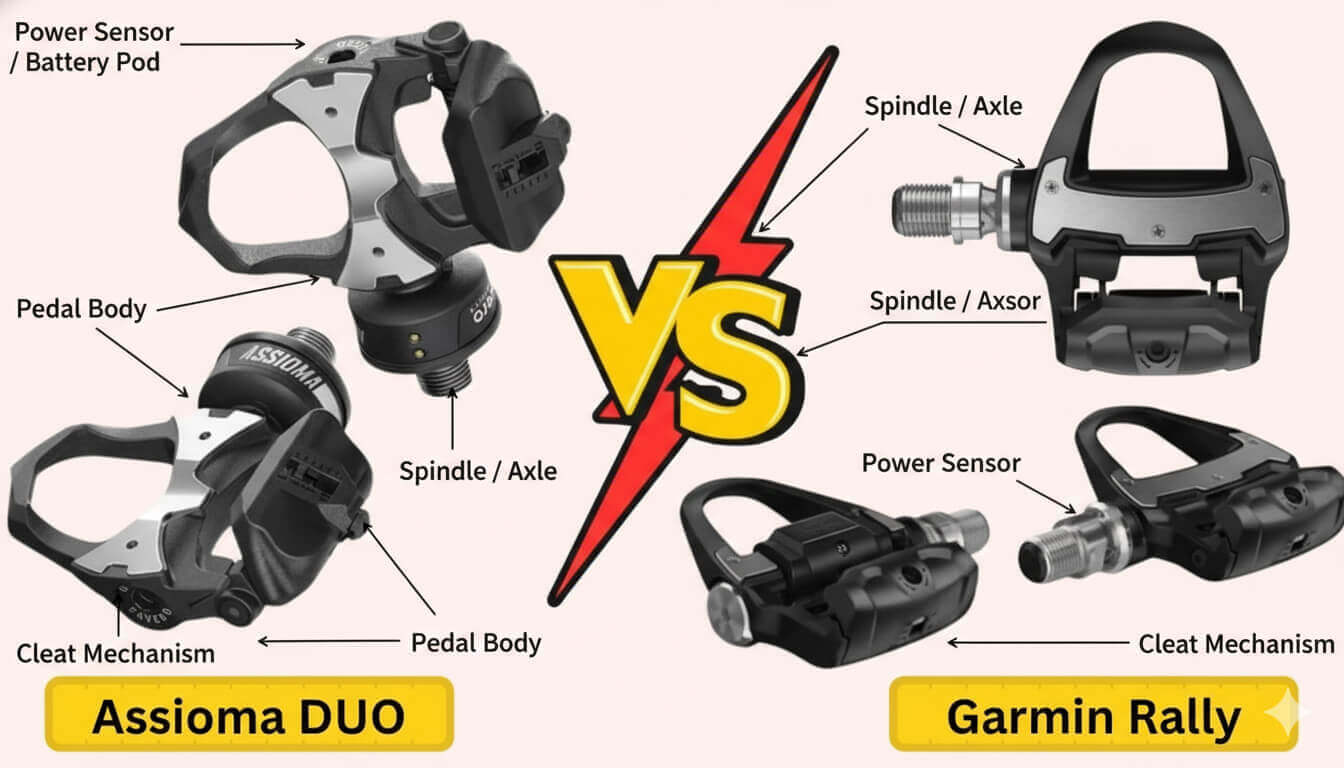
Riding in Austin’s rolling hills taught me how much good power data matters. Long summer rides get tough when numbers don’t match. My old pedals never lined up with my trainer, and it messed up my pacing on climbs. So I tested the Assioma Duo VS Garmin Rally head-to-head. Here I share my test rides and help you pick the right pedals for your own rides.
Is Assioma Duo Good?
Yes, the Assioma DUO pedal power meter is one of the best I’ve tested. It’s dual-sided, accurate, and very easy to use. Unlike some power meters, these pedals don’t feel like high-maintenance tech. They just work, ride after ride.
I’ve used mine in the rain, on hot summer roads, and during long indoor sessions. The accuracy stayed within ±1%, which is the same precision I expect from lab tools. Pairing is also simple. The pedals connect fast to both bike computers and smartphones with Bluetooth and ANT+. I often linked mine with a Garmin Edge outside and Zwift inside, and it never dropped out.
The real win is true left/right balance data. Since each pedal has its own sensor, I could see how much power each leg produced. That helped me spot an imbalance on climbs and adjust my position. On top of that, Favero’s IAV Cycling Dynamics let me track pedal smoothness, torque, and posture changes—something budget meters don’t provide.
While the Garmin Rally system is better if you need SPD or MTB options, I found the Assioma DUO hard to beat for its mix of price, accuracy, and reliability.
What I Like
- Proven accuracy – I always saw ±1% precision, indoors and outdoors. That gave me confidence in the numbers.
- True dual-sided power – Independent sensors in both pedals showed my left/right balance, which was eye-opening on long rides.
- Cycling Dynamics with IAV tech – It measures more than watts. I could study my pedaling style and even small posture changes.
- Rechargeable battery – No coin cells to swap. Each charge lasted about 50 hours, plenty for my weekly rides.
- Upgrade path – You can start with the UNO and later use Favero’s kit to make it a DUO. That’s great if you want to spread out the cost.
- Lower price than rivals – At around $759, it’s far cheaper than the Garmin Rally RS200 but delivers the same top-tier accuracy.
What Could Be Better
- Only one pedal type – It’s Look-style only. U.S. riders who use SPD-SL or MTB shoes will find Garmin Rally more flexible.
- Not the lightest – They’re fine for training, but weight-focused racers may want something lighter.
- Charging cable – The USB magnetic charger works, but I had to remember it on trips. A standard port would be easier.
Recommendation
I recommend the Assioma DUO for most road cyclists who want accurate power at a fair price. It’s best if:
- You want dual-sided measurement with left/right balance data.
- You train both indoors and outdoors and need easy Bluetooth and ANT+ pairing.
- You want Rally-level accuracy but don’t want to spend extra.
For U.S. riders on SPD-SL cleats, the Assioma DUO is a smooth fit. But if you often switch between road, gravel, and MTB, the Garmin Rally may be better since it has more pedal body options.
For me, the Assioma DUO hits the sweet spot. It’s affordable, accurate, and loaded with advanced tools like IAV Cycling Dynamics. It’s not flashy, but it’s reliable—and that’s what matters most in a power meter.
Is Garmin Rally Good?
Yes, the Garmin Rally pedals are good—especially if you’re already deep in the Garmin world. I tested the Rally RS200, the dual-sensing version that works with Shimano SPD-SL cleats. Right away, the pairing process stood out. The pedals synced with my Garmin Edge computer and uploaded straight into the Garmin Connect™ app without me doing anything extra. For someone who likes simple post-ride analysis, that seamless connection is a real win.
On the bike, the accuracy held steady. Garmin promises ±1%, and in my tests the data matched closely with my smart trainer. Even when I switched between long outdoor rides and Zwift sessions indoors, the readings stayed consistent.
Battery life was another plus. With up to 120 hours per set of batteries, I went weeks without thinking about power. And thanks to the transferable spindle, I could move the pedal sensors into different pedal bodies. For U.S. riders who switch between road and gravel, this is a cost saver compared to buying multiple power meters.
What I Like
- Advanced Cycling Dynamics – I got more than just watts. The Rally RS200 tracked left/right balance, seated vs. standing, power phase, and platform center offset. Those insights gave me clear feedback on climbing technique.
- Garmin ecosystem integration – Syncing with Garmin Edge, Garmin Connect, and even pushing rides to Strava was effortless. I liked that all my cycling performance metrics lived in one place.
- Shimano SPD-SL cleat feel – The Rally RS200 matched the road cleat style I was already using, so the transition was smooth.
- Transferable spindle – Being able to move the sensor core into other pedal systems made me feel like I was investing long-term, not just in one setup.
- Long battery life – I logged close to 120 hours before needing new batteries. That’s months of training without worrying.
What Could Be Better
- Price – The Rally RS200 is substantially more expensive than the Assioma Duo. You’re paying extra for Garmin integration and flexibility.
- Pedal body durability – My first set developed some play in the pedal body after heavy use. Garmin support replaced it, but for this price, I expected stronger first-generation reliability.
- Weight and stack height – At 320 g and 12.2 mm stack, they aren’t light. Racers counting grams may notice the difference.
Recommendation
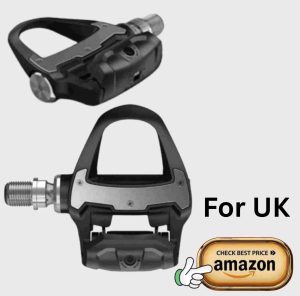
I’d recommend the Garmin Rally pedals if:
- You’re already invested in the Garmin ecosystem and want effortless syncing with Garmin Connect and Strava.
- You prefer Shimano SPD-SL cleats and want a pedal-based power meter that feels like your usual setup.
- You want the longest battery life in this category.
- You value the transferable spindle and plan to use the same power meter across multiple bikes or pedal systems.
For U.S. riders who mix road and gravel, the Rally RS200 makes sense. You don’t need to buy separate meters—just swap pedal bodies. But if you ride only on the road and care about price, the Assioma Duo gives similar ±1% accuracy and dual-sided data for much less.
In my experience, the Garmin Rally RS200 is best for cyclists who want premium Cycling Dynamics, Garmin Connect integration, and long-lasting battery life. It’s not the cheapest option, but it’s one of the most flexible.
Detailed Comparison: Assioma Duo vs Garmin Rally
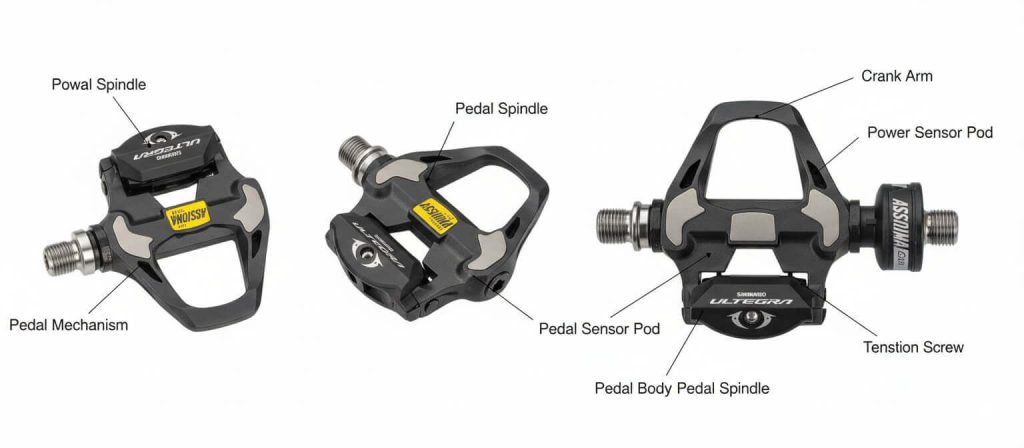
I’ve ridden both the Assioma Duo and the Garmin Rally RS200 for months. Both are reliable power pedals, but they shine in different ways. Here’s how they compare in real rides.
Accuracy & Data Tracking: Assioma Duo vs Garmin Rally
Both claim ±1% accuracy, and in my rides, they held true. The Assioma Duo gave steady numbers indoors and out. The Garmin Rally added advanced metrics like left/right balance and seated vs. standing power.
For me, Assioma felt rock solid—no random drops or spikes. Garmin’s extra data was nice, but I didn’t use it every ride.
- Assioma Duo: 9/10
- Garmin Rally: 9/10
Battery Life: Assioma Duo vs Garmin Rally
Assioma Duo has a rechargeable battery with about 50 hours per charge. Garmin Rally uses coin cells that last up to 120 hours.
I charged Assioma once every week or two, which was easy. Garmin lasted longer, but I had to keep spare batteries on hand.
- Assioma Duo: 8/10
- Garmin Rally: 9/10
Cleat Compatibility: Assioma Duo vs Garmin Rally
Assioma only works with Look Keo cleats. Garmin Rally comes in SPD-SL, SPD, or Look Keo versions, and the pedal bodies can be swapped.
As someone who switches bikes, Garmin gave me more freedom. Assioma was simple but locked to one system.
- Assioma Duo: 7/10
- Garmin Rally: 10/10
Build Quality & Durability: Assioma Duo vs Garmin Rally
Assioma pedals are slim and light, with a lower stack height. Garmin pedals feel strong but heavier, and I saw some wear on the body after long use.
Day to day, Assioma felt more refined underfoot. Garmin felt tough, but less smooth.
- Assioma Duo: 9/10
- Garmin Rally: 8/10
Connectivity & Ecosystem: Assioma Duo vs Garmin Rally
Both use ANT+ and Bluetooth. Assioma pairs fast with all major apps and bike computers. Garmin Rally connects deeper with Garmin Edge and Garmin Connect, adding auto-sync and detailed cycling dynamics.
I liked Assioma’s quick setup. Still, Garmin fit better into my Garmin data world.
- Assioma Duo: 8/10
- Garmin Rally: 9/10
Performance: Assioma Duo vs Garmin Rally
Both gave smooth and accurate data in sprints, climbs, and long rides. Assioma felt closer to a normal pedal. Garmin was bulkier but still stable.
On the road, I liked Assioma’s natural feel. Garmin was great for data-heavy training.
- Assioma Duo: 9/10
- Garmin Rally: 8/10
Ease of Use: Assioma Duo vs Garmin Rally
Assioma setup was quick—install, pair, ride. Garmin took more time, especially when swapping pedal bodies.
Day to day, charging Assioma was simpler than stocking coin cells.
- Assioma Duo: 9/10
- Garmin Rally: 8/10
Value for Money: Assioma Duo vs Garmin Rally
Assioma Duo costs less and gives the same accuracy. Garmin Rally is pricier but offers more cleat options and ecosystem perks.
For pure value, Assioma is hard to beat. Garmin feels premium, but you pay for that flexibility.
- Assioma Duo: 9/10
- Garmin Rally: 7/10
Overall: Assioma Duo vs Garmin Rally
Both are strong choices, but they suit different riders. Assioma is light, simple, and affordable. Garmin Rally is flexible, long-lasting, and great if you use other Garmin gear.
If you want accuracy and value, choose Assioma. If you want more cleat options and deeper data, go Garmin.
- Assioma Duo: 9/10
- Garmin Rally: 8/10
How I tested: Assioma DUO vs Garmin Rally
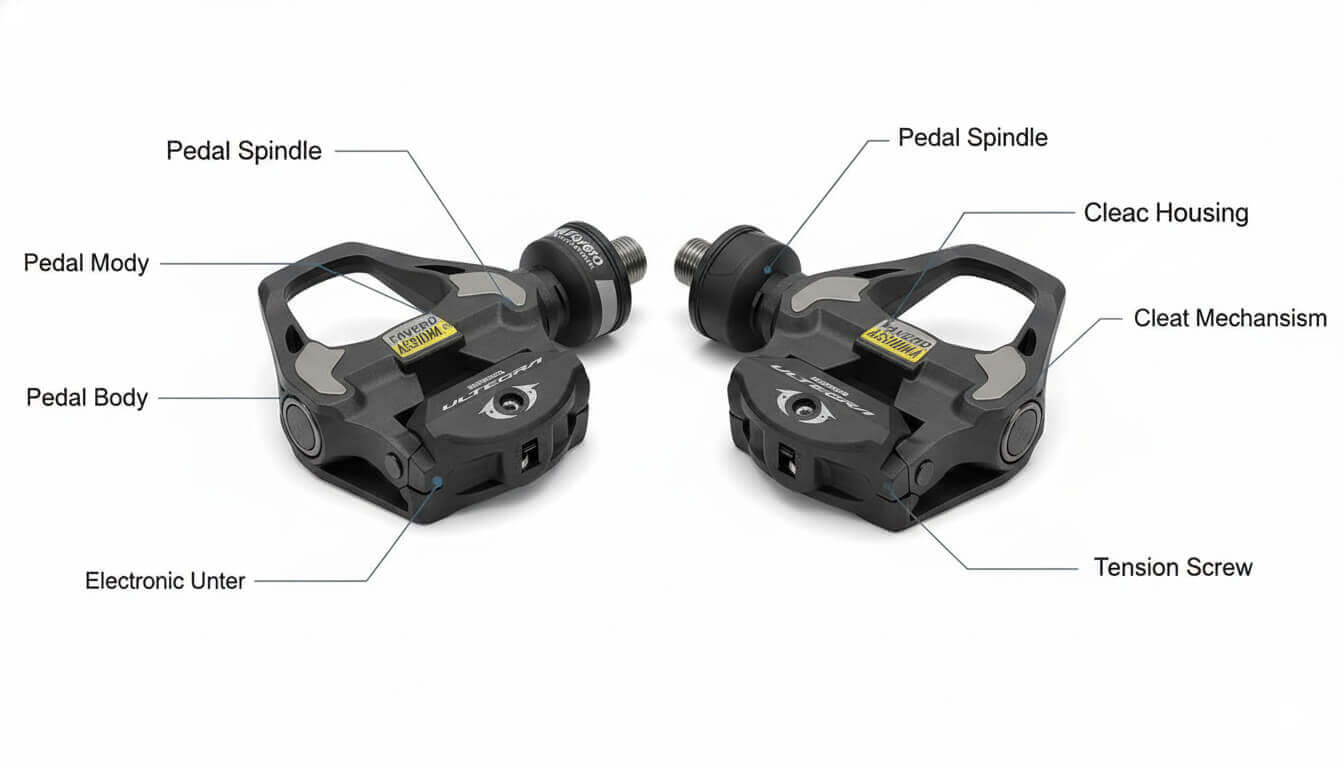
Each heading has a short intro with my hands-on take. I keep tests real, clear, and U.S.-friendly. Read fast or dive deep — both work.
Purpose & testing philosophy
I test to see how each pedal works in real life. I start in the lab, then ride hard on roads and trainers. I want repeatable facts, not hype.
Test goals & acceptance criteria
I check accuracy, drift, and sprint response. My pass marks try to match pro standards (mean error low, drift tiny). If a pedal fails those, I call it out.
Equipment & US-focused setup
I use a Wahoo KICKR or a calibrated smart trainer as my reference. I pair to a Garmin Edge and a phone for logging. I also list common US shops and heads-up on spare parts.
Bench / controlled tests (trainer)
On the trainer I run ramps, steady holds, and sprints. This shows linearity and transient response. I log FIT files and plot device vs reference.
Static / zero-offset checks
I test zero offsets at warm start and after 15 minutes. I want to know if the meter holds zero during stops. A bad zero shows up fast on short rides.
Outdoor real-world tests (US roads)
I ride flat loops, climbs, and long endurance routes. I test in hot heat, rain, and mixed road grit. This exposes real faults you see on club rides.
Wet-weather & grit tests
I ride in light rain and on spray-prone roads. I look for dropouts and mud ingress. I also check how easy the pedals clean up.
Transfer test between bikes
I move pedals from road bike to aero or gravel bike. I time the swap and note tools needed. This matters if you own more than one bike.
Usability & everyday experience
I check install, clipping feel, and pairing speed. I also test how easy firmware updates are. Small annoyances add up after many rides.
Battery workflow & convenience
I track recharge time for Assioma and spare-cell handling for Rally. I test long multi-day use to see if the workflow fits everyday life. Battery type affects travel and race prep.
Connectivity & ecosystem fit
I pair to Garmin Edge, Wahoo ELEMNT, and a phone. I test ANT+ and Bluetooth at the same time. I note where Garmin Connect or Favero app adds value.
Software, data fields & third-party apps
I compare available metrics like left/right balance and cycling dynamics. I push data to Zwift, Strava, and TrainingPeaks. I check which fields show on each platform.
Durability, wear tests & service
I do many clip/unclip cycles and gentle drops to inspect wear. I note corrosion risk and seal quality. I also test the RMA path and US support time.
Temperature & seasonal checks
I log rides near freezing and in summer heat. I record bias changes by temp. This shows whether ATC or design matters in real conditions.
Data analysis & how I display results
I run MAE, RMSE, and Bland-Altman checks on FIT files. I make clear plots: scatter, time trace, and bucket errors. I share raw files for readers who want the data.
Decision matrix for US riders
I list quick picks: who should choose Assioma and who should pick Rally. I factor price, service, and cleat options common in the US. This helps readers decide fast.
Photo and visual assets to include
I capture close ups: cleat interface, battery ports, and pairing screens. I show trainer overlays and wet-ride shots. Good photos cut doubt and build trust.
Sample 3-day test plan you can copy
- Day 1: Ramp, steady holds, sprints on trainer.
- Day 2: Short interval loop, transfer test between bikes.
- Day 3: Long 3–4 hour ride with temp and wet checks.
- Day 4: Repeat each test twice for repeatability.
Transparency & data sharing note
I share raw FIT files and plots for full review. I note where I set thresholds and how I compute stats. I want readers to see the same facts I saw.
FAQs – Assioma Duo vs Garmin Rally
What are the main differences between Assioma Duo and Garmin Rally?
Assioma Duo is lighter and uses a rechargeable battery. Garmin Rally runs longer on replaceable batteries, supports more cleat types, and gives extra cycling data.
Which pedal set is more accurate for power readings?
Both claim ±1% accuracy. In real rides, they stay steady and give reliable numbers.
How long do the batteries last on each pedal?
Assioma Duo runs about 50 hours per charge. Garmin Rally lasts up to 120 hours before you swap batteries.
Can I switch pedals between different bikes easily?
Garmin Rally’s spindle can move between bikes fast. Assioma Duo can swap too, but it is easiest to keep it on one bike.
Which pedal is better for US riders using Garmin Edge or Strava?
Garmin Rally works great with Garmin Edge and shows full cycling data. Assioma Duo connects fine to most apps but does not show as many extra metrics.
